Introduction: VVGng and VVGng‑LS
The power cable VVGng has long become a standard for fixed indoor installation. The abbreviation stands for: V — PVC insulation, V — PVC sheath, G — no armour, ng — does not propagate combustion. The modification with the LS index adds a requirement for low smoke and gas emission — Low Smoke. Both types are manufactured in accordance with GOST 31996‑2012 with copper conductors of cross‑sections from 1.5 to 240 mm², for voltages of 0.66 or 1 kV.
The designer and installer are faced with the question: VVGng or VVGng‑LS cable — which one to choose? The difference lies in the behaviour during a fire. VVGng prevents the fire from spreading along the cable route, but at the same time it emits smoke and toxic gases. VVGng‑LS minimises both. This difference determines the areas of application and the requirements of the standards. Basic information about power lines is given in the article details about power cable, while laying rules and standards are provided in the guide cable laying.
Comparative Table of VVGng and VVGng‑LS
| Parameter | VVGng | VVGng‑LS |
| Designation meaning | Vinyl insulation, vinyl sheath, does not propagate combustion | The same plus Low Smoke — low smoke and gas emission |
| Regulatory document | GOST 31996‑2012 | GOST 31996‑2012, additional tests according to GOST R IEC 61034‑1/2, GOST IEC 60754‑1/2 |
| Fire safety index | ng(A) — does not propagate combustion in bundled laying | ng(A)‑LS — does not propagate combustion, reduced smoke formation and gas emission |
| Smoke emission | Permissible, without strict restrictions | Reduced: smoke transparency not less than 50 % when tested according to GOST R IEC 61034 |
| Toxicity of combustion products | Contains halogens, dense, corrosive smoke | Halogen‑containing, but with reduced release of HCl and other gases |
| Operating temperature | From –50 to +50 °С | From –50 to +50 °С; cold‑resistant versions KhL are available |
| Insulation and sheath material | Standard PVC compound | PVC compound with additives that reduce smoke formation |
| Bending radius | 7.5 outer diameters for multi‑core, 10 for single‑core | Identical |
| Cross‑sections and number of cores | From 1.5 to 240 mm²; 1–5 cores (3×1.5, 4×6, 5×10, 5×16, etc.) | Identical range of cross‑sections, all standard sizes |
| Rated voltage | 0.66 kV; 1 kV | 0.66 kV; 1 kV |
| Permissible currents | According to the PUE tables for copper conductors with PVC insulation | Identical to VVGng of the same cross‑section |
| Cable cost | Lower | 10–20 % higher due to the special compound |
| Installation cost | Lower, ordinary termination and connection | The same, but stricter requirements for marking and reporting |
| Area of application | Industrial, administrative, residential buildings without increased requirements for smoke emission | Premises with mass occupancy: schools, hospitals, shopping centres, cinemas, airports, underground railways |
| Service life | Not less than 25 years | Not less than 25 years |
Fire Safety and Smoke Emission
The main difference between VVGng and VVGng‑LS becomes apparent under real fire conditions. Ordinary PVC compound when burning emits dense black smoke containing hydrogen chloride. HCl, combining with air moisture, forms hydrochloric acid, which corrodes building structures and equipment. Smoke sharply reduces visibility, making evacuation difficult. The LS index indicates that the sheath and insulation material has passed smoke formation and gas emission tests according to IEC methods. The smoke transparency remains sufficient for people to orient themselves in the room.
The standards SP 256.1325800.2016 and Federal Law No. 123‑FZ require the use of cables with the LS index on escape routes, in areas of mass assembly of people and in institutions with round‑the‑clock occupancy. These are schools, hospitals, kindergartens, shopping and entertainment centres, railway stations, stadiums. VVGng without LS is allowed in production workshops, warehouses, technical floors where people are present temporarily and forced ventilation is available.
Both types have the ng(A) category — they do not propagate combustion in bundled laying. Tests according to GOST IEC 60332‑3‑22 confirm that the flame does not spread from one cable to neighbouring ones. The difference is only in smoke and toxicity. For fire‑resistant lines of fire‑protection systems, the FRLS version is produced, details of which can be found in the review fire‑resistant cable.
Design, Materials and Marking
Both types of cable are manufactured with round or segment‑shaped copper conductors. The number of cores is from 1 to 5. The insulation is PVC compound, the sheath is PVC compound. The difference lies in the chemical composition of the compound: for LS, fire retardants and smoke inhibitors are added, which slightly increases the cost of the formulation. This does not affect appearance and flexibility: VVGng‑LS is just as rigid or flexible as VVGng, the bending radii are identical.
The marking on the sheath contains the full designation: “VVGng(A)‑LS 5×10 GOST 31996‑2012”. Sometimes the fire hazard class according to GOST 31565 is added: for LS this is usually P1b.1.2.2.2, for ng — P1b.1.2.2.2 or higher. The letter (A) in brackets denotes the category for non‑propagation of combustion. The cross‑sections vary from 1.5 mm² to 240 mm². Popular sizes: 3×1.5, 3×2.5, 3×4, 3×6, 4×1.5, 4×4, 4×6, 4×10, 5×2.5, 5×4, 5×6, 5×10, 5×16, 5×25, 5×35, 5×50, 5×70, 5×95, 5×120. Cable 3×1.5 and 3×2.5 is used for lighting, 5×6 and 5×10 — for socket groups and panel supplies.
The permissible current loads are determined according to PUE Table 1.3.4 and depend on the cross‑section and the method of laying. The outer diameter and the weight per metre are indicated in the manufacturer’s technical documentation. For example, VVGng 5×10 has an outer diameter of about 18 mm and a weight of approximately 1.4 kg/m. For VVGng‑LS 5×10, the parameters are almost the same.
More about the choice between single‑core and multi‑core versions is described in the article single‑core or multi‑core.
Technical Characteristics and Cross‑Sections
Both cables comply with GOST 31996‑2012 and have a rated voltage of 0.66 or 1 kV. The series with the 0.66 kV index are used in 380/660 V networks, those with the 1 kV index — in circuits up to 1000 V. The current‑carrying conductors are copper, round, class 1 or 2 according to GOST 22483. The long‑term permissible heating temperature of the conductors is 70 °С. In short‑circuit mode — up to 160 °С for 5 seconds. The installation temperature without pre‑heating is not lower than –15 °С, and with the KhL index — down to –30 °С.
Below are typical cross‑sections and currents for a cable laid in air at 25 °С, according to the PUE (copper conductors, PVC insulation). The data are identical for VVGng and VVGng‑LS.
| Cross‑section, mm² | Permissible current, A (3‑core cable) | Permissible current, A (4‑core cable) | Permissible current, A (5‑core cable) |
| 1.5 | 18 | 16 | 15 |
| 2.5 | 25 | 22 | 21 |
| 4 | 35 | 30 | 28 |
| 6 | 45 | 39 | 37 |
| 10 | 63 | 55 | 52 |
| 16 | 85 | 75 | 70 |
| 25 | 115 | 100 | 95 |
| 35 | 140 | 125 | 115 |
| 50 | 175 | 155 | 145 |
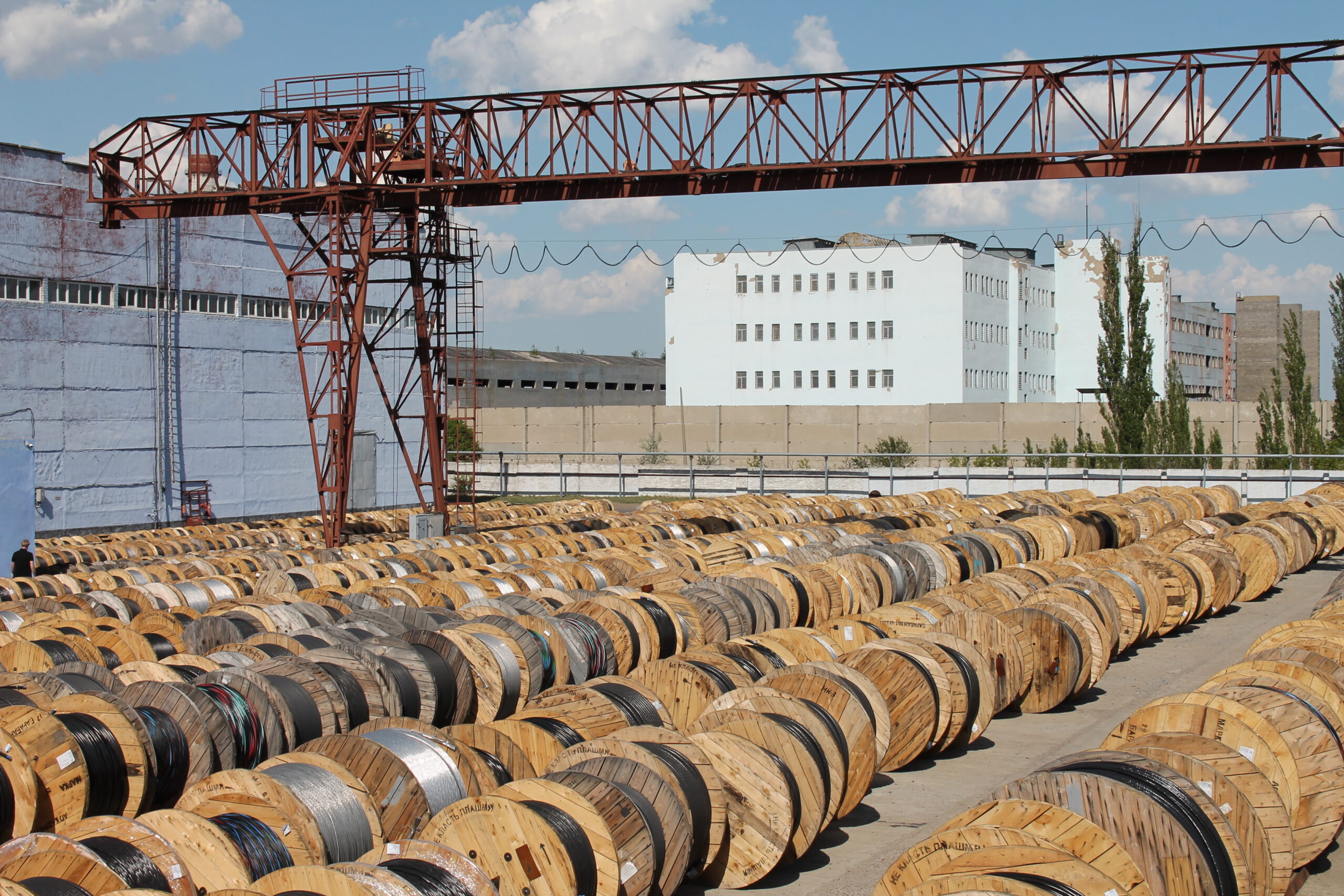
The weight per metre and the outer diameter depend on the specific manufacturer, therefore the exact figures are clarified from the catalogues. The cable is supplied in coils or on drums; for small cross‑sections a 100 m coil, for large ones — to order.
When to Choose VVGng
- Production workshops and warehouse premises where there are no requirements for smoke emission on escape routes.
- Technical floors, cable basements, tunnels with forced ventilation.
- Residential buildings, if the internal wiring is not subject to SP 256.1325800.2016 regarding the need for LS in premises with mass occupancy. Apartment wiring is often carried out with VVGng, since the areas are small.
- Facilities where the project budget is limited and the fire hazard category allows ng without LS.
- Temporary and seasonal lines in which fire risks are minimised by organisational measures.
When VVGng‑LS Is Required
- Buildings with mass occupancy: shopping centres, cinemas, sports arenas, railway stations, airports.
- Educational institutions, hospitals, polyclinics, kindergartens — wherever evacuation may be difficult.
- Office centres with open spaces, where the fire load is high and smoke extraction may not cope.
- Escape routes — corridors, staircases, foyers. The requirements of SP 256 directly indicate the necessity of LS.
- Residential complexes with high safety requirements — for example, multi‑storey buildings with developed infrastructure on the ground floors.
- Facilities commissioned according to Green Building standards, where the environmental aspect and the safety of materials are important.
Typical Mistakes in Selection
- Installing VVGng instead of LS in a school sports hall or assembly hall. The inspecting authorities will issue a prescription for replacement.
- Saving on LS in a residential building with commercial premises on the ground floor. Shops and cafés belong to areas of mass occupancy, the cable must be LS.
- Assuming that LS does not contain halogens. LS means reduced smoke emission, but halogens are present. A completely halogen‑free cable is marked HF.
- Using VVGng‑LS outdoors without protection from ultraviolet radiation. The PVC sheath degrades under the sun; additional protection or a cable with a polyethylene sheath is required.
- Confusing LS and FRLS. LS — low smoke formation, FRLS — the same plus fire resistance. For fire alarm and smoke extraction systems, FRLS is required.
- Buying a cable without a certificate of conformity to GOST 31996 and a fire certificate. On site, the inspector has the right to demand documents confirming the declared LS category.
Frequently Asked Questions
How is the marking VVGng(A)‑LS 5×10 decoded?
V — PVC insulation, V — PVC sheath, G — without armour, ng(A) — does not propagate combustion in category A, LS — low smoke and gas emission. 5×10 — five copper conductors, each with a cross‑section of 10 mm².
Are VVGng and VVGng‑LS interchangeable?
Technically yes, the electrical parameters are identical. From the point of view of the standards — no. If the design specifies LS, replacement with ng without LS is prohibited and can lead to the rejection of the facility acceptance.
Which cable is better for an apartment: VVGng or VVGng‑LS?
For an apartment in a multi‑apartment building, VVGng is usually sufficient. If the building was completed after 2015 and the developer followed SP 256, then LS has already been applied on the risers. The internal wiring can be done with VVGng, but LS is preferable from a safety point of view.
Does the weight and diameter of the LS version differ from the ordinary one?
The difference is negligible. The LS compound has a similar density, therefore the mass per metre and the outer diameter are practically the same.
What does the KhL index on a VVGng‑LS cable mean?
KhL — cold‑resistant version. It allows installation at temperatures down to –30 °С without pre‑heating. It is used in regions with a harsh climate.
How to distinguish a counterfeit LS from a genuine cable?
A genuine LS cable has a fire safety certificate with test reports for smoke formation. The marking is clear, on the sheath — the full designation and the market circulation mark. When burning, the insulation of a genuine LS emits noticeably less black smoke and does not drip with burning droplets.
Conclusion
The choice between VVGng and VVGng‑LS is a choice between standard and enhanced fire safety. The electrical parameters are identical, the difference lies in the behaviour during a fire and in the regulatory requirements for the facility. For workshops, warehouses, and technical zones, VVGng is sufficient. For hospitals, schools, shopping centres and escape routes, VVGng‑LS is mandatory. The catalogue VVGng cable and VVGng‑LS contains the entire size range, from 3×1.5 to 5×120, with passports and certificates according to GOST 31996‑2012.