What the Bending Radius Is
The minimum bending radius of a cable is the smallest radius of arc to which the cable is permitted to be bent without the risk of damaging the insulation, sheath or current-carrying conductors. When bent, the outer layers of the construction stretch, while the inner layers compress. If the radius is too small, the stresses exceed the tensile strength of the material, and microcracks appear in the insulation or sheath.
For power cables for fixed installation, the bending radius is measured in outer cable diameters. The requirements are established by the standards for specific types and by the manufacturer’s technical specifications. There is no universal value for all cables — it depends on the design, the insulation material, the presence of armour and a screen. General principles of installation and cross-section selection are described in the material power cable installation.
What the Minimum Radius Depends On
The minimum bending radius is determined by several design parameters.
Outer cable diameter. The radius is directly proportional to the diameter: the thicker the cable, the larger the permissible radius. This is because, at the same bending angle, the deformation of the outer layers increases with the diameter.
Type and material of insulation. Rigid materials require a larger radius. Cables with cross-linked polyethylene (XLPE) insulation permit a smaller radius than cables with paper impregnated insulation. The differences between rubber and PVC insulation also affect flexibility: rubber insulation is more elastic, PVC is stiffer.
Presence of armour and screen. Armoured cables bend at a larger radius than unarmoured ones. Metal armour of steel tapes or wires limits flexibility and, at too small a radius, may damage the insulation. Shielded cables also require a larger radius.
Solid and stranded conductor. Flexible stranded conductors permit a smaller bending radius than solid conductors. Cables with single-core or multi-core design have different flexibility requirements.
Number of conductors. Single-core cables require a larger radius than multi-core ones due to the greater rigidity of the construction. For multi-core cables, the radius is usually smaller.
Installation temperature. At negative temperatures, materials become stiffer. Installation without pre-heating is permitted at a temperature not lower than minus 15 °C for cables with PVC insulation. At lower temperatures, the cable requires heating or the use of the KhL and EKhL designs.
Design of the specific type. Standards establish general requirements, but the final value is specified in the technical specifications for cables of specific types. The differences between VVG and VVGng may affect flexibility due to different sheath materials.
The general design and characteristics of a power cable, including structural elements, are described in the material about power cable.
How to Determine the Radius for a Specific Cable
The general principle for calculating the minimum bending radius:
Rmin = K × D
where Rmin is the minimum bending radius, mm; D is the outer cable diameter, mm; K is a coefficient depending on the cable design.
The coefficient K cannot be taken universally. For power cables with plastic insulation for voltages up to 3 kV, typical values are: for multi-core cables — 7.5D, for single-core — 10D. For armoured cables, the coefficient is higher. The specific value is checked against the standard or technical specifications for the cable.
| Cable type | Coefficient K (to the diameter) | Example source |
| Multi-core with plastic insulation up to 3 kV | 7.5D | SP 76.13330.2016; GOST 31996-2012 |
| Single-core with plastic insulation up to 3 kV | 10D | SP 76.13330.2016; GOST 31996-2012 |
| Armoured control cables | 10D | GOST 26411-85 |
| Unarmoured control cables | 6D | GOST 26411-85 |
| Cables with aluminium sheath | 15D | GOST 16442-80 |
Sources: SP 76.13330.2016, Table 7.5; GOST 26411-85, Table 9; GOST 16442-80. For a specific type, the value is clarified according to the manufacturer’s technical specifications.
When installing in cramped conditions, bending to a minimum radius of 7.5D is permitted when using a special template. This requirement is specified in the manufacturers’ documentation for cables with plastic insulation.
Calculation Example
Example 1. Cable VVGng(A)-LS 3×2.5.
The outer diameter of the 3×2.5 cable is approximately 9 mm. The cable is multi-core, with plastic insulation. Coefficient K = 7.5.
Rmin = 7.5 × 9 = 67.5 mm.
The minimum bending radius during installation is 67.5 mm.
Example 2. Single-core cable APvP 1×240.
The outer diameter of the 1×240 cable is approximately 35 mm. The cable is single-core, with cross-linked polyethylene insulation. Coefficient K = 10 (for single-core cables with plastic insulation).
Rmin = 10 × 35 = 350 mm.
The minimum bending radius during installation is 350 mm.
If the cable has an aluminium sheath or armour, the coefficient may be higher (up to 15D and more). For a specific type, the value is clarified according to the technical specifications.
What Happens with Excessive Bending
Violation of the minimum bending radius leads to damage that may not manifest immediately.
Microcracks in the insulation. When bent, the outer layers of insulation stretch. If the deformation exceeds the tensile strength of the material, microcracks occur. Over time, under the action of the electric field and moisture, they develop into a breakdown.
Damage to armour and screen. Metal armour at too small a radius may deform and damage the insulation. A screen of copper wires may break, which disrupts protection against electromagnetic interference.
Conductor breakage. In stranded conductors, with strong bending, individual wires break. This increases the conductor resistance and creates local heating under load.
Reduced service life. Even if there is no visible damage, violation of the bending radius accelerates the ageing of the insulation and shortens the cable’s service life.
Typical Installation Mistakes
Bending the cable “by eye” without calculation. The installer determines the radius visually, without taking into account the diameter and design. As a result, the cable is bent too much, and the damage manifests after months or years of operation.
Using a coefficient for a different cable type. The coefficient 7.5D for multi-core cables is applied to single-core or armoured ones. The radius turns out to be understated, and the insulation is damaged.
Ignoring the installation temperature. At negative temperatures, materials become stiffer, and the permissible radius increases. Installation without heating at minus 20 °C for a cable with PVC insulation leads to cracking of the sheath.
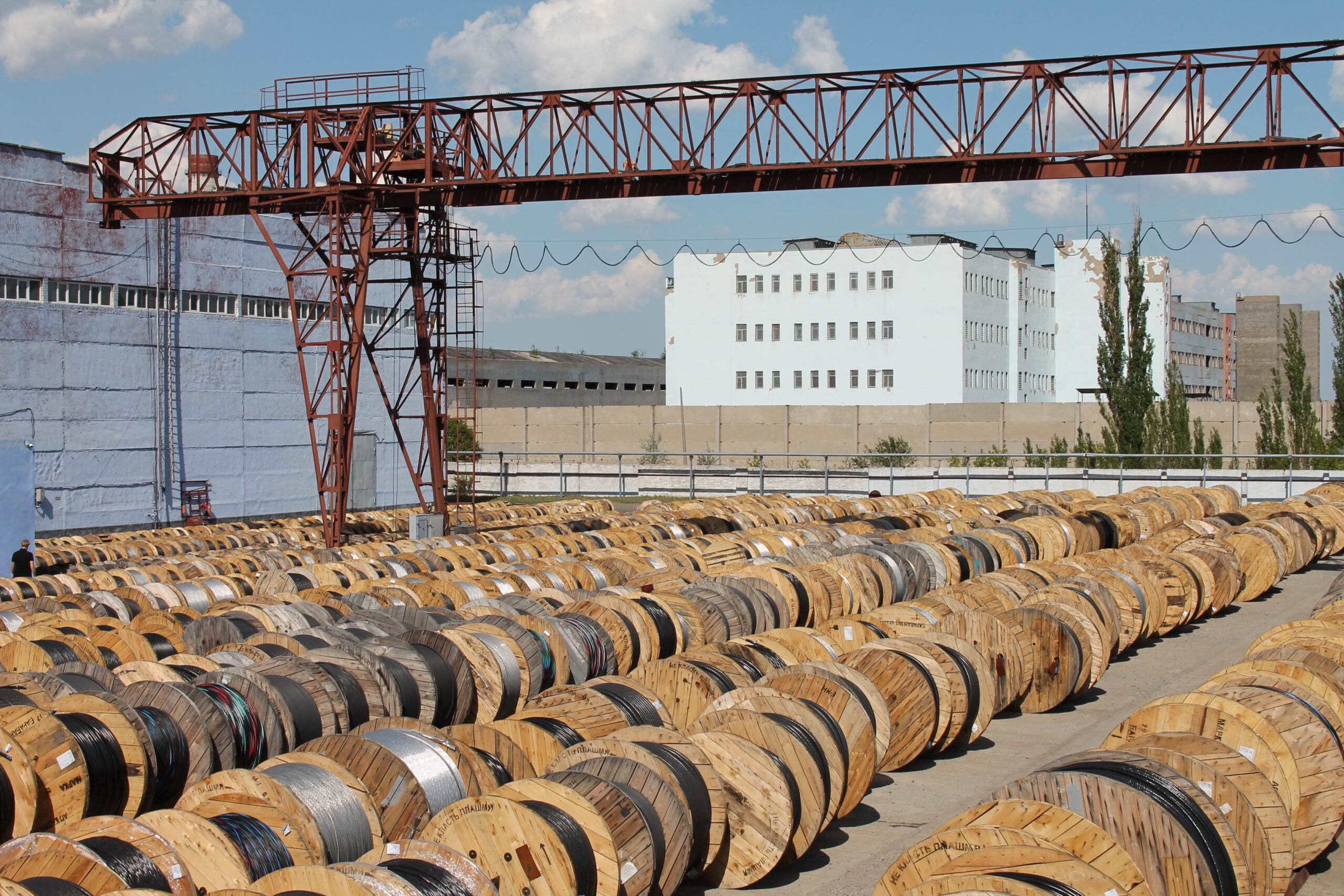
Bending on the drum or in the coil. When unwinding a cable from a drum, the inner diameter of the coil must be not less than 12 cable diameters. Violation of this requirement damages the cable even before installation begins.
Absence of fixation at route turns. If the cable is not secured at turns, it may shift and bend to a radius smaller than permissible under the action of its own weight or during pulling.
FAQ
Can a cable be bent to a radius smaller than that specified in the technical specifications?
No. The minimum bending radius is a standardised value, the violation of which leads to damage to the insulation and a reduction in service life. In cramped conditions, bending to 7.5D is permitted when using a special template, if this is specified in the manufacturer’s documentation. In other cases, the radius must comply with the technical specifications.
How does temperature affect the bending radius?
At negative temperatures, the insulation and sheath materials become stiffer, and their elasticity decreases. The permissible bending radius during installation in cold conditions increases. Installation without pre-heating is permitted at a temperature not lower than minus 15 °C for cables with PVC insulation. At lower temperatures, heating or the use of cables in the KhL design is required.
What is the difference between the bending radius during installation and during operation?
During installation, the permissible radius is usually larger than during operation, since during installation the cable is subjected to a single bend with possible tension. During operation, the cable is in a static position, and the permissible radius may be smaller. The specific values are specified in the technical specifications for the cable.
How to determine the bending radius if the technical specifications do not specify a value?
If the technical specifications for a specific type do not specify a value, the general requirements of the standards are applied. For power cables with plastic insulation for voltages up to 3 kV: for multi-core — 7.5D, for single-core — 10D. For armoured and shielded cables, the coefficient is higher. The value is clarified with the manufacturer.
What to do if the cable has already been bent to too small a radius?
It is necessary to inspect the insulation and sheath at the bend location. If cracks, kinks or a change in colour are detected, the cable is not subject to use. If there is no visible damage, it is recommended to measure the insulation resistance with a megohmmeter and check the conductor integrity. With satisfactory results, the cable is permitted for operation, but its service life may be reduced.
Sources
- SP 76.13330.2016 “Electrical devices” — in force — official text on normacs.info — permissible bending radii of cables with plastic insulation, Table 7.5.
- GOST 31996-2012 “Power cables with plastic insulation for rated voltages of 0.66; 1 and 3 kV” — in force — official text on meganorm.ru — requirements for cable design, permissible bending radii.
- GOST 26411-85 “Control cables. General technical conditions” — in force — official text on dokipedia.ru — bending radii for armoured and unarmoured control cables, Table 9.
- GOST 16442-80 “Power cables with plastic insulation” — in force — official text on cable.ru — permissible bending radii for cables with aluminium sheath.
- GOST 24334-80 “Power cables for non-stationary installation” — in force — official text on dokipedia.ru — ranges of bending radius values, selection according to the technical specifications for specific types.
- GOST 433-73 “Power cables with rubber insulation” — in force — official text on meganorm.ru — minimum bending radii for cables with rubber insulation.
- IEC 60502-1:2021 “Power cables with extruded insulation and their accessories for rated voltages from 1 kV (Um = 1.2 kV) up to 30 kV (Um = 36 kV) — Part 1: Cables for rated voltages of 1 kV (Um = 1.2 kV) and 3 kV (Um = 3.6 kV)” — in force — official IEC website, webstore.iec.ch — minimum bending radii for cables with extruded insulation, values 12D and 15D.
- Technical specifications for VVGng(A)-FRLSLTx cables (TU 3500-010-41580618-2014) — in force — manufacturer’s technical documentation — minimum bending radius 7.5D for multi-core and 10D for single-core cables.
- Electrical Installation Code of the Republic of Kazakhstan 2015, as amended by the order of the Minister of Energy of the Republic of Kazakhstan dated 31.10.2022 No. 340 — in force — IPS “Adilet”, adilet.zan.kz — general requirements for cable installation, protection from mechanical damage.