“`html
PVS Wire: Technical Characteristics, Designation, Cross‑Section Selection and Installation
The PVS wire is one of the most common power conductors in domestic and industrial applications. It is valued for its flexibility, round shape and resistance to repeated bending. In this article we will examine what the designation means, what materials the insulation is made of, which cross‑sections and core combinations are available, how to properly join the wire, what load it can handle and where to find certified products. The full range of household conductors is presented on the PVS wire page. For a detailed review of characteristics and selection rules, read the guide: detailed guide to household wire.
1. Decoding the PVS Designation
The letter code PVS gives complete information about the construction. The letter “П” means “wire” (провод), “В” stands for polyvinylchloride plastic compound insulation, “С” is for “connecting” (соединительный). So we are looking at a connecting wire with PVC insulation. The classic version is copper, multi‑stranded, flexible, with a round cross‑section. Sometimes the marking includes the suffix “нг” – non‑flame propagating, giving PVS‑нг for installation in places with increased fire‑safety requirements. There is also the PVS‑T marking with heat‑resistant insulation up to +105 °C. All these details are regulated by GOST 7399‑97 and the manufacturers’ technical specifications. Understanding the designation helps to immediately assess whether the conductor is suitable for a particular task.
2. Construction and Materials
The core consists of a copper multi‑stranded conductor twisted from fine wires of flexibility class 5 according to GOST 22483. It is this stranding that provides a soft bend and makes it able to withstand numerous deformation cycles. The number of wires in a core depends on the cross‑section: the larger it is, the more wires there are. For example, a core with a cross‑section of 1.5 mm² contains at least 30 wires, while 2.5 mm² contains at least 50. The copper may be tinned or bare, depending on the version; tinned copper improves corrosion resistance and facilitates soldering.
Each core is insulated with PVC compound in specific colours: yellow‑green for earthing, blue or light blue for the neutral, brown, black, white and others for the phase conductors. The colour palette is unified for ease of installation and maintenance. The outer sheath is made of the same PVC, fills the interstices between the cores and forms a sturdy circular profile. This construction provides high mechanical strength, abrasion resistance, and protection against moisture and dust. The sheath does not propagate flame when installed singly; versions with the “нг” index withstand group installation without flame propagation. The insulation and sheath material is resistant to most household chemicals, oil and petrol within reasonable contact.
3. Main Technical Characteristics
The PVS wire is rated for a nominal voltage of up to 380 V AC for three‑phase networks and up to 220 V for single‑phase. The test voltage applied to the coil during factory acceptance tests is 2000 V. The operating temperature range is from –25 °C to +40 °C for the standard version; for ng‑versions the upper limit rises to +70 °C. Installation at temperatures below –15 °C without pre‑heating is not permitted, as the sheath becomes brittle. The minimum bending radius is not less than 10 outer diameters, ensuring the integrity of the current‑carrying cores even inside the cramped housings of household appliances. The wire is resistant to repeated bending; the life cycle for bends with a radius equal to five diameters exceeds 30 000. The service life under correct operation is not less than 10 years; for fixed connection without movement – up to 20‑25 years. The standard delivery length of a coil is usually 100 metres or multiples thereof.
4. Range of Cross‑Sections and Core Combinations
The wire is manufactured with two to five cores and a wide range of cross‑sections. All dimensions comply with GOST 7399‑97. The table below provides an expanded list of typical versions: outer diameter, continuous permissible current for open‑air laying, electrical resistance of the core per 1 km and approximate power at 220 V. Cross‑sections of 0.5 mm² are rare, as the minimum standard for PVS is 0.75 mm². However, some manufacturers produce wire with 0.5 mm² cores under agreed technical conditions.
| Type | Number and cross‑section of cores, mm² | Outer diameter, mm | Current, A | Core resistance, Ohm/km | Power at 220 V, kW |
| PVS 2×0.75 | 2×0.75 | 6.2 | 6 | 24.5 | 1.3 |
| PVS 2×1.0 | 2×1.0 | 6.5 | 10 | 18.1 | 2.2 |
| PVS 2×1.5 | 2×1.5 | 7.0 | 14 | 12.1 | 3.0 |
| PVS 2×2.5 | 2×2.5 | 8.0 | 20 | 7.41 | 4.4 |
| PVS 2×4 | 2×4.0 | 9.5 | 25 | 4.61 | 5.5 |
| PVS 2×6 | 2×6.0 | 10.8 | 32 | 3.08 | 7.0 |
| PVS 3×0.75 | 3×0.75 | 6.6 | 6 | 24.5 | 1.3 |
| PVS 3×1.0 | 3×1.0 | 7.0 | 10 | 18.1 | 2.2 |
| PVS 3×1.5 | 3×1.5 | 7.8 | 14 | 12.1 | 3.0 |
| PVS 3×2.5 | 3×2.5 | 9.0 | 20 | 7.41 | 4.4 |
| PVS 3×4 | 3×4.0 | 10.5 | 25 | 4.61 | 5.5 |
| PVS 3×6 | 3×6.0 | 12.0 | 32 | 3.08 | 7.0 |
| PVS 4×1.0 | 4×1.0 | 7.5 | 10 | 18.1 | 2.2 |
| PVS 4×1.5 | 4×1.5 | 8.5 | 14 | 12.1 | 3.0 |
| PVS 4×2.5 | 4×2.5 | 10.2 | 20 | 7.41 | 4.4 |
| PVS 4×4 | 4×4.0 | 11.8 | 25 | 4.61 | 5.5 |
| PVS 4×6 | 4×6.0 | 13.5 | 32 | 3.08 | 7.0 |
| PVS 5×1.0 | 5×1.0 | 8.2 | 10 | 18.1 | 2.2 |
| PVS 5×1.5 | 5×1.5 | 9.2 | 14 | 12.1 | 3.0 |
| PVS 5×2.5 | 5×2.5 | 11.2 | 20 | 7.41 | 4.4 |
| PVS 5×4 | 5×4.0 | 13.0 | 25 | 4.61 | 5.5 |
| PVS 5×6 | 5×6.0 | 15.0 | 32 | 3.08 | 7.0 |
| PVS 5×10 | 5×10.0 | 19.5 | 50 | 1.83 | 11.0 |
| PVS 5×16 | 5×16.0 | 23.8 | 70 | 1.15 | 15.4 |
The most popular cross‑sections for household extension cords and portable leads remain 0.75, 1.0, 1.5 and 2.5 mm². Five‑core versions with cross‑sections from 10 mm² are used for connecting mobile three‑phase loads. The price is calculated per metre and depends on the number of cores and the cross‑section. For the current cost of a specific length, check the PVS wire page.
5. Application of PVS Wire
The PVS connecting power wire is designed for connecting electrical appliances to the mains. Its primary use is for making portable extension cords, connecting electric cookers, washing machines, refrigerators, power tools, low‑power welding equipment, and temporary lighting systems. Electrical installation with PVS is carried out indoors, in cable ducts and openly along walls. It does not tolerate direct burial in the ground; for outdoor use mandatory protection from direct sunlight and moisture is required, using conduit or special casing. Installation is straightforward: the wire bends easily, is stripped, and the ends are crimped with NSHVI ferrules.
PVS is often used as the basis for making multi‑socket blocks and surge protectors because its multi‑stranded structure withstands frequent bending without breaking the current‑carrying conductor. For powerful three‑phase mobile machines and generators, five‑core versions with cross‑sections up to 16 mm² and 25 mm² are employed, providing power to motors and reliable earthing. In industry, PVS is used as flexible jumpers inside distribution devices, for connecting welding machines, and as temporary lines on construction sites provided they are protected from mechanical damage.
6. How to Choose the Cross‑Section and Calculate the Power
The main criterion is the load. For low‑power luminaires and chargers, 0.5–0.75 mm² is sufficient. Socket circuits rated at 16 A require cross‑sections of 1.5 or 2.5 mm². Electric cookers and water heaters are fed with 4–6 mm² wire. For distribution boards and powerful electric motors, 10, 16, 25 and even 50 mm² are used. When selecting, the total power of the connected appliances is taken into account. For example, a washing machine with a power of 2.2 kW draws about 10 A, which is within the limit of PVS 3×1.5. For a 7 kW hob, the minimum cross‑section is 4 mm² copper. A general rule: the continuous current through the conductor must not exceed the tabulated value, taking into account the cooling conditions.
When selecting, voltage drop along the line is also considered. For extension cords up to 50 m long, increasing the cross‑section by one step compensates for the losses. Thus, if a fixed 16 A socket uses 2.5 mm², for an extension cord of the same length it is reasonable to use 4 mm² so that a stable voltage is maintained at the end. When laying PVS openly (without overheating), the continuous current rating for a cross‑section of 2.5 mm² is 20 A; however, when wound on an extension‑lead reel heat dissipation worsens, and the current should be reduced by at least 10–20 %.
7. Connection and Splicing
Secure connection of PVS wire is achieved with terminal blocks, WAGO spring clamps or crimping with ferrules. Twisting without fixation is unreliable and prohibited by the Electrical Installation Code (PUE). For stranded wire, NSHVI insulated ferrules must be used. When making an extension cord, a plug is fitted at one end and an earthed socket at the other. Such an assembly is often called a “wire with a plug”. The core ends are crimped and inserted into the terminals, carefully tightening the screws. Soldering of flexible cores is permissible but requires caution: the solder must not rise along the wire above the contact point, otherwise the transition becomes rigid and brittle. Crimping with a GML sleeve or NSHVI ferrule is the preferred method, preserving flexibility and ensuring low contact resistance.
When it is necessary to join two lengths of PVS, connecting terminals in junction boxes or through‑terminal blocks are used. Extension by twisting is not allowed. Every joint must remain accessible for inspection. Two‑core wire is connected so that the phase and neutral cores do not cross, preserving the colour coding. Before commissioning, the assembled line must be checked with an indicator and tester for circuit continuity and absence of short circuits.
8. Insulation Colours and Standards
The colour code for wires is governed by international standard IEC 60445 and the Russian PUE: yellow‑green – earthing, blue – neutral working conductor, brown or black – phase. In two‑core wire, blue and brown are typically used; in three‑core, yellow‑green is added. Deviations from the standard palette are undesirable as they complicate maintenance and increase the risk of wiring errors. Some manufacturers produce batches with an entirely black outer sheath and coloured cores inside. The colour of the outer insulation may be white, grey, black or, less commonly, transparent for designer solutions. When choosing the sheath colour, the operating conditions and the aesthetics of the room are considered, but the technical properties do not depend on colour.
9. Length, Coil and Storage Rules
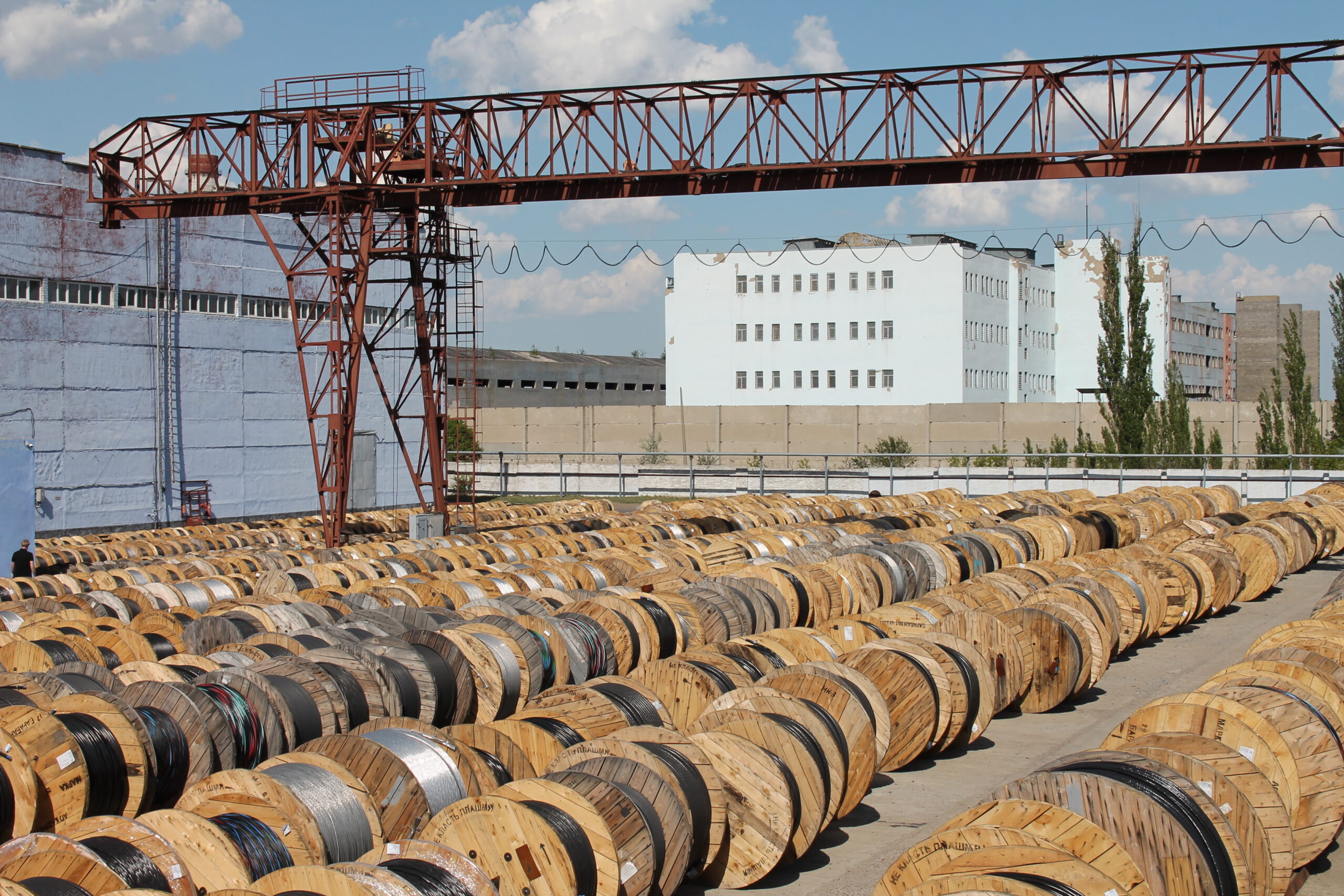
The factory supply of PVS wire comes in coils of standard length 100 metres or in cut lengths. For large‑volume purchases, specific lengths can be manufactured. When unwinding a coil, it is recommended to use a cable roller or a turntable so as not to twist the wire and disturb the lay of the cores. Storage should be in a dry area, avoiding exposure to direct sunlight and aggressive media. Each coil is labelled with the type, cross‑section, length, date of manufacture and factory number, which facilitates accounting and identification. The shelf life of the wire in the manufacturer’s packaging is usually several years without deterioration of properties.
10. Certification and OKPD2
Every batch of PVS wire is accompanied by a certificate of conformity to GOST 7399‑97 or the technical specifications. In the OKPD2 product classifier, wire occupies code 27.32.13 – “power wires for electrical installations for voltages up to 450 V”. When purchasing, one should verify the availability of a certificate and factory test reports, as well as the integrity of the packaging. The marking on the coil must contain the EAC conformity mark, the manufacturer’s trademark, the wire type, the date of manufacture and the stamp of the quality control department. Only certified products guarantee compliance with the declared characteristics and fire safety.
11. Comparison with Other Types
The closest analogue of PVS is the PUGNP wire. The main difference lies in the sheath: PVS has an overall sheath, while in PUGNP each core is separately insulated and there is no outer covering. Therefore, PUGNP is flatter but less protected against abrasion. PVS is preferable for extension cords and domestic connections. The difference from ShVVP wire lies in shape and flexibility: ShVVP is flat, intended for low currents and light conditions, whereas PVS is round and more powerful, with better heat dissipation. For fixed wiring in apartments, VVG cable is used; it does not possess such flexibility but has a solid or rigid stranded core and a stronger insulation for concealed installation under plaster. Replacing VVG with PVS in chased‑out walls or above suspended ceilings without additional mechanical protection is not permitted, since PVS is not intended for fixed installation in building structures.
12. Installation Rules and Safety Measures
The PVS wire is intended primarily for non‑stationary connection of a consumer to a socket by means of plugs and sockets. If fixed routing indoors is required, it is laid in cable ducts, flexible conduit or on insulators with fixings every 0.5 metres. Open laying without protection is allowed at a height of at least 2.0 m from the floor and away from areas of mechanical damage. When passing through walls, sleeves of non‑combustible material are installed. The installation temperature must not be lower than –15 °C; at lower temperatures the coil is pre‑conditioned in a warm place and laying is carried out with extreme care, avoiding impacts and sharp bends. After completing the installation work, the insulation resistance must be checked with a 500 V megohmmeter – the minimum permissible value is 0.5 MΩ.
13. Conclusion
The PVS wire is a reliable soft electrical conductor for domestic and industrial use. Knowledge of its designation, operating characteristics, permissible loads and installation rules allows it to be operated safely for decades. The full range of PVS wire and other cable products is presented on the website: cable products.
“`