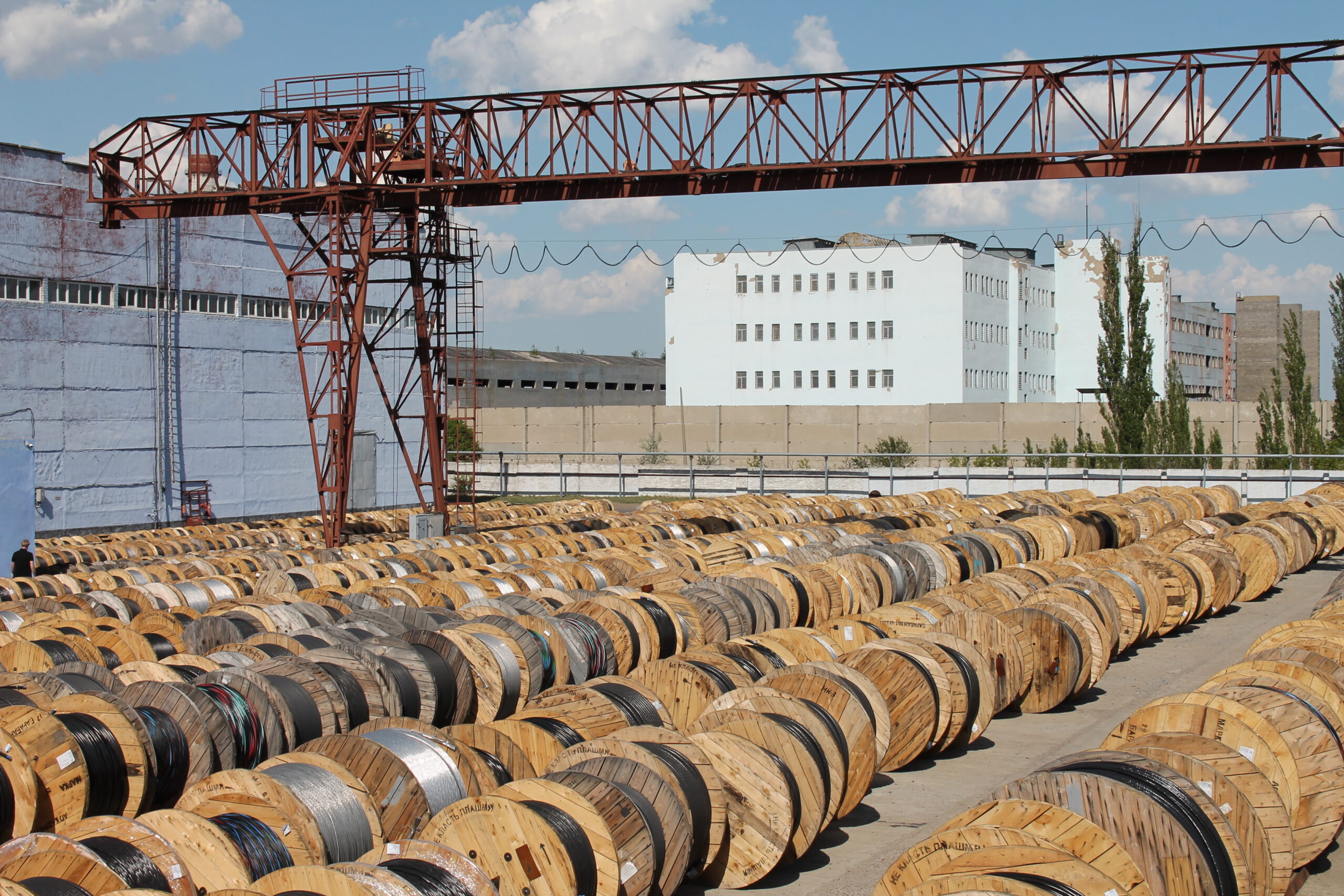
VP Wires: Explosion-Proof Communication and Control Lines
Products under the VP brand occupy a special place in industrial automation and signaling systems operating in hazardous environments. In this article, we will examine in detail what a VP wire is, its construction, technical parameters, and main applications. The material will be useful for design engineers, installers, and technical specialists responsible for safety at explosive facilities.
1. Name decoding and purpose
Decoding of the abbreviation VP — Explosion‑Proof Wire. In technical circles, this product is often called explosion wire, which emphasizes its direct purpose: operation in control, signaling and communication circuits inside areas where explosive mixtures of gases, vapors or dust may form. VP wire is not intended for transmitting high power — its task is to ensure reliable transmission of low‑voltage signals (up to 220 V AC at 50 Hz or up to 110 V DC) without the risk of sparking or insulation breakdown.
The wire construction prevents flame propagation during single laying, and a special shield made of copper braid protects signals from electromagnetic interference, which is critical for the accurate operation of sensors and actuators. The most widely used modifications are those with two cores of 0.7 mm² (2×0.7) and 0.8 mm² (2×0.8), since these sizes optimally combine flexibility, electrical conductivity and ease of installation in confined spaces.
2. Construction features and materials
Each VP wire consists of the following mandatory elements:
- Current‑carrying cores — stranded copper, flexibility class 3 or 4 according to GOST 22483. Cross‑section 0.7 or 0.8 mm². The use of a stranded rather than solid core increases service life under vibration and bending.
- Core insulation — polyvinyl chloride compound (PVC) of reduced flammability. Colour coding: blue and brown (or black for “ground” in some versions). The insulation thickness is designed for a test voltage of 1500 V for 5 minutes.
- Twisting — two insulated cores are twisted together with a pitch that prevents mutual crossing. This reduces outer diameters and gives the wire mechanical integrity.
- Shield — copper braid with a density of at least 80%. The shielding coefficient provides attenuation of external interference up to 60 dB in the frequency range up to 1 MHz.
- Separation layer — polyethylene terephthalate film (PET) that prevents the braid from sticking to the sheath and facilitates stripping.
- Outer sheath — grey or black PVC compound, resistant to ultraviolet radiation, oil and weak acids. The sheath does not propagate flame and retains elasticity at temperatures down to –40°C.
For the with acceptance version (military acceptance or reinforced quality control), the tolerances for insulation and sheath thickness are reduced, and electrical tests are performed on every construction length rather than on a sample basis.
3. Detailed technical characteristics
The main parameters of VP wires are given in the table. The data are valid for the 2×0.7 and 2×0.8 versions at an ambient temperature of 20°C.
Insulation resistance values remain at least 20 MΩ·km even after 15 days of immersion in water at 20°C. VP wire remains operational at relative humidity up to 98% at a temperature of 35°C.
4. Version with acceptance: requirements and advantages
For particularly critical facilities (defense enterprises, nuclear power plants, chemical plants with the highest hazard class), VP wires with acceptance are produced. This version is marked with an additional letter “P” or a special quality control stamp. Differences from the standard version:
- 100% incoming inspection of copper conductors (oxygen content, mechanical properties).
- Measurement of insulation eccentricity — tolerance not more than 15% instead of the standard 25%.
- Testing of each wire length at 2000 V (instead of 1500 V) for 10 minutes.
- Control of braid density — at least 85% instead of 80%.
- Accompanying documentation with a mark from the military representative or an accredited laboratory.
- Extended warranty period (up to 5 years instead of the standard 2 years).
Ordering a wire with acceptance requires the submission of additional permits (licenses for working with military products for the end customer). The coils and reels themselves are sealed with special seals.
5. Marking and designation system
The full designation of a VP wire follows this logic: VP — [number of cores] × [cross‑section] [version letter]. Decoding of additional indices:
- P — with acceptance (military or factory quality control acceptance).
- HL — cold‑resistant version (range down to –60°C, insulation made of special PVC).
- M — oil‑ and petrol‑resistant sheath (resistance to petroleum products for up to 72 hours).
- ng(A)-HF — does not propagate flame during group laying according to category A, halogen‑free version (sheath made of a polymer compound that does not emit corrosive gases).
Example: VP-2×0.8 P HL — explosion‑proof wire, two cores of 0.8 mm² cross‑section, with acceptance, cold‑resistant.
6. Examples of decoding popular types
To avoid confusion when ordering, here are clear examples of decoding full designations found in technical documentation:
- VP 2×0.7 — basic version, cores of 0.7 mm², no additional requirements. Used for general industrial explosion‑proof signaling.
- VP 2×0.8 with acceptance — enhanced quality control, recommended for facilities under the supervision of Rostechnadzor and departmental security.
- VP-2×0.7-P — the letter “P” after the cross‑section indicates acceptance by the factory quality control department. All certificates contain a batch number marked “VP”.
- VP-2×0.8 HL — northern version, remains elastic at frosts down to –60°C, installation allowed without preheating down to –30°C.
- VP-2×0.7 ng(A)-HF — halogen‑free version, intended for rooms with large crowds of people (subway, tunnels, railway stations).
When ordering a VP wire with acceptance, be sure to clarify whether the certificate must include a military acceptance number (e.g., “MO” or “Ministry of Defense”).
7. Applications
Thanks to its explosion‑proof properties and resistance to external influences, VP products are in demand in the following industries and infrastructure:
- Oil & gas sector — connecting pressure, temperature, gas analyzer sensors at gas stations, oil depots, gas distribution points, cluster pumping stations. Used in zones of class B‑1 (gases) and B‑1a.
- Chemical industry — signaling and automation lines in workshops producing solvents, varnishes, paints, ammonia, methanol.
- Mining industry — warning and emergency communication systems in mines and mines (except for the working faces themselves, where mining cables are required).
- Defense industrial complex — use of wires with acceptance in missile launch systems, weapon control systems, arsenals and ammunition depots.
- Transport infrastructure — subway tunnels, railway tunnels, underground pedestrian crossings where explosive gases (methane, propane) may accumulate.
- Nuclear power plants — in leak monitoring and signaling systems (safety class 4 according to NP-001).
VP wire is suitable for stationary installation indoors, in cable ducts, trays, boxes, as well as outdoors with protection from direct sunlight. Installation in steel pipes and flexible metal conduits is permitted.
8. Installation and laying requirements
Proper installation of VP wire directly affects the preservation of its explosion‑proof properties. Main rules:
- Installation temperature — not below –15°C for the standard version. At lower temperatures, the wire must be kept at room temperature for at least 24 hours.
- Bending radius — not less than 5 outer diameters. For a 2×0.8 wire (diameter about 6 mm), the minimum bending radius is 30 mm.
- Pulling tension — not more than 80 N for 2×0.7 and 90 N for 2×0.8. Exceeding this leads to stretching of the copper conductors and a decrease in shield density.
- Terminal connection — it is recommended to use NSHVI type ferrules (insulated pin terminals) or to tin the conductor ends with POS‑61 solder. Soldering with acid fluxes is not allowed.
- Shield grounding — the braid must be grounded on one side (on the signal source side) to prevent the formation of ground loops.
- Joint laying — VP wire must not be laid in the same bundle with power cables of voltage above 1000 V without separating partitions.
After laying, it is recommended to perform insulation meggering (test voltage 500 V) and check the integrity of the shield. For the with acceptance version, the protocols of these measurements are attached to the handover documentation.
9. Comparison of standard version and version with acceptance
For a clear understanding of the differences, here is a comparative table of the two main versions of VP wire.
The choice between the two versions is determined by the requirements of the project documentation. For most industrial facilities, the standard version is sufficient. With acceptance is ordered only when directly specified in the specification or for facilities controlled by departmental supervisory authorities.
10. Climatic and special versions
In addition to the basic version, modifications for special conditions are produced. The most popular are:
- VP-2×0.7 HL — for the Far North regions. Insulation and sheath made of cold‑resistant PVC, retain impact strength at –60°C. Installation allowed down to –30°C without preheating.
- VP-2×0.8 M — oil‑ and petrol‑resistant. Sheath made of special compound, withstands 72 hours immersion in diesel fuel, AI‑95 petrol, transformer oil without swelling.
- VP-2×0.7 ng(A)-HF — does not propagate flame during group laying (category A according to GOST R 53315), does not emit halogens (HCl, HF). Used at facilities with high fire safety requirements (nuclear power plants, submarines, subways).
- VP-2×0.8 UV — enhanced protection against ultraviolet radiation. The sheath contains light stabilizers, service life outdoors increases to 10 years without cracking.
Combined versions, for example VP-2×0.7 P HL ng(A)-HF, are possible on special order, but production times increase to 8–10 weeks.
11. Certification and regulatory framework
VP products are manufactured according to TU 16-705.492-2006 (as amended in 2014) and comply with the following regulatory documents:
- GOST R IEC 60079-0-2011 — “Explosion‑protected electrical equipment. Part 0. General requirements”.
- GOST R IEC 60079-14-2011 — “Design, selection and installation of electrical equipment in hazardous areas”.
- GOST R 53315-2009 — “Cable products. Fire safety requirements” (non‑flame propagating group).
- TR CU 012/2011 — “On the safety of equipment for use in explosive atmospheres”.
- TR CU 004/2011 — “On the safety of low‑voltage equipment”.
Each batch of VP wire is accompanied by a certificate of conformity, a quality certificate and, for the with acceptance version, an acceptance certificate from the military representative. Certificates are valid for 5 years with periodic inspection control.
12. Transport, storage and service life
Proper handling of the wire before installation extends its service life. Recommendations:
- Transport — in covered vehicles at temperatures from –40°C to +50°C. Dropping reels from a height of more than 1 m is not allowed.
- Storage — on racks in factory packaging, in dry rooms without direct sunlight. Storage period before installation is not more than 2 years.
- Service life — declared by the manufacturer as at least 15 years provided that installation and operation rules are observed. Actual service life, according to operational data, reaches 25 years for wires laid indoors.
- Rejection criteria — cracking of the sheath, exposure of the shield, decrease in insulation resistance below 1 MΩ·km, breakage of more than 10% of the wires in the conductor.
For the with acceptance version, the disposal procedure is also regulated: the wire must be marked as “special products” and returned to the manufacturer after its service life.
13. Conclusion
VP wire is a specialized, technically proven solution for organizing reliable communication, signaling and control circuits in explosive atmospheres. Its compact dimensions, presence of a shield, flexibility and wide range of climatic versions make it indispensable for installation in confined spaces of oil & gas, chemical and defense facilities. Thanks to the 2×0.7 and 2×0.8 modifications, you can accurately select the cross‑section for the required load and line length. The with acceptance version guarantees increased reliability for particularly critical facilities where wiring failure is unacceptable. You can buy VP wire and other types of cable and wire products in the general cable catalog. When ordering, specify the required cross‑section, availability of acceptance, and climatic version — this will avoid mistakes and obtain a product that fully complies with the project.