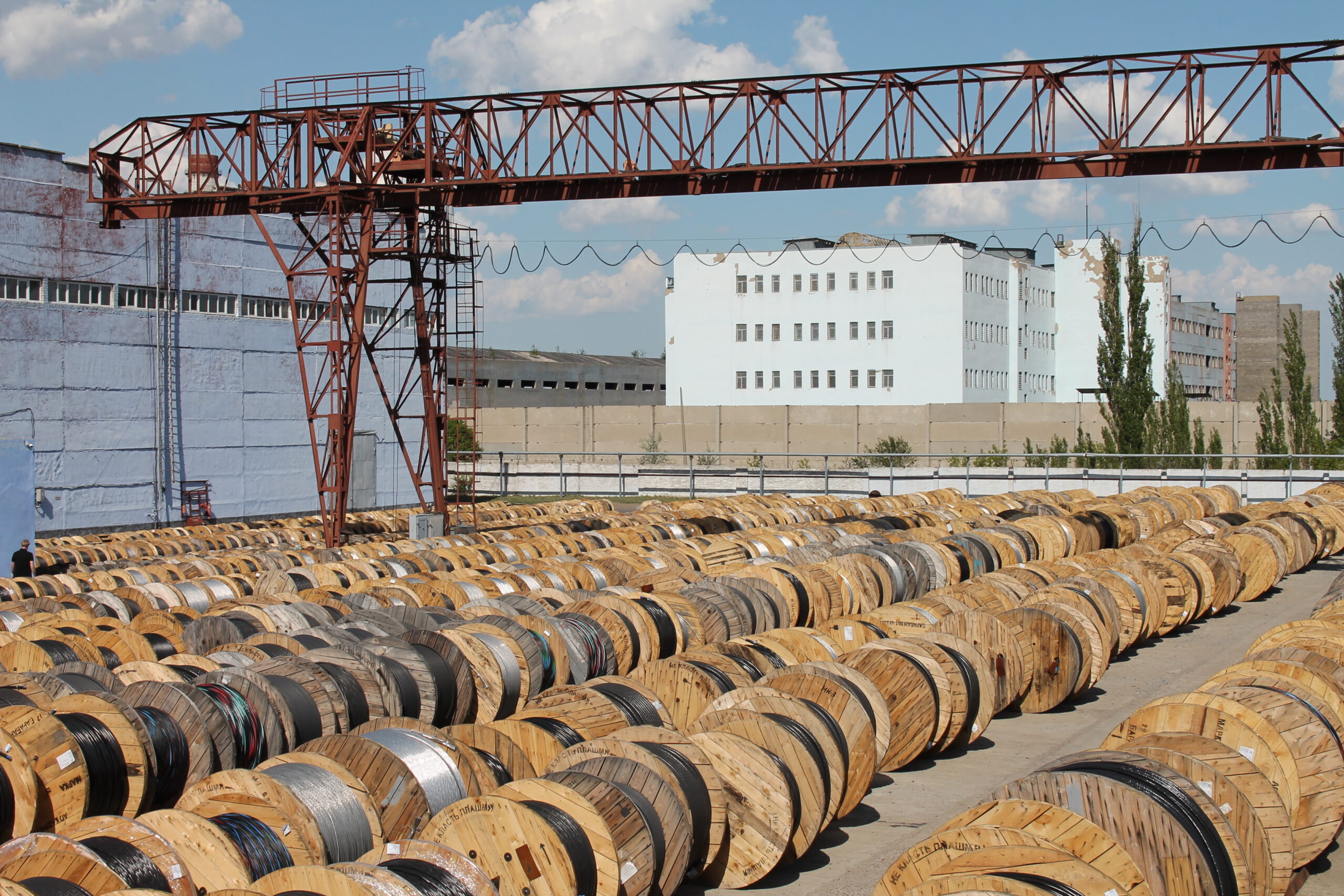
Submersible Wires: Complete Guide to Selection and Application
Submersible wires are specialized cable products designed for reliable and safe operation under conditions of constant or prolonged immersion in water under pressure. Their key purpose is to supply power to submersible pumps, drainage and sewage pumps, borehole equipment, and other electrical equipment operating in an aquatic environment. Unlike ordinary cables, a submersible wire must withstand a complex of aggressive influences: water pressure, water ingress, corrosion, as well as constant mechanical loads.
1. Key Requirements and Operating Conditions
Operation in an aquatic environment imposes a number of extreme requirements on wires, which determine their design.
- Hermeticity and Waterproofing: Complete protection of the current-carrying conductor and insulation from water ingress under pressure. This is the primary requirement, preventing short circuits and insulation breakdown.
- Resistance to Hydrostatic Pressure: The cable must maintain its properties at great depths where water pressure can reach several atmospheres.
- Resistance to Aggressive Environments: Water may contain salts, acids, alkalis, and organic substances that must not degrade the sheath and insulation materials.
- Mechanical Strength: Resistance to tension, abrasion against the well walls or casing pipe, compression, and impacts during installation and operation.
- Flexibility and Resistance to Bending: Ability to be installed in confined spaces and along curved paths without loss of hermeticity.
- Long Service Life: Replacing a cable in a well or borehole is a complex and expensive procedure, so the product’s lifespan should be measured in years and decades.
2. Construction of Submersible Wires
The construction of a submersible wire is multi-layered, with each layer performing a strictly defined function. Let’s examine it using the example of the most common brand — VPP.
| Construction Element | Material and Purpose | Features and Requirements |
| Current-Carrying Conductor | Copper, multi-wire (flexible) or solid (rigid). | Ensures power transmission. Multi-wire conductor (flexibility class 5) is preferable for complex installation. Should be tinned to protect against oxidation in case of possible moisture ingress. |
| Conductor Insulation | Polyethylene (PE) or cross-linked polyethylene (XLPE). Less commonly — PVC of special compounds. | Provides the main electrical insulation. Polyethylene has excellent dielectric properties, resistance to water and pressure. Cross-linked polyethylene (XLPE) has increased heat resistance. |
| Belt Insulation (optional) | Tapes made of polymer materials, an additional extruded layer. | Serves to give the cable a round shape, provide additional mechanical protection for the cores, and increase the overall level of hermeticity. |
| Water-Resistant Barrier | Aluminum-polymer tape reinforced with fiberglass, with a longitudinal overlap and seam sealing. | Critically important element. Creates a continuous barrier preventing longitudinal water propagation along the cable. Often combined with a drain wire to remove possible moisture. |
| Armor (optional, for KVV grade) | Braid made of galvanized steel wires. | Protects the cable from mechanical damage (rodents, stones, friction against pipes), as well as from tensile loads. |
| Outer Sheath | High-density polyethylene (HDPE), special polymers (polyurethane). | Protects all inner layers from abrasive wear, impacts, ultraviolet radiation (if the cable section is on the surface), and chemical exposure. HDPE has high strength and resistance. |
3. Main Grades and Their Decoding
The most common grades are VPP and its modifications.
| Wire Grade | Marking Decoding | Construction and Key Features | Application Area |
| VPP | Vodopogruzhnoi (Submersible) Provod (Wire) in Polietilenovoi (Polyethylene) insulation and sheath. | Copper conductor, polyethylene insulation, sealing polyethylene sheath. May have a waterproofing screen. Classic design for clean and slightly aggressive waters. | Powering submersible pumps in drinking water wells, boreholes, clean reservoirs. Immersion depth — up to 100 m or more depending on design. |
| KVV | Kabel (Cable) Vodopogruzhnoi (Submersible) with Vinilovoi (Vinyl) insulation (outdated designation, VPP is more commonly used). | Similar to VPP, but insulation and sheath may be made of special moisture-resistant PVC. May have armor made of galvanized steel wires. | Used in conditions where mechanical damage is possible. Armored version — for rocky soils or areas with an increased risk of damage. |
| VPP-KhL (or VPP with XLPE insulation) | Submersible wire with insulation made of cross-linked polyethylene. | Insulation made of cross-linked polyethylene (XLPE). Has increased heat resistance (up to +90°C), resistance to cracking, and increased mechanical strength. | For deep wells where the cable may be heated by the pump motor or the environment, as well as for use in hot springs or industrial fluids. |
| PMZh | Provod (Wire) for Morskaya Zhidkost (Marine Liquid) (or general purpose in water). | Has enhanced corrosion resistance, often with double insulation and a sheath made of special polymers (polyurethane). | For operation in seawater, highly mineralized or chemically aggressive liquids, in oil wells. |
4. Technical Characteristics (using VPP as an example)
- Rated Voltage: 380/660 V, 450/750 V. Allows connection of both single-phase (220V) and three-phase (380V) pumps.
- Number and Cross-section of Cores: Usually 1, 3, or 4 cores. Cross-section: from 1.0 mm² to 50 mm² and more, depending on the pump power.
- Operating Temperature Range: From -40°C to +50°C (for standard PE). For XLPE versions, the upper limit can reach +90°C.
- Minimum Bending Radius: Typically, not less than 5-10 times the outer diameter of the cable to maintain hermeticity.
- Pressure Resistance: The specific value is specified by the manufacturer. High-quality cables are designed for depths of 100-200 meters or more.
- Test Voltage: 2000-2500 V AC for 5 minutes.
VPP wire is a balanced solution for most domestic and industrial wells.
5. Criteria for Selecting Submersible Wire
Choosing the right cable is a responsible task on which the uninterrupted operation of the water supply system depends.
| Selection Criterion | What to Consider | Recommendations and Examples |
| Pump Power and Type | Number of phases (1 or 3 phases), current consumption (A), starting currents. | The conductor cross-section is selected based on current with a 20-30% margin. For a three-phase pump, a 4-core cable (3 phases + ground) is needed. |
| Immersion Depth | Hydrostatic pressure at maximum depth. | Check with the cable manufacturer for the depth it is designed for. For wells deeper than 70-100 meters, cables with a reinforced construction and reliable sealing are required. |
| Water Quality (Environment) | Presence of salts, acids, alkalis, petroleum products, solid suspensions. | For aggressive environments (seawater, industrial effluents), choose cables with a special sheath (polyurethane) and marking confirming resistance (PMZh). For clean water, standard VPP is suitable. |
| Presence of Mechanical Risks | Rocky soil, friction against the casing pipe, risk of damage by rodents. | For high risk, choose cables with armor (KVVbshv) or with a reinforced wear-resistant sheath (HDPE). |
| Water Temperature | Maximum liquid temperature and heating from the pump motor. | For hot springs or when the cable is located near the motor, choose versions with cross-linked polyethylene insulation (VPP-KhL). |
| Route Length | Distance from the pump to the connection point (control panel). | For long routes (more than 50-100 m), consider voltage drop. A larger cross-section than calculated may be required. |
6. Features of Installation and Connection
- Handling the Coil: Unwind the cable from the coil carefully, avoiding twisting and sharp bends that could damage the inner layers.
- Attachment to Pipe or Rope: The cable must be securely, but not overtightened, attached to the discharge pipe of the submersible pump using plastic ties every 1-2 meters. Do not use metal ties without insulation.
- Protection on the Surface: The section of cable from the wellhead to the entry point into the house must be protected from UV radiation and mechanical damage (laid in a pipe or underground).
- Sealing the Connection to the Pump: The connection point of the cable cores to the pump terminals must be properly sealed using heat-shrink tubing with an adhesive layer or a special coupling supplied with the pump. This is the weakest point of the system!
- Use of Cable Gland: A special sealed gland is used to insert the cable into the pump terminal box, ensuring protection against water ingress.
- Prohibited: Splicing the cable underwater or in the well shaft. The cable length should equal the immersion depth plus a margin to the control panel.
7. Conclusion
Choosing the right submersible wire is an investment in the long and uninterrupted operation of an autonomous water supply or drainage system. Saving on the cable can lead to its rapid failure and costly work to lift the pump and replace the route. For standard clean well conditions, the proven VPP wire is the optimal choice, and for difficult conditions, its specialized modifications with enhanced protection.
By purchasing high-quality submersible wires from reliable manufacturers, you ensure the safety and reliability of power supply for critical equipment for many years.