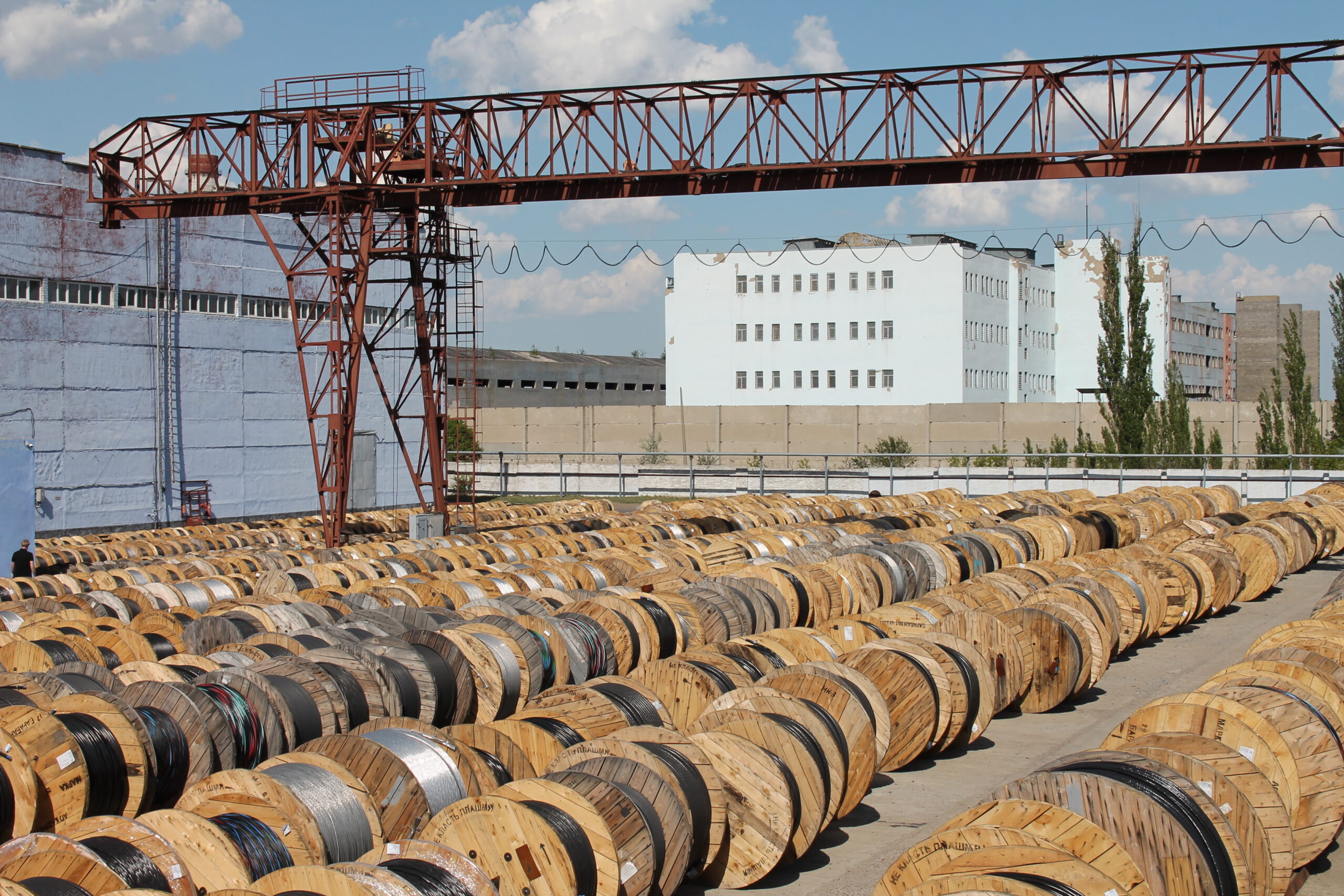
Introduction: Resistive and Self-Regulating Heating Cable
Heating cable solves the tasks of heating pipes, roofs, gutters and underfloor heating. When choosing, two fundamentally different technologies arise: resistive and self-regulating cable. The first generates heat due to the constant resistance of a metal conductor, the second changes power at each point depending on the ambient temperature. The difference determines all aspects: from the installation method to energy efficiency.
A resistive heating cable is produced with a fixed linear power — 10 W, 16 W, 24 W, 30 W, 40 W per metre. Two-core versions, for example 16/2, are convenient for connection from one end. A self-regulating cable is marked by the nominal power at 10 °C — 16SR, 24SR, 30SR, etc. Its semiconductor matrix automatically increases or decreases heat output. More details about the types and construction of heating wires are described in the guide about heating cable.
Comparative Table of Characteristics
| Parameter | Resistive heating cable | Self-regulating heating cable |
| Operating principle | Heating of a conductor with constant resistance (nichrome, steel) | Semiconductor matrix changing resistance when the temperature changes |
| Power dependence on temperature | Power is constant regardless of external conditions | Power decreases when heated, increases when cooled (self-regulation effect) |
| Possibility of cutting on site | No, only fixed lengths (ready-made kits 1 m, 2 m, 10 m, 16 m) | Yes, cut to the required length from a coil, up to 100–150 m |
| Risk of local overheating | High: under thermal insulation, in places of debris accumulation, at overlaps | Minimal: the matrix itself reduces power in the overheated zone |
| Energy efficiency | Requires a thermostat to reduce costs | Self-regulation saves energy without external control, but a thermostat increases savings |
| Typical values of linear power | 10 W/m, 16 W/m, 24 W/m, 30 W/m, 40 W/m | Nominally 10, 16, 24, 30, 40 W/m at 10 °C |
| Conductor design | Single-core or two-core (16/2), shielded or not | Two parallel supply conductors with a matrix between them, always shielded for interference suppression |
| Maximum line length | Limited by the manufacturer, usually up to 150–200 m for single-core | Up to 100–150 m depending on the cross-section of the supply conductors and power |
| Connection | Cold leads, splice kit, scheme with or without screen earthing | Termination by stripping the matrix, installation of an end seal, screen earthing is mandatory |
| Cost per metre | Lower | 1.5–2 times higher |
| Service life | 15–20 years with correct installation | 20–25 years, the matrix does not degrade if the regimes are observed |
| Main application | Underfloor heating, heating of open areas, gutters in the absence of debris | Heating of pipes, water supply, roofs, gutters, industrial tanks, explosion-proof version |
Operating Principle and Design Differences
A resistive heating cable is based on the Joule–Lenz law: current passes through a conductor with high resistivity, releasing heat. The amount of heat is strictly determined by the geometry and material of the conductor. A single-core cable is powered from both ends, a two-core — from one. A two-core 16/2 cable (16 W/m) is more convenient in installation: there is no need to return the end to the connection point. Shielded versions have a metal braid that diverts leakage currents and protects against interference.
A self-regulating cable is more complex: two parallel tinned copper conductors are pressed into a semiconductor polymer matrix. When cooled, the matrix contracts, the carbon conducting chains draw closer, the resistance falls, the current increases, and more heat is released. When heated, the matrix expands, the chains break, the resistance rises, and the power falls. This physical process occurs locally at every point of the cable, which excludes overheating even when the turns overlap. Explosion-proof versions are certified according to TR CU 012/2011 and are used at oil and gas facilities.
Heat Output and Energy Consumption
A resistive cable always consumes the declared power over its entire length, regardless of whether heating is needed at that moment. For example, a 16-watt cable 10 metres long consumes 160 W around the clock. A thermostat with a temperature sensor cuts off the power when the threshold is reached, saving electricity, but the cable itself is unable to change power.
A self-regulating cable without a thermostat already saves: on a cold pipe section it heats more strongly, on a warm one — more weakly. At a pipe temperature of +20 °C, the power of a 16-watt cable drops to 5–6 W/m. A thermostat further reduces consumption. This makes a self-regulating cable preferable for long pipelines where the temperature is distributed unevenly.
Installation, Connection and Length
A resistive cable cannot be arbitrarily shortened or lengthened — the resistance will change, the power will go beyond the calculated limits, and overheating or underheating will occur. Manufacturers supply ready-made kits with fixed lengths: 1 m, 2 m, 10 m, 16 m, etc. A sealed end cap is installed at the end, and a cold lead for connection to the 220 V network at the beginning. This simplifies installation, but requires precise measurement of the route before purchase. The connection diagram is elementary: phase and neutral to the cold leads, screen to earth.
A self-regulating cable is sold in coils and cut on site. After cutting the required length, the matrix between the conductors is stripped, and an end seal is installed to prevent a short circuit. At the other end, a splice kit with a supply wire is mounted. Earthing of the shielding braid is mandatory. Installation is allowed both outside the pipe and inside the pipe — special cables with a food-grade sheath are produced for water supply systems. Outdoor installation on a pipe provides for fixing with aluminium tape and thermal insulation. Detailed instructions and diagrams are in the article laying heating cable.
When to Choose a Resistive Heating Cable
- Underfloor heating in a screed or under tiles. A resistive cable evenly warms up the surface, the power is selected by a heat calculation of 10–30 W/m².
- Heating of open areas, ramps, steps. Constant power ensures fast heating without adjustment.
- Gutters and a roof of a simple configuration, where there is no risk of leaves and debris accumulation, and the system is controlled by a precipitation and temperature sensor.
- Facilities where a low initial price is important. A ready-made resistive cable kit is cheaper than a self-regulating analogue of the same length.
- Short sections — 1–2 metres, for which it is unprofitable to buy a coil of a self-regulating cable and install an end seal.
When to Choose a Self-Regulating Heating Cable
- Heating of water supply and sewerage pipes. Self-regulation will not let the pipe overheat under the thermal insulation and will prevent freezing on cold sections. A power of 10–16 W/m is sufficient for a domestic water supply.
- Roofs and gutters of a complex shape, where water stagnation and debris accumulation are possible. The cable automatically reduces power on dry sections and does not overheat.
- Internal installation into a pipe. A special self-regulating cable with a food-grade sheath is inserted through a tee and heats the water from the inside.
- Industrial facilities with explosive zones. An explosion-proof self-regulating cable is certified for gas environments and petroleum products.
- Extended routes with variable conditions — bridges, gantries, process pipelines. The cable adapts itself to wind and sun, saving energy.
Typical Mistakes in Selection and Installation
- Cutting a resistive cable. Changes the resistance, leads to overheating and failure.
- Installing a resistive cable on a roof without a thermostat. In warm weather, the cable continues to heat, wasting electricity.
- Laying a self-regulating cable without an end seal. Moisture enters the matrix, causing a short circuit.
- Ignoring the screen earthing. Violation of electrical safety, risk of electric shock if the insulation is damaged.
- Using a cable for underfloor heating in a screed: only resistive, not self-regulating. The latter is not designed for uniform floor warming and will not provide comfort.
- Choosing the power “by eye”. For heating a 32 mm diameter pipe, 16 W/m is sufficient, for 50 mm — 24 W/m. Excessive power leads to overconsumption of electricity.
Frequently Asked Questions
How does a self-regulating heating cable work?
Inside there is a polymer matrix with carbon particles. When the temperature drops, the matrix contracts, creating conductive paths — the resistance falls, the current increases, and the power rises. When heated, the matrix expands, the paths break — the power decreases. The process occurs locally at every point.
Can a resistive cable be shortened?
No. A resistive cable is supplied in fixed lengths. Any shortening changes the resistance and power, which leads to overheating or inefficient operation.
Which cable is better for a water supply: 16 W or 24 W?
For a domestic water supply with a diameter of up to 32 mm, 16 W/m is sufficient with high-quality thermal insulation. 24 W/m is taken for 40–50 mm pipes or weak insulation. The exact calculation depends on the climate zone.
Is a thermostat needed for a self-regulating cable?
Not mandatory, but desirable for saving. The cable itself reduces power when it gets warmer, however a thermostat completely cuts off the power at above-zero temperature, reducing consumption to zero.
What is 16/2?
The marking of a resistive two-core cable with a power of 16 W/m. Two cores allow powering the cable from one end, simplifying the connection scheme.
What is the difference between a shielded heating cable and an unshielded one?
A shielded one has a metal braid that diverts leakage currents and provides protection against electromagnetic interference. It is required for safety in residential premises and at facilities with electronic equipment.
Conclusion
A resistive heating cable is the choice for underfloor heating and simple heating systems with a fixed length. A self-regulating heating cable is indispensable for pipes, roofs and gutters where flexibility, safety and energy saving are required. Both types are presented in the catalogue heating cable — from ready-made floor kits to explosion-proof self-regulating lines for industrial purposes. When choosing, one relies on an accurate thermal engineering calculation and installation requirements.