Instrumentation Cable: Design, Types, Selection and Application
In distribution cabinets, automation, alarm and communication systems, a special type of conductor product is used – the instrumentation cable. It is distinguished by its flexibility, shielding, resistance to electromagnetic interference and is intended for fixed inter‑device wiring. The correct choice of type, cross‑section and design determines the reliability of the entire information and control system. In this article we will examine the main families of instrumentation wires, their technical parameters and the logic of selection for a specific task.
1. Purpose and Difference Between Instrumentation Cable and Power Cable
Instrumentation conductors connect sensors, actuators, controllers and operator panels. They transmit low‑power signals, control circuit supply voltage and digital bus data. Unlike power lines, which are rated for kiloampere currents and thick insulation, instrumentation cable has stranded conductors of small cross‑section – from 0.3 to 6 mm² – and screens for protection against interference. The difference between power and instrumentation cable is clearly seen in the construction: power cable is rarely shielded and always has reinforced insulation, whereas instrumentation cable is oriented towards flexibility and noise immunity. Instrumentation cable, unlike control cable, more often contains conductors with a cross‑section up to 1.5 mm², twisted pairs and screens necessary for transmitting 4–20 mA analogue signals and digital protocols.
In circuits where high connection density is required, multi‑core cables with up to 37 cores or more come to the fore. For example, MKESh 20×0.75 makes it possible to connect twenty signal lines in one harness. Due to its flexibility, such a wire is convenient to lay in the trunking of automation cabinets. When selecting an instrumentation cable, it is important to remember that it is not intended for transmitting large powers: the maximum voltage is usually 380–500 V AC, and the operating current does not exceed a few amperes.
2. Main Families and Their Marking
Domestic plants produce several large groups. The most commonly used are:
- MKESh – shielded instrumentation cable, with stranded copper conductors, in an overall braid of copper wires;
- MKSh – similar, but without a screen;
- MKEKShV – with an additional PVC sheath over the screen;
- KPS – for security and fire alarm systems and voice evacuation, including fire‑resistant types;
- twisted pair for industrial buses PROFIBUS, Modbus, etc.
The entire construction is encoded in the designation. For example, MKESh 3×0.75 means: instrumentation, with copper conductors, shielded, three cores with a cross‑section of 0.75 mm². The indices “ng”, “LS”, “HF”, “FRLS” indicate fire safety, and the letter “V” at the end signifies the presence of an outer PVC sheath. More details on decoding fire‑resistant indices are given in the guide fire‑resistant cable in detail.
3. Design Features and Materials
The current‑carrying cores of instrumentation cables are always copper, solid or stranded. The flexibility class from 3 to 5 ensures easy laying in trunking and connection to terminals. The insulation is made of PVC compound, less commonly of polyethylene or a halogen‑free composition. For twisted pairs, the cores are twisted with a specific pitch, which reduces cross‑talk. The screen is a braid of copper wires with a density of at least 65%, often combined with aluminium‑lined polyester tape. In MKEShV types, the screen is protected by an outer PVC sheath.
In addition to overall screens, cables with individual shielding of each pair are manufactured. Such a construction is necessary for real‑time buses where signal delays and distortions are critical. The copper screen braid is tinned for better soldering to the connector body. The pair twist pitch is strictly maintained, reaching 40–80 mm depending on the cross‑section, to ensure a characteristic impedance of 120 Ω. All this allows lines up to several hundred metres long to be installed without repeaters.
4. Popular Types and Typical Cross‑Sections
Below are the items with the most frequent inquiries, their characteristics and typical applications.
4.1. MKESh – Shielded Instrumentation Cable
Shielded copper cable MKESh is a classic for inter‑device connections in machine tool building, power engineering and automation. It is manufactured with 2 to 37 cores and cross‑sections from 0.35 to 6 mm². The presence of a screen makes it suitable for laying near power circuits. Examples:
- MKESh 2×0.5 – two cores of 0.5 mm²;
- MKESh 2×0.75 – two cores of 0.75 mm², often with “blue‑brown” or “blue‑black” colour coding;
- MKESh 3×0.75 – three cores, used for connecting sensors with earthing;
- MKESh 4×0.75 – four cores for three‑phase control circuits;
- MKESh 7×0.5 – seven cores, a compact solution for multi‑function devices;
- MKESh 20×0.75 – twenty cores, used in cross‑connect cabinets where a large number of signals must be connected;
- MKESh 27×0.5 – twenty‑seven cores, in demand in telemetry systems.
The factory length is supplied in coils of 500 m for small cross‑sections or in cut lengths to order. Cable MKESh 2×0.75 500 is a standard stock order, where “500” indicates the coil length in metres. Similarly MKESh 3×0.75 500 or MKESh 2×0.5 500, MKESh 4×0.75 500. If required, MKESh 3×0.75 TRTS can be found – a tropical version resistant to mould and high humidity.
Modifications with the “ng” index do not propagate flame: MKEShng 3×0.75, MKEShng(A)‑LS 3×0.75, MKEShng(A)‑HF 2×0.75. They are intended for office and residential buildings with increased fire‑safety requirements. Separately, MKEShV is distinguished – with an outer PVC sheath, more resistant to abrasion. Cable MKEShVng(A)‑LS 2×2×1 contains two pairs of 1 mm² cores, which is convenient for serial interfaces.
4.2. MKSh – Unshielded Flexible Wire
MKSh is used inside metal conduits and trunking where the external electromagnetic field is low. It is lighter and cheaper than MKESh. MKSh 2×0.75 is common for connecting limit switches, MKShng‑LS 2×1 – with low smoke emission. The type MKShVng(A)‑LS provides a protective sheath.
4.3. KPS – Cables for Security/Fire Systems and Voice Evacuation
The KPS group combines conductors for fire alarm and voice evacuation systems. KPSTTng(A)‑HF is fire‑resistant, halogen‑free, withstands 180 minutes at +750 °C. KPSeng is shielded, with copper braid. KPSng(A)‑FRLS has low smoke emission and fire resistance. These types are mandatorily certified to GOST 31565‑2012 and come with a passport indicating the fire resistance limit.
4.4. Twisted Pair for Industrial Automation
For PROFIBUS, CAN, Modbus systems, a shielded twisted‑pair instrumentation cable is manufactured. It consists of one or two twisted pairs, each with an individual screen. For example, cable for industrial automation with twisted pair 2×2×0.5 or 2×2×0.75. In types such as MKEKShV 2×2×1, double protection is applied: a screen on each pair and an overall outer screen. Such a cable is mandatory for data transmission at speeds up to 10 Mbit/s over a distance of up to 100 m. More about twisted pair and its parameters – instrumentation twisted‑pair cable.
5. Technical Table of Cross‑Sections and Parameters
Summary data for frequently used types are given in the table.
| Type | Number and cross‑section of cores, mm² | Outer diameter, mm | Core resistance, Ω/km | Design |
| MKESh 2×0.5 | 2×0.5 | 3.8 | 36 | shielded, PVC |
| MKESh 2×0.75 | 2×0.75 | 4.2 | 24.5 | shielded, PVC |
| MKESh 3×0.75 | 3×0.75 | 4.8 | 24.5 | shielded, PVC |
| MKESh 4×0.75 | 4×0.75 | 5.3 | 24.5 | shielded, PVC |
| MKESh 7×0.5 | 7×0.5 | 5.8 | 36 | shielded, PVC |
| MKESh 20×0.75 | 20×0.75 | 10.5 | 24.5 | shielded, PVC |
| MKEShng‑LS 3×0.75 | 3×0.75 | 5.0 | 24.5 | ng, LS, shielded |
| MKEShVng(A)‑LS 2×2×1 | 2 pairs ×1.0 | 7.5 | 18.1 | outer sheath, ng‑LS |
| MKSh 2×0.75 | 2×0.75 | 3.5 | 24.5 | unshielded |
| MKShng‑LS 2×1 | 2×1.0 | 4.0 | 18.1 | ng, LS |
| KPSTTng(A)‑HF 1×2×0.5 | 1 pair ×0.5 | 4.2 | 36 | fire‑resistant, halogen‑free |
| KPSeng 2×2×0.75 | 2 pairs ×0.75 | 6.8 | 24.5 | shielded, ng |
For installation inside switchboard equipment, a single‑core or two‑core MKSh wire is often sufficient. Shielded MKESh is preferred for field connections. If it is necessary to run a line in trays together with power cables, shielded types with the “ng‑LS” index should be selected and the screen must be earthed at one end.
6. Application in Fire Alarm, Voice Evacuation and Industrial Automation Systems
In security and fire alarm systems, instrumentation cable for fire alarm and voice evacuation is laid from detectors to control panels. It must be fire‑resistant or non‑flame propagating depending on the system type. For addressable loops, twisted pair with a characteristic impedance of 120 Ω is taken. Cable for fire alarm often has a red or orange sheath for visual distinction from other networks. In voice evacuation and emergency management systems, the cores may have a cross‑section of 1.5 mm² in order to transmit the audio signal over tens of metres without attenuation.
In industrial automation, instrumentation cable for industrial automation connects PLCs to sensors, encoders, variable frequency drives. The screen is mandatory, since powerful inverters operate nearby. For 4–20 mA analogue circuits, shielded pairs MKESh 2×0.75 or specialised MKEKShV 1×2×0.5 are used. For discrete inputs, unshielded MKSh with a core cross‑section of 0.5–1.0 mm² is used. When the line length exceeds 50 m for discrete signals, shielding is also recommended to avoid false triggering from noise.
7. Installation, Termination and Fixing Elements
Laying is carried out in cable ducts, corrugated tubes and on trays. For fixing, a clamp for fixing the cable to the wall or to the supporting structure is used. When pulling into a tube, a special cable tie gun is employed, which ensures uniform tightening force without crushing the insulation. In junction boxes, the cores are stripped to a length of 8–10 mm and connected to terminals. The screen braid is twisted into a pigtail and insulated, connecting to the earth terminal only on the signal source side. This approach prevents the occurrence of equalising current loops capable of creating additional interference.
For neat termination, a stripper with diameter adjustment is used, which avoids damaging the copper wires. When installing multi‑pair cables such as MKEShVng(A)‑LS 2×2×1, each pair is additionally fixed with a tie near the terminal block. Fixing points are chosen such that access is provided for subsequent maintenance and replacement of devices.
8. Storage, Coiling and Sets
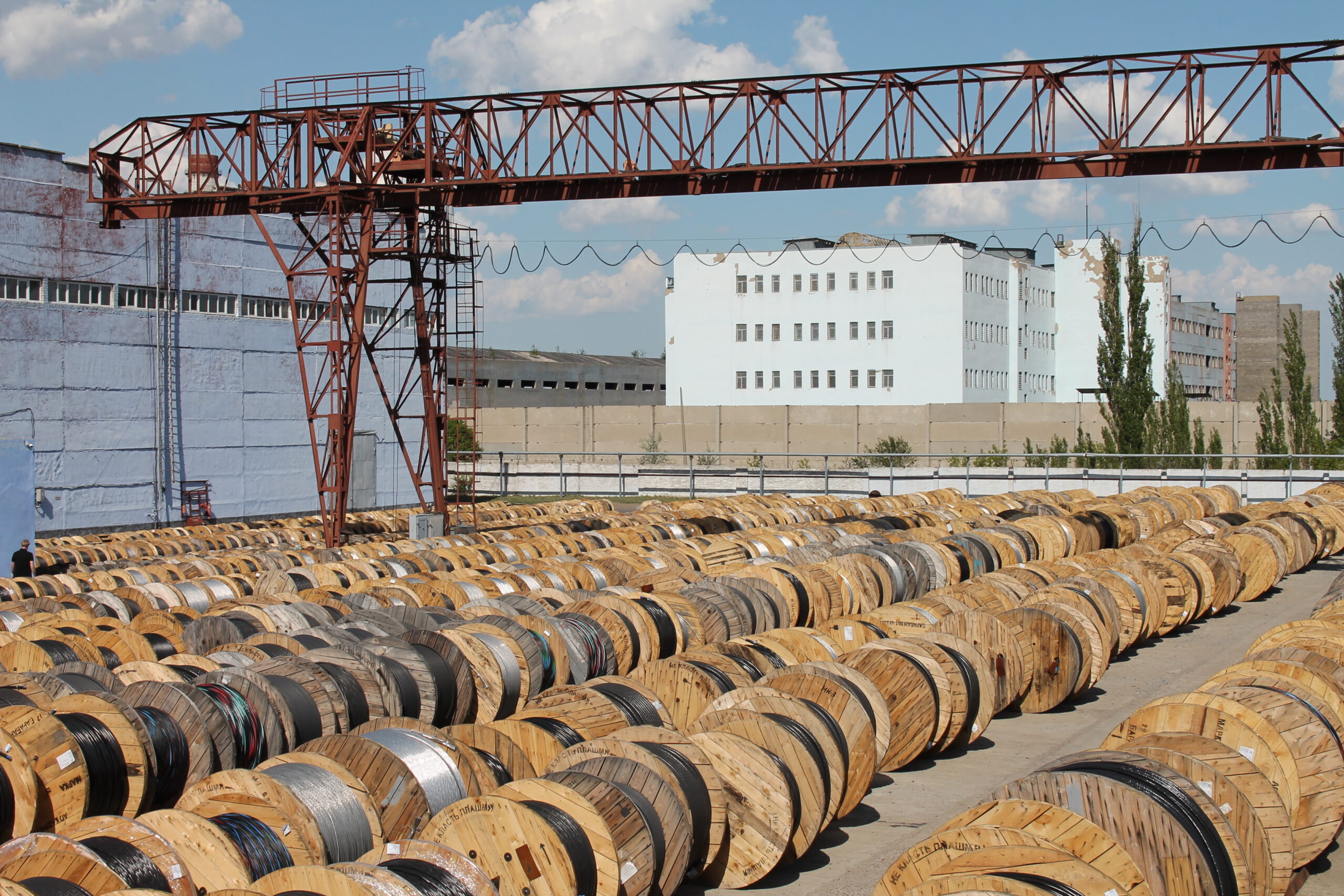
Cables are supplied in coils of 100, 200 or 500 metres. For large projects, a ready‑made kit for self‑regulating heating or a set of multi‑coloured instrumentation wires for panels is ordered, including cross‑sections of 0.75–2.5 mm². When ordering, the OKPD 2 code is always checked – for instrumentation wires it is 27.32.13. Coils are stored in a dry, ventilated room, avoiding exposure to direct sunlight which destroys the PVC sheath. The shelf life under proper conditions reaches 5–7 years without deterioration of properties.
9. Regulatory Documentation and Certificates
All instrumentation cables must comply with TU 16‑505.437‑82 for MKESh, TU 3581‑001‑76960731‑2008 for KUIN and analogues, and GOST 31565‑2012 for fire resistance. A certificate of conformity to TR CU 004/2011 is mandatory. The batch passport contains test reports, the number and cross‑section of cores, insulation resistance, which must be at least 0.5 MΩ under normal conditions. Without these documents, the cable cannot be used on sites controlled by Rostechnadzor. For export deliveries, a certificate of origin is additionally issued.
10. Summary
Instrumentation cable is an extensive class of conductor products that solves the tasks of transmitting signals and power in control systems. Knowledge of the marking scheme, the difference between shielded and unshielded versions, as well as fire‑safety requirements, allows the correct selection of the appropriate type for panels, fire alarm, automation or industrial networks. Factory coils, correctly performed termination and screen earthing guarantee trouble‑free operation for decades. You can view the full range and select control instrumentation cable, twisted pair or shielded types in the catalogues: control instrumentation cable, instrumentation twisted‑pair cable and MKEShV cable.