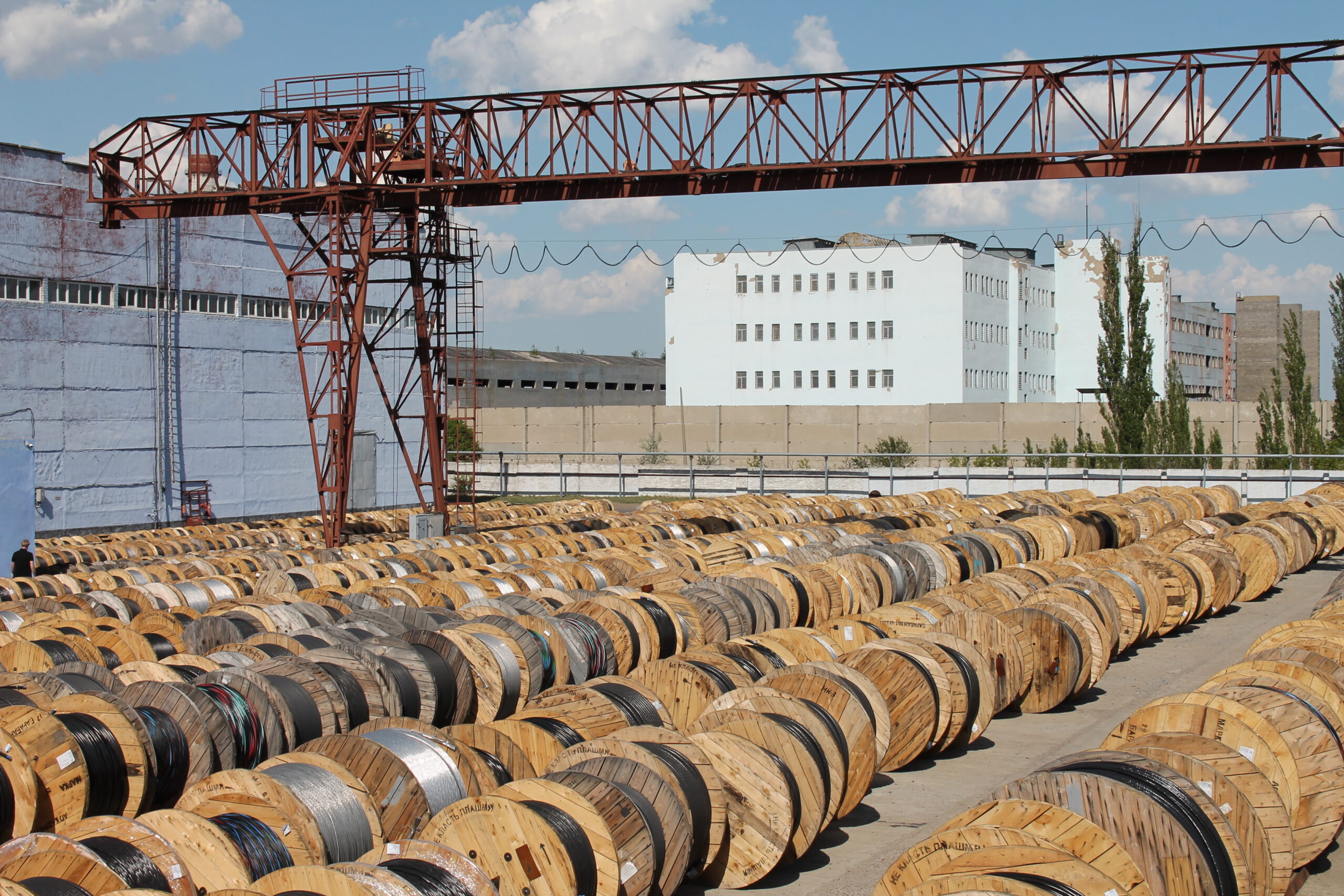
Installation of Self‑Supporting Insulated Wire (SIP): Standards, Techniques, Fittings and Rules
Self‑supporting insulated wires (SIP) have become the backbone of modern overhead power lines and service drops to consumers. Their construction eliminates conductor clashing and reduces the risk of short circuits, while installation is noticeably simpler than that of bare conductors. However, without strict adherence to the technology, laying SIP can lead to sagging, insulation damage and failures. In this article we will sequentially examine tensioning techniques, fixing with anchor clamps, building entry, as well as permissible distances and the requirements of the Electrical Installation Code (PUE). The full list of types and cross‑sections is available in the self‑supporting insulated wires section, and an in‑depth description of characteristics and selection is given in the guide details about SIP.
1. General Characteristics of SIP and the Regulatory Framework
SIP conductors consist of aluminium phase cores stranded around a neutral messenger conductor or with a separate steel core. The insulation of light‑stabilised cross‑linked polyethylene withstands ultraviolet radiation, heating up to 90 °C and frost. Owing to this sheath, laying of SIP cable is permissible without additional protection in the open air. Depending on the design, types SIP‑1, SIP‑2, SIP‑3, SIP‑4 are distinguished. For household 0.4 kV networks, SIP‑4 with a cross‑section of 16 or 25 mm² is most often used, and for 10–20 kV trunk lines – SIP‑3 with each core individually insulated. The main regulatory documents are the 7th edition of the PUE, Chapter 2.4 “Overhead Power Lines”, and standard designs for 0.4–10 kV overhead lines. The installation rules for SIP wire also rely on GOST 31946‑2012 and the instructions of fitting manufacturers.
An important difference between SIP and bare conductors is the possibility of laying SIP cable along a building facade without additional insulation, as well as reduced distances to tree branches and structures. Nevertheless, the PUE contains a number of conditions that must be observed irrespective of the insulation type. For example, joint suspension of SIP with telephone cables is permitted with a spacing of at least 0.5 m, and with power lines of a different voltage – 0.1 m.
2. Tools and Equipment
Installation of SIP conductors is carried out using a specialised set of devices that reduces the risk of insulation damage:
- stringing rollers with a smooth polymer surface, suspended on supports;
- tensioning mechanism and dynamometer or installation “frogs” with a ratchet mechanism;
- anchor and suspension brackets;
- insulation‑piercing branch connectors for joining the main line and branches;
- clamp for mounting SIP wire on supports – anchor or supporting, depending on the angle of turn;
- hand tools: stripper knife for removing insulation (on branches), socket heads, set of spanners, cordless screwdriver with an attachment for the clamp bolts.
All fittings for overhead laying are supplied in a kit selected for the core cross‑section and the SIP type. When ordering, one refers to compatibility tables with the specific wire type. Additionally, dielectric tools are used for cutting the conductor and stripping insulation on branches. A laser distance meter or a level is used to check the suspension height, and a dynamometer with a reading device to verify tension. Before commencing work, all clamps are inspected for defects, the integrity of the insulation on the conductor is checked, and bolted connections are lubricated with grease to protect against seizure.
3. Rules for Installation on Poles and Overhead Lines
Laying a SIP wire on poles begins with installing anchor brackets on terminal and angle supports. Then stringing rollers are fixed on intermediate supports. Pulling is performed smoothly, without jerks, controlling the pulling force with a dynamometer. For SIP‑2 and SIP‑4 with aluminium cores, the maximum force is limited to 45 N/mm² of the total cross‑section. After laying, the conductor is fixed in the anchor clamps at the ends of the section and transferred from the rollers into supporting clamps.
It is very important to maintain the alignment of the conductor and the roller: misalignment leads to scuffing of the insulation. When stringing a span longer than 40 metres, a pulling line is used, attached to the end of the SIP via a swivel. This prevents twisting of the conductor. During suspension on angle supports, the conductor is passed through angle rollers of increased diameter so as not to violate the bending radius. Laying of SIP cable on poles is carried out sequentially, starting from an anchor span and moving towards intermediate supports. When crossings with roads are present, temporary protective nets are erected or traffic is stopped for the duration of the work.
The span length between supports for SIP with a cross‑section of 16–25 mm² is usually 25–40 m; when using a larger cross‑section and a reinforced messenger wire, the span is increased to 50 m. The sag in the middle of the span must not lower the conductor below the standardised height. The sag is calculated according to stringing tables that depend on the ambient temperature on the day of installation. At turning angles greater than 30°, a double anchor fastening is installed, and at an angle over 60° – an intermediate anchor pole.
4. Building Entry and Laying Along the Facade
Entry with SIP cable from a pole to a house is performed in one of two ways: an overhead crossing from the pole to the building wall with fastening to an anchor clamp, or laying the cable along the building facade with a drop from the main line. For an overhead entry, the distance from the pole to the wall must not exceed 25 m for SIP with a cross‑section of 16 mm². If the distance is greater, an intermediate pole is installed. The branch from the main line is made with insulation‑piercing connectors, which do not require stripping the insulation on the main conductor.
Immediately before entering the wall, the conductor is passed through a bent tube or sleeve. The tube should protrude outward by 50–100 mm and be sealed at both ends so that moisture does not penetrate inside. Rising along the facade from the ground, SIP is laid at a height of not less than 2.75 m above ground level, and above a porch or balcony – 2.5 m. Fastening to the wall is made with facade anchor clamps with plugs. The fastening spacing is 1.5–2 m. At bends of the route, the bending radius must be not less than 10 conductor diameters. Inside the building, SIP may be laid over a distance of not more than 2 m up to the service entrance panel, after which a transition to VVGng cable or a similar one is made. Laying SIP indoors over long distances is not recommended because of its rigidity and combustible insulation.
5. Laying in the Ground, in Pipes and in Corrugated Conduit
Although SIP is originally intended for overhead lines, in some cases it is laid underground. The rules for installing SIP cable underground require mandatory protection: the conductor is placed in an HDPE pipe or a double‑wall corrugated pipe resistant to crushing. The trench depth is not less than 0.5 m when laid in a pipe and 0.7 m without it, but for SIP the pipe method is preferred. A sand bed is poured on the bottom, the pipe is laid with a slight slope for condensate drainage, then covered with sand and warning tape.
Laying SIP cable in the ground in an HDPE pipe protects it from mechanical damage and rodents. The pipe diameter is chosen so that the conductor occupies no more than 40 % of the cross‑section. Before pulling, the conductor is lubricated with soapy water or a special lubricant. Pulling is performed by a winch with force monitoring. When entering a building from the ground, the pipe must protrude above the ground level by at least 30 cm, and its mouth is sealed against water ingress. Inside buildings, if flexibility is required, SIP is laid in a corrugated conduit of self‑extinguishing PVC, but such a solution is considered an exception rather than the rule.
6. PUE Requirements and Minimum Heights
When laying SIP cable overhead, the PUE establishes clear clearances:
- above a pedestrian zone – not less than 5.0 m;
- above a carriageway – not less than 6.0 m;
- above a crossing with roads – 6.0 m, and with tram lines – 9.5 m;
- distance from the conductor to the ground on a support in a built‑up area – 4.0 m for 0.4 kV lines;
- when entering a building, the height above ground must be not less than 2.75 m, and above a porch or balcony – 2.5 m.
The distance between SIP wires on supports during parallel suspension is governed by the manufacturer’s installation drawings. As a rule, it is 20–30 cm. When laying along a building facade, the distance to window openings must be not less than 0.5 m. Fixing SIP directly to gas pipes, gutters and ventilation ducts is prohibited. The minimum distance to tree branches is 0.5 m. On service drops to a house, the same heights as for the main line must be maintained.
7. Cost Estimate Norms (GESN)
The cost of work on laying self‑supporting insulated wires is standardised by the State Elemental Estimate Norms (GESN) collections 33‑04‑004 and 33‑04‑010 for 0.4–10 kV overhead lines. The estimate includes the stringing of conductors, installation of hooks or brackets, suspension with fastening to insulators, mounting of clamps and arrangement of entries. Direct costs are calculated per 100 metres of line. The norms take into account the drum mass, span length and number of supports. Separate rates from collection 33‑04‑014 are used for service drops to houses. When compiling an estimate, the cost of auxiliary materials must be taken into account: fasteners, lubricants, identification tags, sealants.
8. Technique of Connections and Branches
Connecting the SIP main line with a branch to a consumer is a critical joint. Insulation‑piercing connectors are used, which, when the bolt is tightened, pierce the insulation and ensure reliable contact. The clamp for mounting SIP cable on a branch simultaneously mechanically fixes the conductor. The nut is tightened with a torque wrench until the calibrated head breaks off, indicating that the specified force has been reached. Lengthening of the main conductor is performed using aluminium alloy connecting sleeves with subsequent insulation by heat‑shrinkable tubing. Welding of aluminium cores is not recommended because of the risk of burning the insulation. All contact connections are treated with a conductive grease that is included in the connector kit or purchased separately.
9. Preparation and Tensioning
Before starting the installation of SIP wire, the drum is set on a jack or a cable payout stand, and the end of the conductor is secured in the clamp of a pulling stocking. To exclude twisting, the stocking is connected to the pulling line via a swivel. Pulling is carried out synchronously, while rollers on intermediate supports reduce friction and prevent the conductor from rubbing against sharp edges. After completing the pull, the sag is adjusted using tensioning devices. The installation temperature affects the length: when laying in hot weather, a greater sag is given, in cold – a minimum, to compensate for thermal expansion. Final fastening on all supports is performed after the design sag has been reached. On the anchor clamp, the conductor is fixed first on one side, tensioned to the specified sag, and then clamped on the other side.
10. Typical Mistakes When Installing SIP Conductors
Analysis of fault statistics on overhead lines with SIP shows that most problems are associated with violation of the technology:
- over‑tensioning the conductor beyond the permissible limit – leads to core breakage or destruction of the anchor clamp;
- insufficient tension – causes sag below the norm, rubbing against foreign objects and clashing in windy conditions;
- incorrect selection of fittings – for example, using clamps of a smaller cross‑section does not provide proper fixation;
- neglecting lubrication – bolts seize, which complicates subsequent maintenance;
- absence of earthing – on long lines without pin earthing of the neutral conductor, a risk of overvoltages arises;
Another common mistake is the wrong choice of tightening torque for piercing connectors: weak tightening leads to poor contact and heating, excessive – to insulation damage and rupture of the main line. Therefore, operators are obliged to use torque tools and follow the instructions.
11. Table of Main Standards
| Parameter | Value | Note |
| Height above pedestrian zone | not less than 5.0 m | PUE 2.4.22 |
| Height above carriageway | not less than 6.0 m | PUE 2.4.22 |
| Height of building entry above ground | 2.75 m (minimum) | PUE 2.4.38 |
| Maximum distance from pole to house (cross‑section 16 mm²) | 25 m | Without an intermediate pole |
| Trench depth when laying in HDPE pipe | 0.5–0.7 m | Depending on the soil |
| Bending radius of SIP (during installation) | 10 conductor diameters | Not less than 10 D |
| Facade fastening spacing | 1.5–2.0 m | Facade brackets |
| Maximum pulling tension during laying | 45 N/mm² (SIP‑2, SIP‑4) | Total aluminium cross‑section |
12. Laying Along a Building and Indoors
Laying SIP along a building is allowed only outdoors or as part of an entry. If it is necessary to run the route inside the building from the entry to the panel, it is protected by a corrugated tube or a metal conduit. The length of the indoor section must not exceed 2 m. Laying in a tray is also possible if the tray is located outdoors or in an unheated room, provided it is protected from ultraviolet radiation and mechanical damage. Inside living rooms, SIP is not laid due to aesthetic considerations and fire‑safety requirements.
13. DIY Installation and Safety Measures
Installing SIP cable oneself is possible provided the safety regulations are followed. The person performing the work must disconnect the voltage on the section and apply a portable earth on both sides of the work site. Stringing the conductor on poles is forbidden to be done alone: at least two installers and an observer on the ground are required. When climbing a pole, a ladder or a hydraulic aerial platform is used, necessarily in a protective helmet and with climber’s gaffs. Working under voltage is permitted only with the use of dielectric gloves, a portable earth and certified tools. Before the start of installation, the serviceability of all devices, the calibration due date of the dynamometer and the absence of cracks on the insulators must be checked. Laying SIP cable on poles in rainy weather and in strong wind is prohibited.
14. Conclusion
Correct installation of SIP wire is the guarantee of long‑term and trouble‑free operation of an overhead line. Compliance with standard clearances, the correct choice of fittings, smooth tensioning with controlled force and careful execution of entry assemblies make it possible to forget about problems for decades. To select the required type and cross‑section, refer to self‑supporting insulated wires, and for a detailed study of the technologies, to the guide details about SIP.