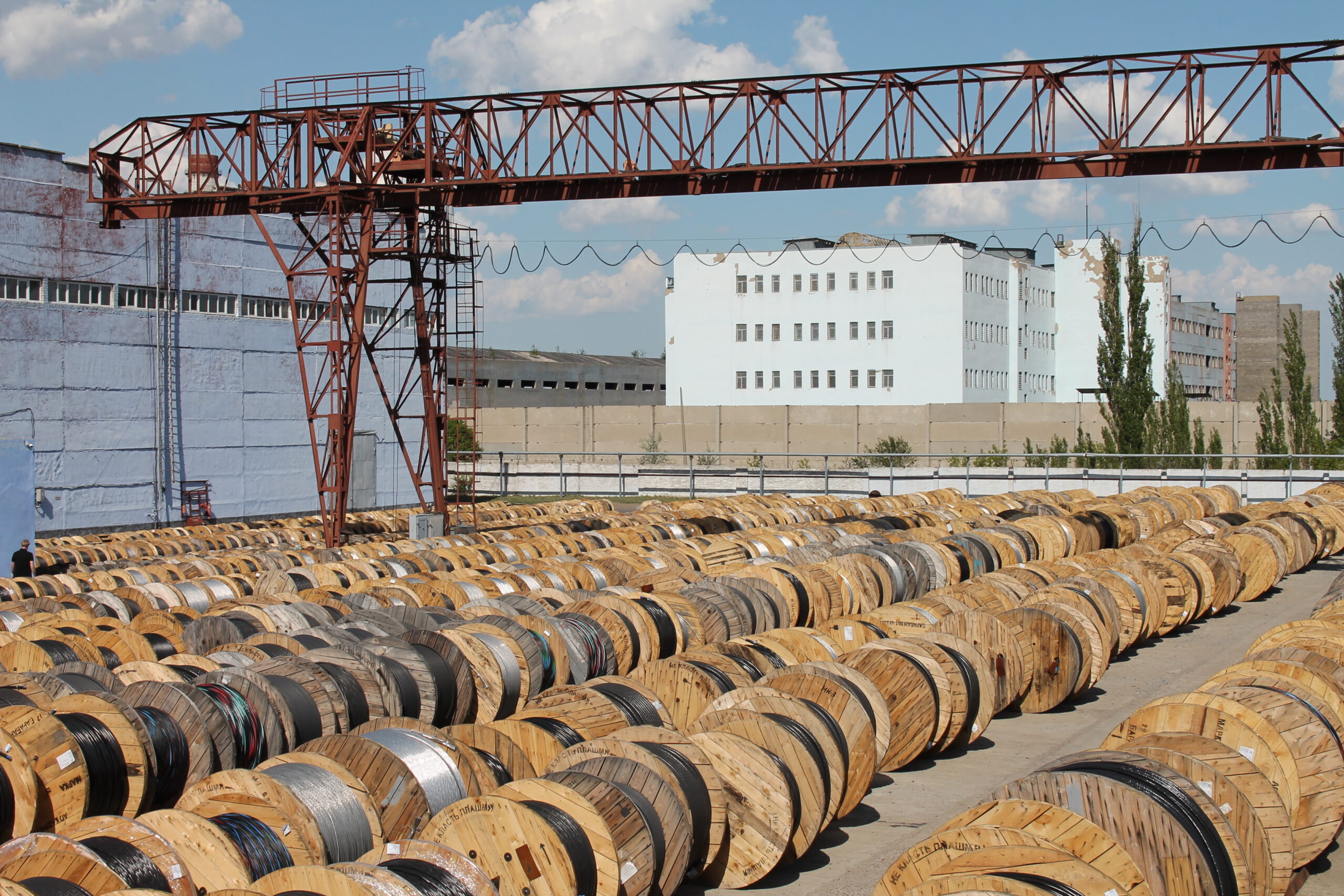
KGTP Flexible Cable: Construction, Properties, Applications
KGTP cable is a modern flexible product designed for connecting mobile machinery, mechanisms, and equipment to electrical networks. Thanks to its insulation and sheath made of thermoplastic elastomer (TPE), it combines high flexibility with resistance to ultraviolet radiation, ozone, moisture, and many chemicals. Its wide operating temperature range (from –40 °C to +50 °C, and in the HL version — down to –60 °C) makes it suitable for use in various climatic zones, including open areas and unheated premises.
In this guide, we will thoroughly analyze what the “KGTP” marking means, what elements the construction consists of, what technical characteristics determine its popularity, and also compare it with its counterparts — KG and PVS cables.
1. Purpose and Applications
The product belongs to the class of flexible conductors for non-stationary installation. Its main purpose is to connect mobile machinery, mechanisms, and portable equipment to the electrical network. According to GOST 24334-2020, it is used in circuits with a rated voltage up to 450/750 V AC at frequencies up to 400 Hz or up to 1000 V DC.
- Industry and Construction: power supply for welding machines, rotary hammers, construction winches, concrete mixers, mobile compressors.
- Agriculture: connecting mobile pumping stations, feed dispensers, grain dryers.
- Household Use: manufacturing portable extension cords and adapters for working with power tools outdoors (including during cold seasons).
- Facilities with increased durability requirements for insulation: thanks to its resistance to ultraviolet and ozone, the cable can be used outdoors without additional sun protection.
Important: according to the technical specifications, KGTP power cable is not intended for use in lifting and transport mechanisms (cranes, hoists, elevators) where significant tensile loads are possible. For such purposes, cables with rubber insulation (KG) are traditionally used.
2. Marking Decoding
The marking “KGTP” reveals the key features of the product:
- K (К) — cable.
- G (Г) — flexible (the construction is designed for repeated bending).
- TP (ТП) — the insulation and outer sheath are made of thermoplastic elastomer (TPE), a material that combines the elasticity of rubber with the processability of thermoplastics.
Additional indices in the marking:
- HL (ХЛ) — cold-resistant version (temperature range down to –60 °C).
- Numbers, for example “3×2.5”, indicate the number of cores and their cross-section in mm².
3. Construction
A feature of the KGTP flexible cable is the use of thermoplastic elastomer as the insulating material, which provides high resistance to mechanical stress, temperature changes, and aggressive environments.
| Construction Element | Material and Features | Purpose |
| Current-Carrying Cores | Copper, stranded, flexibility class 5 according to GOST 22483-2012. | Provide high flexibility and the ability to withstand repeated bending. |
| Core Insulation | Thermoplastic elastomer (TPE). Color coding according to GOST 24334. | Electrical insulation, protection against short circuits, resistance to abrasion and aging. |
| Inner Filling | Polyethylene terephthalate film (PET) or talc. May be absent. | Facilitates core sliding, increases flexibility. |
| Outer Sheath | Thermoplastic elastomer, black (or blue for the HL version). | Protection against moisture, UV radiation, ozone, oils, mechanical impacts. |
The color coding of core insulation is standardized: green-yellow — grounding core (PE), blue — neutral (N). Other cores are gray, brown, black, or with digital marking by agreement.
4. Technical Characteristics
The main parameters of the KGTP cable according to GOST 24334-2020 and manufacturers’ technical specifications:
| Rated Voltage | AC: 0.66 kV (660 V) frequency up to 400 Hz; DC: 1 kV (1000 V) |
| Operating Temperature Range | UHL version: –40 … +50 °C; HL version: –60 … +50 °C |
| Relative Air Humidity | up to 98 % at +35 °C |
| Insulation Resistance (1 km, +20 °C) | not less than 50 MΩ |
| Permissible Core Heating | not more than +75 °C in continuous mode |
| Minimum Bending Radius | not less than 8 outer diameters |
| Service Life | not less than 4 years (actual may be significantly longer under proper operating conditions) |
4.1. Range of Cross-Sections and Number of Cores
The cable is produced in a wide range of cross-sections and numbers of cores. The most popular versions:
| Number of Cores | Nominal Cross-Section of Main Cores, mm² | Note |
| 1 | 2.5–630 | single-core version |
| 2, 3, 4, 5 | 0.75–240 | multi-core with equal cross-section |
| 2–5 + grounding | 0.75–120 (grounding core may have smaller cross-section) | cables with grounding core (PE) |
| 7–37 | 0.5–4.0 | multi-core control versions |
Exact diameter and weight values for each size can be obtained from the technical documentation or from managers.
5. Comparison with Counterparts: KG and PVS
Other flexible conductors are present on the market, and choosing between them often raises questions. Let’s consider the main differences.
5.1. KGTP vs KG
- Insulation and Sheath Material: KG uses rubber (a mixture of natural and synthetic rubbers), while KGTP uses thermoplastic elastomer.
- Resistance to UV and Ozone: KGTP significantly surpasses standard KG, as rubber degrades over time under the influence of ultraviolet and ozone. Therefore, KGTP is preferable for outdoor installation.
- Flexibility: both products are flexible, but KGTP is lighter and somewhat more elastic at low temperatures.
- Load Capacity: KG has higher rated voltages (up to 10 kV AC), so it is used in powerful mobile installations. KGTP is intended for 0.66/1 kV networks.
- Use in Lifting Mechanisms: KG is permissible for use in cranes and hoists, KGTP is not (due to lower tensile strength).
5.2. KGTP vs PVS
- PVS is a wire with PVC insulation and sheath, intended for household use (extension cords, connecting household appliances).
- Temperature Range: PVS typically operates from –25 to +40 °C, KGTP from –40 to +50 °C (HL version down to –60 °C).
- Resistance to External Influences: KGTP is resistant to UV, ozone, and oils; PVC ages in the sun and loses elasticity.
- Flexibility: both wires are flexible, but KGTP retains its elasticity better at sub-zero temperatures.
6. Installation and Operation Features
- Minimum bending radius during installation is not less than 8 outer diameters. Adhering to this requirement prevents damage to cores and insulation.
- Climatic Versions: for temperate climate (U) — down to –40 °C; for cold-resistant (HL) — down to –60 °C. The sheath of the HL version is often blue for visual identification.
- Outdoor Installation: the black thermoplastic elastomer sheath contains carbon black, providing protection against UV radiation. The cable can be installed without additional conduits or sun protection.
- Not Permitted for use in places where intense tensile forces are possible (overhead cranes, elevators, winches). For such tasks, choose cables with rubber insulation (KG) or specialized ones.
- Prohibition on installation at low temperatures without preheating: although the material retains its elasticity, at temperatures below –15…–20 °C, it is recommended to keep the cable in a warm place before unwinding to avoid sheath cracking.
- Connection and Termination: stranded cores require crimping with ferrules or sleeves (NSHVI, NVI) for reliable contact in terminals.
7. Regulatory Framework and Certification
- Cables are manufactured according to GOST 24334-2020 “Flexible power cables for voltages up to 1 kV”. Technical specifications may be supplemented by requirements for cold resistance or special versions.
- Comply with the requirements of TR CU 004/2011 “On the safety of low-voltage equipment”.
- Climatic version — U, UHL, HL (placement categories 1–5 according to GOST 15150).
- KGTP GOST — marking confirming that the product complies with the state standard, not just the technical specifications of an individual manufacturer.
8. Conclusion
The flexible KGTP cable is a versatile solution for powering mobile equipment, portable power tools, and connecting mechanisms outdoors. Thanks to its thermoplastic elastomer insulation, it is resistant to ultraviolet, ozone, oils, retains its elasticity at low temperatures, and does not require additional protection from sunlight. A wide range of cross-sections and core counts allows selecting the product for virtually any task: from powering a welding machine to organizing temporary power supply on a construction site.
When choosing between KGTP and other flexible brands (KG, PVS), one should consider the operating conditions: if operation in the cold, prolonged exposure to the sun, or contact with oils is required, then KGTP will be the optimal choice. However, for cranes, hoists, and mechanisms with high tensile loads, it is better to use the classic KG cable.
The range of flexible cables from JSC “Kazenergocable” includes the full KGTP line in various versions, including cold-resistant (HL). By contacting our managers, you can select the required cross-section, number of cores, and get current prices. High-quality products manufactured according to GOST 24334-2020 will guarantee the reliability and safety of your equipment.