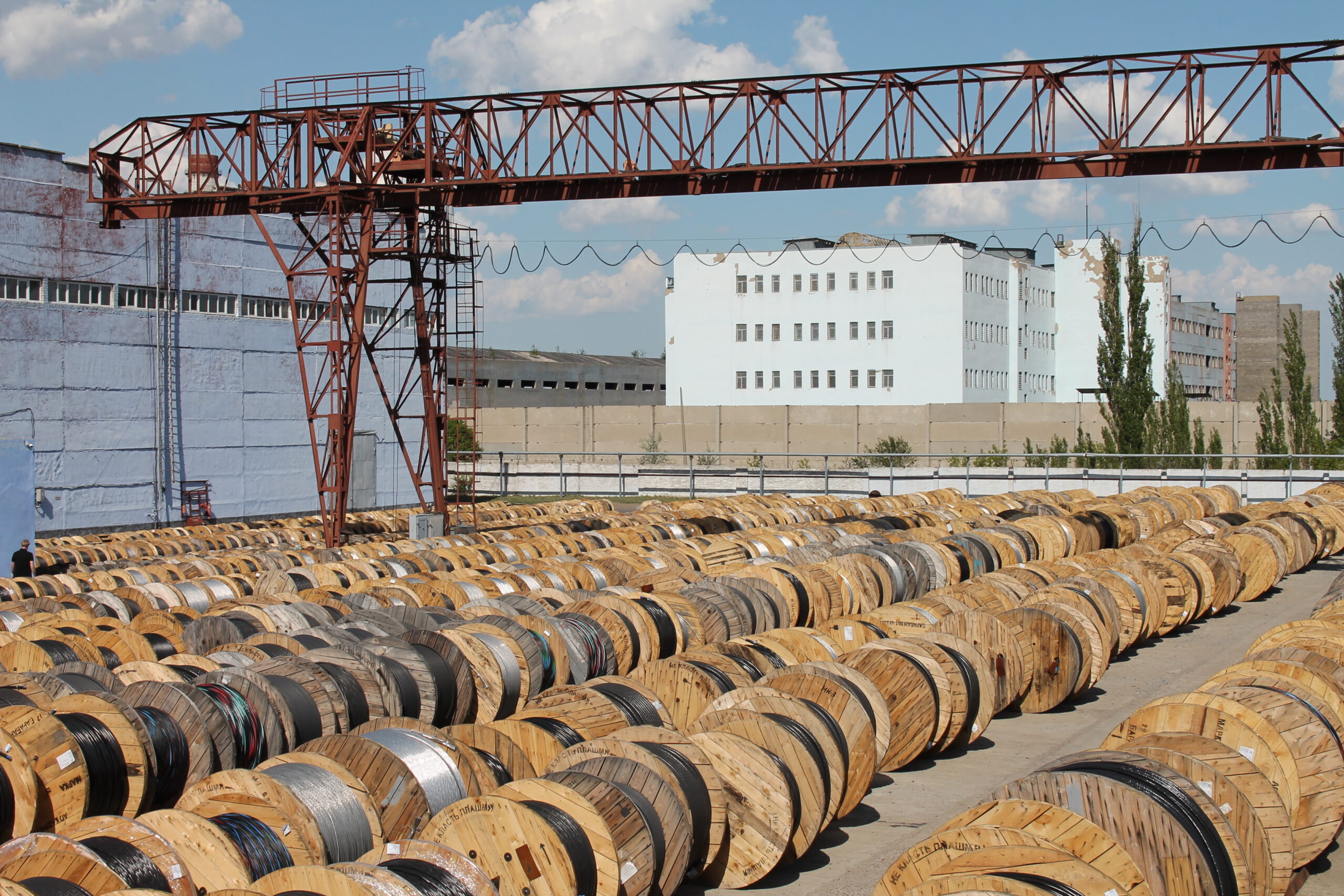
Introduction: KGN and KGTP — Two Flexible Power Cables
KGN and KGTP cables belong to the extensive family of flexible power conductors with stranded copper conductors and rubber insulation. Both are intended for mobile connection of equipment: welding machines, compressors, construction machinery, pumps and other equipment where the cable is constantly bent, coiled and uncoiled. Despite their external similarity, there are a number of fundamental differences between them that affect the choice in specific operating conditions.
KGN is a flexible cable with rubber insulation and a flame retardant sheath. The index “N” indicates a zero category for fire safety. KGTP is a flexible tropical-design cable with an oil- and petrol-resistant sheath that is resistant to aggressive media and high humidity. Both are produced according to GOST 24334-80, have the same cross-sections and flexibility class, but differ in sheath materials and areas of application. You can read more about KGTP in the article KGTP Cable. A comparison of KGTP with ordinary KG is given in the material KG or KGTP cable, and with PVS in the review KGTP or PVS cable.
Comparative Table of KGN and KGTP
| Parameter | KGN Cable | KGTP Cable |
| GOST | 24334-80 | 24334-80 |
| Conductor type | Flexible power, copper | Flexible power, copper |
| Conductor insulation | Rubber | Rubber |
| Sheath | Flame retardant rubber | Oil- and petrol-resistant rubber, tropical design |
| Non-propagation of combustion | Yes, index “N” | Yes, the sheath does not propagate combustion |
| Oil and petrol resistance | Moderate | High |
| Operating temperature | From –40 to +50 °C | From –40 to +60 °C |
| Climatic design | UHL, KhL | T, UHL |
| Cross-sections, mm² | 0.75–240 | 0.75–240 |
| Voltage | 660/1000 V | 660/1000 V |
| Service life (mobile state) | 4 years | 4 years |
| Service life (stationary) | up to 20 years | up to 20 years |
| Cost | Higher than ordinary KG, comparable to KGTP | Higher than ordinary KG, comparable to KGN |
| Main application | Fire-hazardous zones, places with requirements for non-propagation of combustion | Aggressive media, oil and gas, chemistry, tropical climate |
Design and Materials: What Is the Difference
Both cables have the same basic design: current-carrying conductors made of many copper wires of the fifth flexibility class, rubber insulation, twisting into a common core and an outer rubber sheath. The copper conductors ensure high conductivity and resistance to multiple bends. The rubber insulation retains elasticity over a wide temperature range. The catalogue with copper versions of both cables is presented at the link copper.
The difference lies in the sheath composition. In KGN, the rubber formulation includes flame retardants, thanks to which the cable does not support combustion when laid singly. This is achieved without loss of flexibility and mechanical strength. In KGTP, the sheath is made of oil- and petrol-resistant rubber that does not break down under the influence of petroleum products, diesel fuel, industrial oils and a number of solvents. Additionally, components preventing the development of mould and fungus in hot humid climates are introduced into the formulation. Therefore, KGTP is marked as a tropical design.
Fire Safety and Non-Propagation of Combustion
KGN is developed specifically for facilities where requirements for non-propagation of combustion are imposed. The index “N” means that the cable passes tests according to GOST IEC 60332-1: when a single sample is ignited, the flame does not spread beyond a defined zone. This reduces the risk of fire spreading along the cable route and increases safety in production workshops, warehouses, and public buildings. KGTP also has a non-flame propagating sheath, but this property is secondary in relation to oil and petrol resistance. Where fire regulations are decisive, preference is given to KGN.
It is important to understand: both cables are not fire-resistant — they do not maintain operability under open flame. FR-index cables are used for fire protection systems. KGN only prevents fire from spreading along the cable, which already significantly reduces the fire load. When choosing between KGN and KGTP in a room with increased safety requirements, KGN is more often chosen.
Oil and Petrol Resistance and Chemical Resistance
Oil and petrol resistance is the main advantage of KGTP. The sheath made of special rubber withstands prolonged exposure to oils, petrol, diesel fuel, cutting fluids. In car repair shops, oil depots, metalworking shops, where floors are constantly flooded with technical fluids, a cable with an ordinary rubber sheath quickly breaks down: the rubber swells, cracks, loses dielectric properties. KGTP lies calmly in such conditions and retains operability.
KGN does not possess increased oil and petrol resistance. Its sheath is designed for moderate effects, but degrades upon prolonged contact with fuel or oil. Therefore, KGN is not used in an aggressive environment, while in dry fire-hazardous rooms, on the contrary, it is preferable due to its flame retardancy. The choice between them is always a compromise between two characteristics.
Temperature Range and Climatic Design
Both cables retain flexibility at temperatures down to –40 °C, which allows their installation and operation in cold regions without pre-heating. However, the upper limit of KGTP is higher: +60 °C against +50 °C for KGN. This difference is critical for southern regions, the tropics, as well as for laying near heat sources. The tropical design of KGTP additionally protects against fungus and mould, which actively develop at high humidity and temperature.
KGN is produced in the UHL and KhL climatic design, which is suitable for temperate and cold climates. For the tropical zone, it is better to choose KGTP with the T index. If the cable is operated under conditions of simultaneously low temperatures and aggressive media, one has to seek a compromise or order a special modification with extended characteristics.
Areas of Application and Selection Scenarios
KGN finds application in fire-hazardous zones: woodworking shops, warehouses of combustible materials, granaries, facilities with increased fire safety requirements. It is chosen when regulations prescribe non-propagation of combustion and contact with oils and fuel is not expected. KGN is also used in public buildings for connecting temporary equipment, where safety is important.
KGTP is indispensable in the oil and gas industry, the chemical industry, car repair shops, the fleet, port facilities, and in tropical climates. It withstands the effects of oils, salt water, UV radiation and high temperatures. If the cable will lie in machine oil or under rain in the tropics, KGTP will serve significantly longer than KGN.
When to Choose KGN Cable
- Premises with high fire safety requirements: woodworking, warehouses of flammable liquids, granaries.
- Public buildings where regulations prescribe non-propagation of combustion of cables.
- Connection of welding equipment in clean workshops without contact with oils.
- Temporary networks in exhibition halls, shopping centres, cinemas.
- Regions with a temperate and cold climate, where there are no aggressive media.
When to Choose KGTP Cable
- Car repair shops, garages, filling stations — constant contact with petrol, oil, greases.
- Oil refining and chemical enterprises with aggressive liquids and vapours.
- Sea and river vessels, port cranes, berthing facilities — salt water, high humidity.
- Tropical climate with high temperature, humidity and the risk of mould.
- Open areas with exposure to UV radiation and atmospheric precipitation.
Typical Mistakes in Selection
- Buying KGN for a car repair shop where the cable lies in oil. The sheath will quickly break down, and the cable will fail.
- Using KGTP in a woodworking shop unnecessarily. The overpayment for oil and petrol resistance is not justified if there is no contact with petroleum products.
- Assuming that KGN is fire-resistant. KGN does not burn, but does not maintain operability in flames; an FR cable is needed for fire extinguishing systems.
- Laying KGN in a tropical climate without protection against mould. Although the sheath does not support combustion, it does not have tropical protection against microorganisms.
- Confusion in marking: KGN and KGTP are often abbreviated, ordering simply a “flexible rubber cable”. The type and requirements must be clearly indicated.
- Ignoring the limit temperature: when operating at +60 °C, KGN may prematurely age, while KGTP is designed for such a temperature.
Frequently Asked Questions
What is the difference between KGN and KGTP?
KGN is a cable with a flame retardant sheath for fire-hazardous zones. KGTP is a tropical-design cable with an oil- and petrol-resistant sheath for aggressive media. Both have the same design and cross-sections.
Can KGTP be replaced with KGN cable?
Replacement is possible only in conditions where there are no oils and aggressive media, and the temperature does not exceed +50 °C. Otherwise, the service life will be sharply reduced.
How are the KGN and KGTP markings deciphered?
K — cable, G — flexible. KGN: N — non-flame propagating. KGTP: T — tropical design, P — increased sheath resistance. Both cables are produced according to GOST 24334-80.
Are KGN and KGTP suitable for laying in the ground?
No, flexible cables are not intended for fixed laying in the ground. Armoured cables are needed for this. KGN and KGTP are only for mobile connection.
What cross-section to choose for a welding machine?
For most welding stations, a cross-section of 3×2.5 mm² or 3×4 mm² is used. The exact choice depends on the current and the cable length. KGN and KGTP are identical in load capacity.
Are both cables produced with the “KhL” index?
Yes, both can be produced in the cold-resistant KhL design, retaining flexibility down to –60 °C. This is important for the Far North.
Conclusion
KGN and KGTP are two specialised flexible power cables, each of which solves its own task. KGN ensures fire safety in places where non-propagation of combustion is critical, while KGTP withstands aggressive chemical media and tropical climates. They cannot be considered interchangeable without analysing the operating conditions. The correct choice of type guarantees a long service life and safety at the facility. Before ordering, one should accurately determine: what the cable will contact, what temperatures await it and what regulations apply on the site.