Household Wire: Complete Guide to Selection and Application
Household wire is a general term for a wide range of electrical wires and cables intended for internal wiring in residential and administrative buildings, connecting household appliances, lighting, and other electrical installations. Unlike industrial cables operating in aggressive environments, household wires are designed for use in standard indoor conditions. The key requirements for them are safety, reliability, ease of installation, and compliance with regulations (Electrical Installation Code, GOST standards).
1. Key Characteristics and Classification of Household Wires
All household wires are classified according to several main parameters that determine their purpose and application area.
| Classification Criterion | Types and Grades | Description and Purpose |
| By Purpose | For stationary installation, for connecting electrical appliances (cords), lighting | Wires for concealed and surface wiring (VVGng-LS, NYM) are installed once and are not moved. Cords (PVS, ShVVP) are intended for flexible connection of equipment. |
| By Conductor Material | Copper, Aluminum | In modern household electrical wiring, copper wires (VVG, PVS) are predominantly used, as copper has better conductivity, flexibility, and durability. Aluminum wires (AVVG) are used less frequently due to brittleness and tendency to oxidize. |
| By Number and Flexibility of Cores | Solid (rigid), Stranded (flexible) | Solid core wires (VVG, PV-1) are used for stationary installation in walls and cable ducts. Stranded wires (PVS, KG) are used where flexibility is important: power cords, connecting movable equipment. |
| By Type of Insulation | With PVC insulation, with rubber insulation | PVC (polyvinyl chloride) is the most common material for household wires (VVG, PVS). Rubber insulation (KG) is used for wires operating in cold conditions or high humidity. |
| By Shape | Round, Flat | Round wires (PVS, VVG) are versatile. Flat wires (PBPp, PUNP) are convenient for concealed installation under plaster, as they require a shallower chasing depth. |
2. Main Grades of Household Wires and Their Decoding
The marking of wires contains information about their construction. Let’s look at the most common grades.
| Wire Grade | Decoding and Construction | Technical Characteristics | Application Area |
| VVG / VVGng-LS | Vinyl insulation, Vinyl sheath, Goly (Bare, without armor). ng — non-flammable, LS — Low Smoke. Copper cores, solid or stranded. |
Voltage: up to 1000 V. Cross-sections: 1.5–50 mm². Temperature: -50°C … +50°C. VVGng-LS is mandatory for group laying in buildings. | Stationary electrical wiring in houses and apartments (concealed in walls, surface in cable ducts). Power input to the apartment panel. |
| PV (PV-1, PV-3) | Provod (Wire) Vinyl. The number indicates the flexibility class: 1 — rigid (solid wire), 3 — flexible (stranded wire). Single copper core in PVC insulation. | Voltage: up to 450 V (for PV-1) and up to 380 V (for PV-3). Cross-sections: 0.5–120 mm². Wide temperature range. | Installation of switchgear equipment, connecting circuit breakers, RCDs, assembly of distribution boards. Laying in pipes and ducts. |
| PVS | Provod (Wire) Vinyl Soedinitelny (Connecting). Household wire PVS consists of several (2–5) flexible copper cores in PVC insulation, twisted together and enclosed in a common PVC sheath. | Voltage: up to 380 V. Cross-sections: 0.75–16 mm². Excellent flexibility, designed for repeated bending. | Power cords for household appliances (kettles, refrigerators, washing machines), extension cords, portable lamps. NOT intended for stationary concealed wiring in walls. |
| ShVVP | Shnur (Cord) Vinyl Vyploshenny (Extruded). Flexible copper cord with flat parallel cores in PVC insulation and sheath. | Voltage: up to 380 V. Cross-sections: 0.5–0.75 mm² (small). Low mechanical strength. | Connecting low-power devices: table lamps, chargers, radio equipment. Due to the small cross-section, it is not suitable for powerful appliances. |
| PUNP / PBPp | Provod (Wire) Universalny (Universal) Plosky (Flat) (or Provod (Wire) Bytovoy (Household) Plosky (Flat)). Aluminum or copper cores in PVC insulation, enclosed in a common flat sheath. | Voltage: up to 250 V. Cross-sections: 1.5–6 mm². Convenient for installation. | Lighting networks and socket groups for low-power consumers (surface or concealed wiring). Attention: Since 2007, PUNP wire has been banned from production for stationary wiring due to non-compliance with safety standards. It is recommended to use VVG or NYM. |
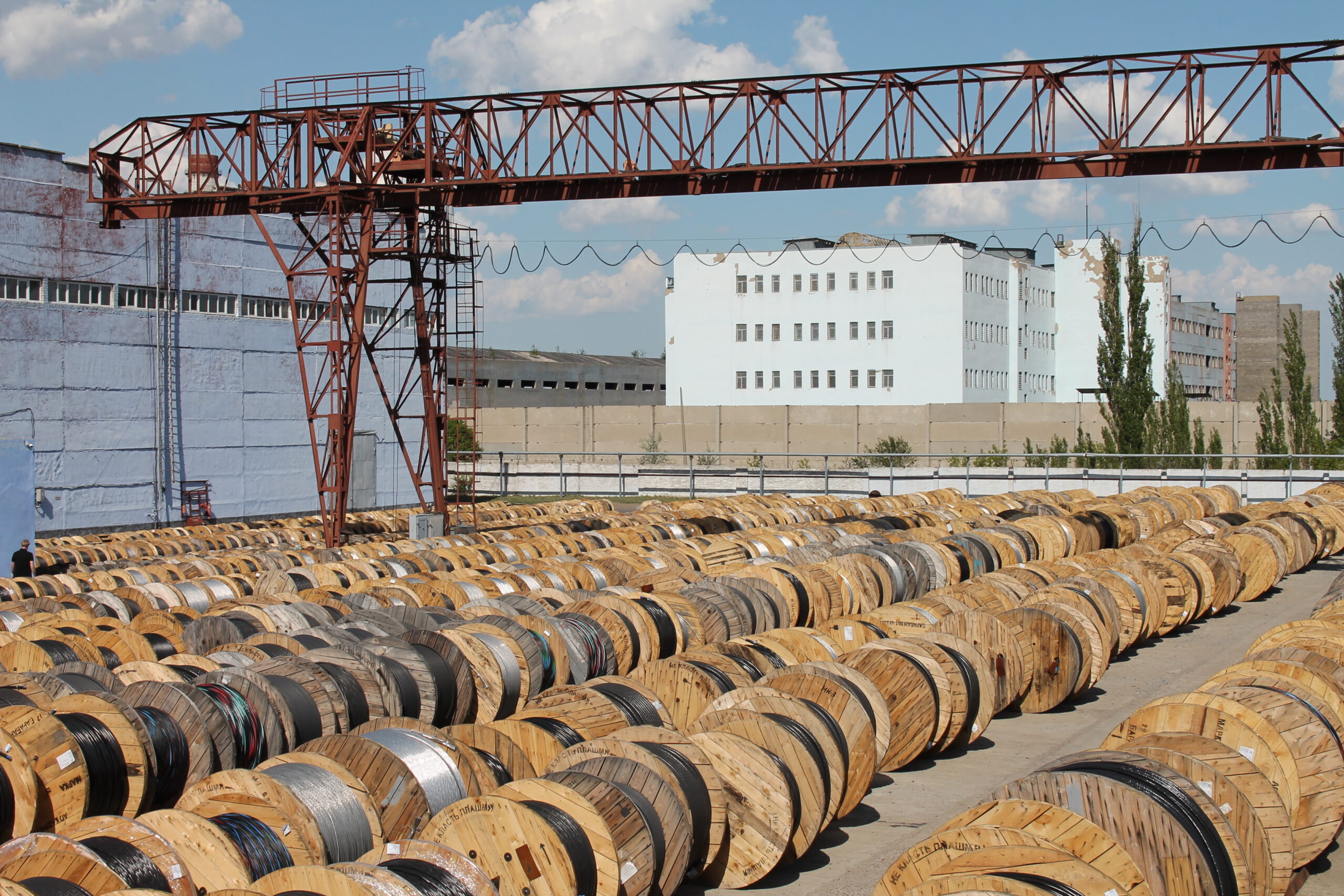
PV grade wires are presented in the plant’s catalog and are widely used for installation work.
3. How to Choose the Cross-section of a Household Wire
The correct choice of cross-section is the key to safety. Insufficient cross-section leads to overheating, melting of insulation, and fire.
- Determine the total power of consumers on the line. For example, for a socket group, add up the power of all appliances that could be switched on simultaneously.
- Calculate the maximum current using the formula: I(A) = P(W) / (U(V) * cosφ). For a 220V household network and active load (lamps, heaters), cosφ=1. Simplified: 1 kW ≈ 4.55 A.
- Select the cross-section according to the table of permissible currents for the corresponding wire type (Electrical Installation Code, Chapter 1.3).
| Line Purpose | Recommended Cross-section | Typical Circuit Breaker | Application Examples |
| Lighting circuits | 1.5 mm² | 10A breaker | Chandeliers, recessed lights, switches. |
| Socket groups | 2.5 mm² | 16A breaker | Sockets in rooms for TV, computer, vacuum cleaner. |
| Kitchen sockets, electric stove | 4 mm² (for stove — 6 mm²) | 25A breaker (for stove — 32A) | Connecting kettle, microwave, oven, hob. |
| Main incoming cable to apartment | 6–10 mm² | 40–50A breaker | From the floor distribution board to the apartment distribution board. |
4. Installation and Safety Rules
- Concealed wiring: For laying in chases, pipes, or under plasterboard, use non-flammable cables VVGng-LS or NYM. Using PVS, ShVVP is prohibited.
- Surface wiring: Wires are laid in cable ducts, skirting boards with a channel section, or on insulators. It is important to ensure protection against mechanical damage.
- Connections: Reliable connection of wires is the foundation of safety. Simple twisting is prohibited. Use:
- Welding or soldering.
- Screw or spring terminal blocks (WAGO).
- PPE (insulated wire connectors) for twists.
- Crimping with sleeves.
- Protection: Each line must be protected by a circuit breaker against overloads and short circuits, and also, for socket groups and bathrooms, by a residual current device (RCD) or a residual current circuit breaker with overcurrent protection (RCBO).
- Color marking: Adhere to the standard: phase — brown/red/black, neutral — blue, ground — yellow-green.
5. Common Mistakes in Selection and Installation
| Mistake | Consequences | Correct Solution |
| Using aluminum wires for new wiring | Brittleness, oxidation at connection points, risk of contact loss and fire. | Use only copper wires (VVGng-LS, NYM). |
| Laying PVS wire in a wall under plaster | PVS is not intended for stationary wiring. Over time, the insulation may deteriorate, leading to a short circuit. | For concealed installation, use cables intended for this purpose: VVGng-LS, NYM. |
| Incorrect choice of cross-section (too small) | Overheating of the wire, melting of insulation, fire. | Calculate the cross-section based on power with a 20-30% margin. |
| Connecting copper and aluminum wires with a simple twist | Rapid oxidation, increased resistance, heating, and fire. | Use special terminal blocks (e.g., with paste preventing oxidation) or make the connection through an ‘adapter’ sleeve. |
| Lack of RCD in socket circuits and bathroom | Risk of electric shock in case of leakage. | Mandatory installation of RCD with a tripping current of no more than 30 mA. |
6. Conclusion
Choosing the right household wire is an investment in the safety and durability of your home electrical network. Give preference to proven copper cables with non-flammable insulation (VVGng-LS) for stationary wiring and high-quality flexible cords (PVS) for connecting appliances. Always calculate the required cross-section, use reliable connection methods, and do not forget about protective devices.
You can buy high-quality household wires and PV installation wires from reliable manufacturers such as JSC “Kazenergokabel”, which guarantees product compliance with GOST standards and safe operation for many years.