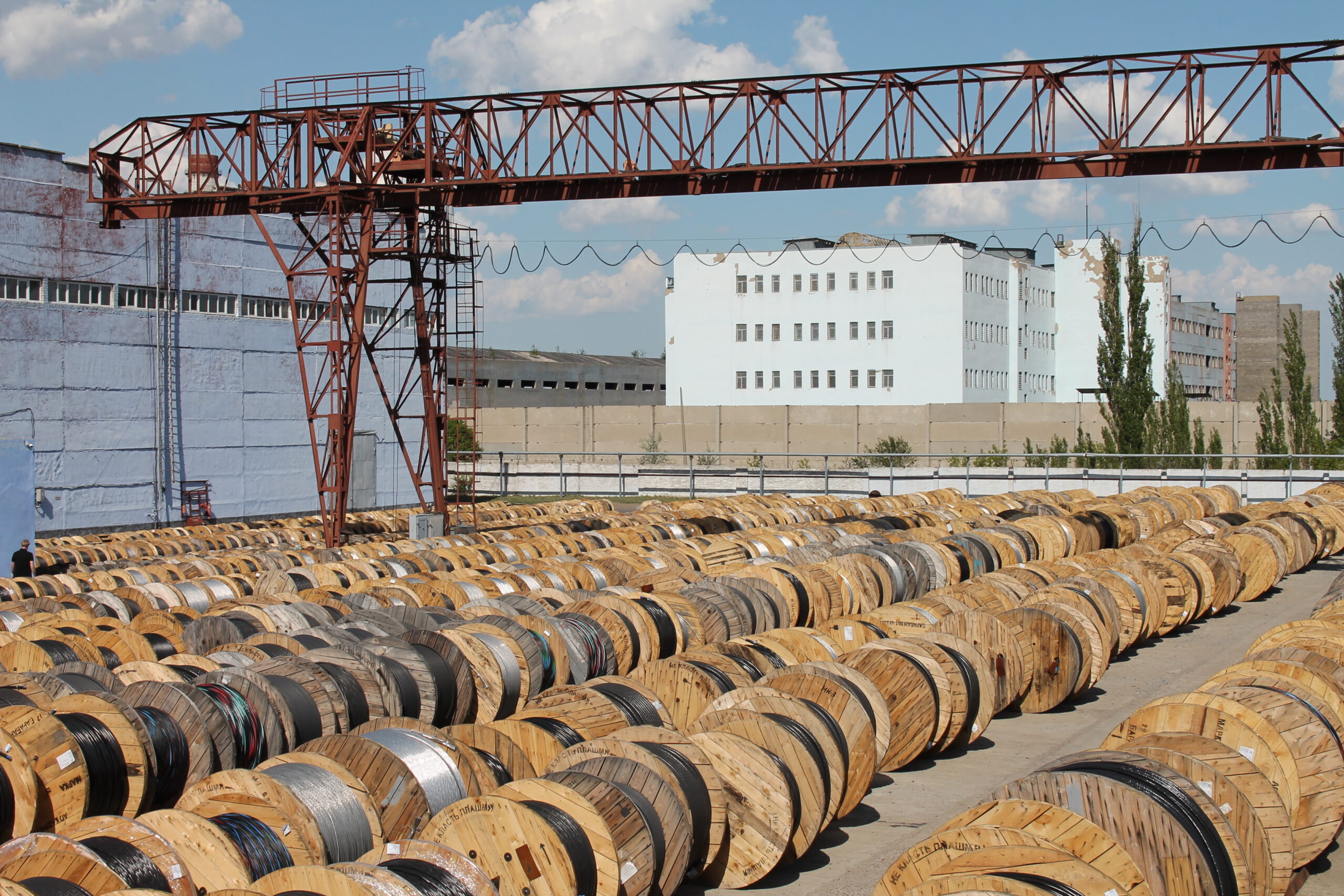
Fire-Resistant Cable: A Complete Guide to Selection and Application
Fire-resistant cable is a specialized cable that maintains the operability of electrical circuits under fire conditions for a specified standardized time. Unlike ordinary non-combustible cables (cable that does not support combustion with the “ng” index), which simply do not propagate flame, fire-resistant cables (with the FR, FRLS, FRHF index) must reliably transmit electricity and signals for life-support and safety systems critical during evacuation and firefighting.
1. Basic Principles and Regulatory Requirements
Operability under fire is the key property defined by standards. In Russia, the main document is GOST 31565-2012 (GOST R 53315-2009) “Cable products. Fire safety requirements”. It establishes classes and designations:
- Fire resistance indicator (circuit integrity): Denoted by the letters E (when tested with flame) or Eca (with flame and mechanical impact). The number after the letter indicates the time in minutes during which the cable remains operational under voltage (standard series: 30, 60, 90, 120, 150, 180). Fire-resistant fire cable most often has the index E90 or E120.
- Fire hazard indicators (accompanying, but no less important):
- ng(A)-FRLS: Does not propagate combustion when laid in groups (A — highest category), fire-resistant (FR), with low smoke and gas emission (LS).
- ng(A)-FRHF: Same, but the sheath is halogen-free (HF), meaning it does not emit corrosive and toxic gases (chlorine, fluorine) when smoldering.
- ng(A)-FRLSLTx: Combination of FR, LS and low toxicity (LTx) of combustion products.
Thus, the full marking might look like KUNGEng(A)-FRLS 2×1.5 E90, meaning: fire-resistant control cable with shield, non-combustible, low smoke emission, maintaining operability for 90 minutes.
2. Construction and Materials: How Fire Resistance is Achieved
Fire resistance is achieved not through a single material, but thanks to a special multi-layer construction.
| Construction Element | Materials and Technologies for Fire Resistance | Operating Principle and Key Properties |
| Current-carrying conductor | Copper. To increase contact reliability in extreme conditions, conductors are often tinned (coated with tin). Copper fire-resistant cable is the standard. | Copper maintains conductivity at high temperatures better than many metals. Tinning prevents oxidation and ensures connection reliability even after thermal exposure. |
| Fire-resistant barrier wrapping | Two or more tapes of mica-containing material (mica tape, micaceous tape), applied with overlap over each core or core bundle. | The heart of fire resistance. Mica is a natural mineral, non-combustible and heat-resistant. At temperatures of 700-1000°C, it sinters, forming a rigid ceramic insulating layer that prevents short circuits between cores even after the main polymer insulation has burned away. |
| Main core insulation | Silicone rubber (SiR), halogen-free compounds based on EVA (ethylene-vinyl acetate), cross-linked polyethylene (XLPE) with fire-retardant additives. | Provides insulation under normal conditions. During a fire, silicone rubber chars, forming a heat-insulating layer, while halogen-free materials minimize harmful emissions. |
| Shield (if present) | Braid made of tinned copper wires or a combined shield of copper tape and wires. Shielded fire-resistant cable is necessary for circuits sensitive to interference. | Protects the signal from noise. In fire-resistant cables, the shield can also serve as an additional heat sink and mechanical framework. |
| Inner sheath and filler | Halogen-free rubber compounds or compositions based on mineral fillers (e.g., aluminum hydroxide). | Fills the space between cores, giving the cable a round shape. When heated, mineral fillers release water, cooling the area and slowing fire propagation. |
| Outer sheath | Polymer compositions meeting the required fire hazard index: FRLS (PVC-based) or FRHF (halogen-free, polyolefin-based). | Provides protection from external influences. The FRHF sheath does not emit corrosive gases when burning, which damage electronics, critical for server rooms and data centers. |
3. Key Brands and Their Decoding
Manufacturers offer various brands adapted for specific tasks.
| Cable Type / Brand | Decoding and Design Features | Typical Application |
| KUNGEVng(A)-FRLS, KUNGEVng(A)-FRHF | Kontrolny (Control), Universalny (Universal), Negoryuchy (Non-combustible), with Germetichnym (Sealed) Ekranom (Shield), in Vinyl sheath, ng(A)-FRLS/FRHF. Has mica core wrapping. Copper conductors. | Fire safety systems: Fire alarm loops and communication lines (FACP), evacuation warning systems (EWS), smoke exhaust and fire suppression systems. Shielded versions for analog addressable systems. |
| PPGng(A)-HF, VVGng(A)-FRLS | Modifications of standard power cables (PPG, VVG) with fire-resistant (FR) execution and low smoke (LS) or halogen-free (HF). | Power supply for fire-resistant fire alarm cables, emergency lighting, evacuation lifts, air supply fans in buildings. |
| KSBVng(A)-FRLS, KSBEVng(A)-FRLS | Cables for data transmission systems (information, signaling) in fire-resistant design. Often have a complex structure: twisted pairs, overall shields. | Installation in evacuation warning and control systems, communication networks at facilities with high fire safety requirements. |
| VVGng(A)-FRLSLTx | Power cable with a full set of properties: fire resistance, low smoke emission, and low toxicity of combustion products. | Application in subways, airports, hospitals, children’s institutions — where evacuation may be difficult and smoke-free escape routes are critical. |
When choosing between FRLS and FRHF, the environment is key: FRLS is suitable for most tasks, while FRHF is mandatory where sensitive electronics are present or in enclosed spaces with people.
4. Areas of Mandatory Application
The use of fire-resistant cables is regulated by sets of rules (SP) and Federal Law No. 123-FZ. They are mandatory for:
- Fire protection systems (FPS): All cable lines ensuring the operation of fire-resistant fire alarm cables, evacuation warning and control systems (EWS), automatic fire suppression systems, smoke ventilation.
- Evacuation and life-support systems during fire: Emergency lighting of evacuation routes and zones, lifts for firefighters and evacuation of people with limited mobility, smoke exhaust and air supply systems.
- Facilities with mass occupancy of people: Entertainment and sports venues, shopping centers, railway stations, airports, subways, hospitals.
- High-rise and unique buildings: For all critical systems.
- Premises with limited access or difficult evacuation: Server rooms, data centers, basements, underground parking lots.
5. Selection Criteria: What to Pay Attention To
| Criterion | What to Check and Consider | Consequences of Error |
| Availability of Certificate and its Parameters | Mandatory presence of a fire safety certificate indicating the specific brand, manufacturer, and confirmed indicators: E (time), ng(A), LS/HF. Check the number and validity period. | Using uncertified cable invalidates the positive EMERCOM conclusion and leads to administrative liability. Without a certificate, compliance cannot be proven. |
| Fire resistance time (E) | Must match the project. For most FPS systems, E90 (90 minutes) is required. For some critical systems, it may be E120 or E180. | Cable with a lower fire resistance time may fail before evacuation or fire containment is complete, leading to safety system failure. |
| Sheath Type (FRLS vs FRHF) | Choice between FRLS (PVC-based) and FRHF (halogen-free). FRHF is more expensive but mandatory in rooms with electronics, in transport, in areas with poor ventilation. | Using FRLS instead of required FRHF in a server room can lead to corrosion and failure of expensive equipment from corrosive gases even before flame exposure. |
| Presence and Type of Shield | For analog addressable fire alarm systems, data transmission systems, a shield is mandatory (index “E” in the marking). | Lack of shielding in sensitive circuits will lead to interference, false alarms, or signal loss. | Conductor Cross-section Compliance with Project | The conductor cross-section must match the electrical calculation (current load, voltage drop). | Insufficient cross-section will lead to overheating and possible cable failure even under normal conditions. |
When searching for “buy fire-resistant cable” or analyzing “fire-resistant cables price“, remember: the price is formed from the cost of certified materials (mica, halogen-free compounds) and technology. Significant cheapening often indicates the use of substandard materials or the absence of certain elements (e.g., mica tape).
6. Installation Features
- Minimum bending radius: For fire-resistant cables, it is generally larger than for ordinary ones, due to the presence of rigid mica tapes. Violating the bending radius can damage the barrier layer.
- Connection and termination: It is recommended to use special fire-resistant terminals and sleeves. Connection points should be additionally protected with fire-resistant casings or mastics.
- Laying: Fire-resistant cables can be laid together with other cables having the “ng(A)” index. Laying with combustible cables is not recommended as it may reduce the overall fire resistance of the route.
- Fixing: The use of combustible fasteners (plastic ties) on evacuation routes is not permitted. Metal clamps, trays with appropriate fire resistance limits should be used.
7. Conclusion
Fire-resistant cable is not just a consumable item, but a strategic element of a building’s safety system. Its correct selection based on project requirements and valid certificates, quality installation, and application in circuits stipulated by regulations is a direct responsibility for human life and health.
Savings on this element are unacceptable. Purchasing cable products from trusted manufacturers, such as JSC “Kazenergokabel”, offering certified solutions like KUNGEVng(A)-FRLS, is a guarantee that at a critical moment, the safety systems will operate, fulfilling their task.