Contact Wire: A Complete Guide to Types and Applications
Contact wire is a key element for transmitting electrical energy from a source to a moving consumer. Its main task is to ensure reliable, continuous, and safe power supply for electric transport. Unlike conventional power cables laid stationary, contact wire is designed for constant mechanical contact with the current collector (pantograph) of an electric locomotive, tram, or trolleybus, which imposes special requirements on its strength, wear resistance, and electrical conductivity.
1. Purpose and Key Requirements for Contact Wires
The main application area is contact network wires for electric transport: railways, subways, trams, trolleybuses, and funiculars. This determines a unique set of requirements:
- High electrical conductivity: Minimization of energy losses during high current transmission.
- Wear resistance: Resistance to abrasion and mechanical impacts from the current collector.
- Strength and rigidity: Ability to withstand significant mechanical loads (tension, wind, vibration) without sagging and deformation.
- Weather resistance: Operation in conditions of rain, snow, temperature fluctuations, ultraviolet radiation, and aggressive environments.
- Reliable contact: Ensuring constant electrical contact with the current collector strip.
These requirements make copper and its alloys practically the only material for manufacturing contact line wires.
2. Main Types and Design Features
Contact wires are classified by cross-sectional shape and material, which directly affects their application.
| Wire Type (Grade) | Shape and Construction | Main Material | Key Characteristics and Purpose |
| MF (shaped) | Solid wire of special profile (shaped) with two longitudinal grooves. | Electrolytic copper (M1) or copper with alloying additives (cadmium, tin). | The grooves serve for reliable fixation in suspension fittings clamps and improve contact with the current collector. The main type for contact networks of railways and urban transport. Cross-sections: 85, 100, 120, 150 mm². |
| MK (round) | Solid wire of round cross-section. | Electrolytic copper (M1). | Used earlier; today it is mainly used as auxiliary wires (reinforcing, feeding) in the contact network, as well as in trolleybus lines. |
| MG, MGE (flexible) | Stranded wire twisted from many copper wires. MGE has a core of impregnated yarn or fiberglass yarn. | Soft (MM) or hard (MT) copper wire. | Possess high flexibility and vibration resistance. Copper contact wire of MG/MGE grades is used not in the contact network, but for internal connections in electrical installations, power equipment leads, in automotive and aviation technology, as flexible busbars and antennas. |
| NlF, BrF (special) | Shaped, similar to MF, or oval (FO). | Low-alloy copper (with Mg, Zr, Sn) or bronze (cadmium, magnesium-zirconium). | Possess increased strength and heat resistance (up to +110°C and +130°C). Used on high-speed sections of railways, in subway tunnels, where requirements for wear and heating are maximum. |
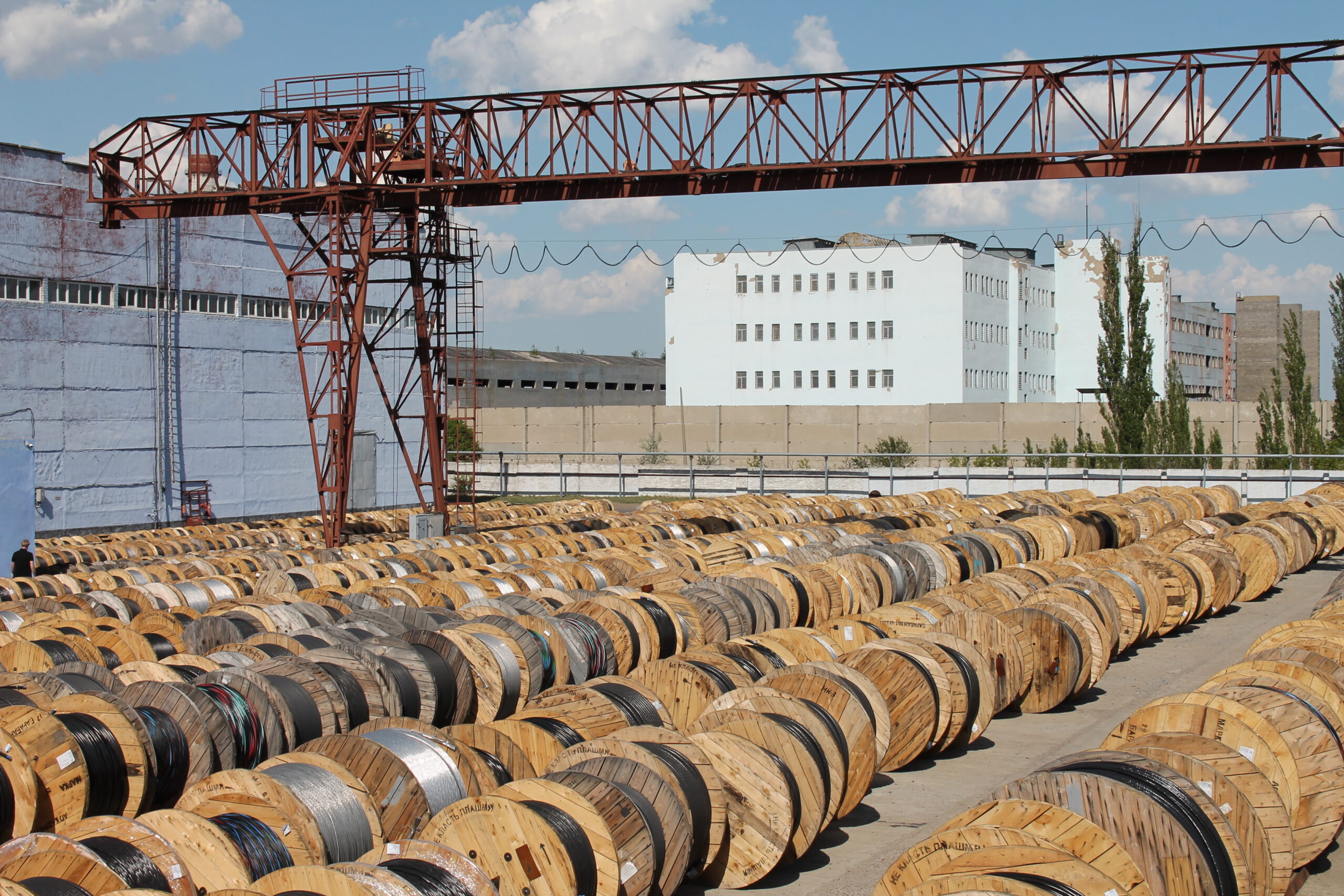
According to GOST 2584-86, all types of wires for contact networks (MF, NlF, BrF) must be supplied in coils ranging from 700 to 5500 meters in length depending on the cross-section, which minimizes the number of joints on the line.
3. Technical Characteristics and Standards (using MF as an example)
The main standard for contact network wires is GOST 2584-86 “Contact wires made of copper and its alloys”. Let’s consider the key parameters using the example of the most common MF wire.
- Nominal cross-section: 85, 100 mm² (also 120, 150 for special versions).
- Material: Copper grade M1 or M1F (with alloying additives for hardness).
- Mechanical properties:
- Tensile strength: not less than 362-367 MPa (~37 kgf/mm²).
- Elongation: not less than 3.5-4.0%.
- Operational parameters:
- Long-term permissible conductor heating temperature: +90°C (for MF copper).
- Operating temperature range: from -60°C to +40°C.
- Estimated weight of 1 km of MF-100 wire: ~890 kg.
- Service life: At least 6 years in the contact network (in practice, with proper operation, significantly longer).
4. Construction of the Catenary Suspension and the Role of the Wire
Contact wire on the railway is just one element of a complex system called the catenary suspension. Its main components are:
- Contact wire (CW): Directly contacts the current collector.
- Messenger wire: Located above the contact wire, bears mechanical loads and ensures its horizontal position using droppers.
- Droppers (supporting and steady): Connect the messenger wire to the contact wire, giving it a zigzag trajectory for uniform wear of the current collector strip.
- Support structures and fittings: Brackets, insulators, clamps for fastening and tensioning.
This design ensures the necessary tension of the wire, minimal bending when the current collector passes, and stability of current collection at high speeds.
5. Features of Installation and Operation
Installation and maintenance of the contact network is a complex engineering task requiring specialized knowledge and equipment.
- Tension: The wire must be tensioned with a precisely calculated force (usually 9-20 kN). Too little tension leads to excessive sagging and breakage, too much tension leads to a risk of rupture.
- Jointing: Special butt connectors are used to connect the ends of the wire, which must ensure electrical conductivity no worse than a solid wire and high mechanical strength.
- Height and zigzag adjustment: The height of the wire above the rail head level and the amount of lateral deviation (“zigzag”) are strictly regulated to ensure high-quality current collection.
- Maintenance: Includes regular inspection for wear and damage, tension control, height measurement, and replacement of worn sections.
6. Recommendations for Choosing Contact Wire
The choice of a specific wire type depends on the project conditions and tasks.
| Application Conditions | Recommended Wire Type | Justification |
| Urban electric transport (tram, trolleybus), main railway lines | MF (copper shaped) | Optimal combination of conductivity, strength, and price. Grooves ensure reliable fixation. |
| High-speed and very high-speed traffic, subway tunnels, sections with high current load | NlF or BrF (low-alloy or bronze) | Increased strength and heat resistance for severe operating conditions. |
| Internal flexible connections in electrical equipment, power panels, generator leads | MG, MGE (flexible copper) | High flexibility, ease of installation in confined spaces, vibration resistance. NOT for contact network. |
| Restoration or repair of contact network sections | The same type and cross-section as on the existing section | Ensuring uniformity of mechanical and electrical characteristics of the entire line. |
7. Modern Trends and Development
- Increase in cross-section and strength: To power more powerful locomotives and increase line capacity, wires of increased cross-section (150 mm² and more) made of low-alloy copper are used.
- Composite messenger wires: Introduction of wires with an aluminum sheath and a steel core, which simultaneously act as a supporting element and a conductor, simplifying the suspension design.
- Automatic tension control systems: Use of hydraulic or spring compensators that automatically maintain constant wire tension when temperature changes, which is critical for high-speed lines.
- Increased service life: Development of new alloys and coatings that reduce wear on both the wire and the carbon inserts of the current collector.
8. Conclusion
Contact wire is a high-tech product, and the reliability and safety of the entire electric transport system directly depend on its quality and correct selection. The choice between standard copper MF, stronger low-alloy, or specialized flexible MG must be based on a clear understanding of the operating conditions: type of transport, loads, climatic factors.
Using products that comply with GOST from trusted manufacturers, such as JSC “Kazenergokabel”, is a guarantee of durability and uninterrupted operation of contact line wires. Proper installation and qualified maintenance complete the chain, ensuring efficient energy supply throughout the entire service life, which is measured in decades.
To select a specific grade and cross-section of contact wire, it is recommended to contact the technical specialists of the manufacturing plant.