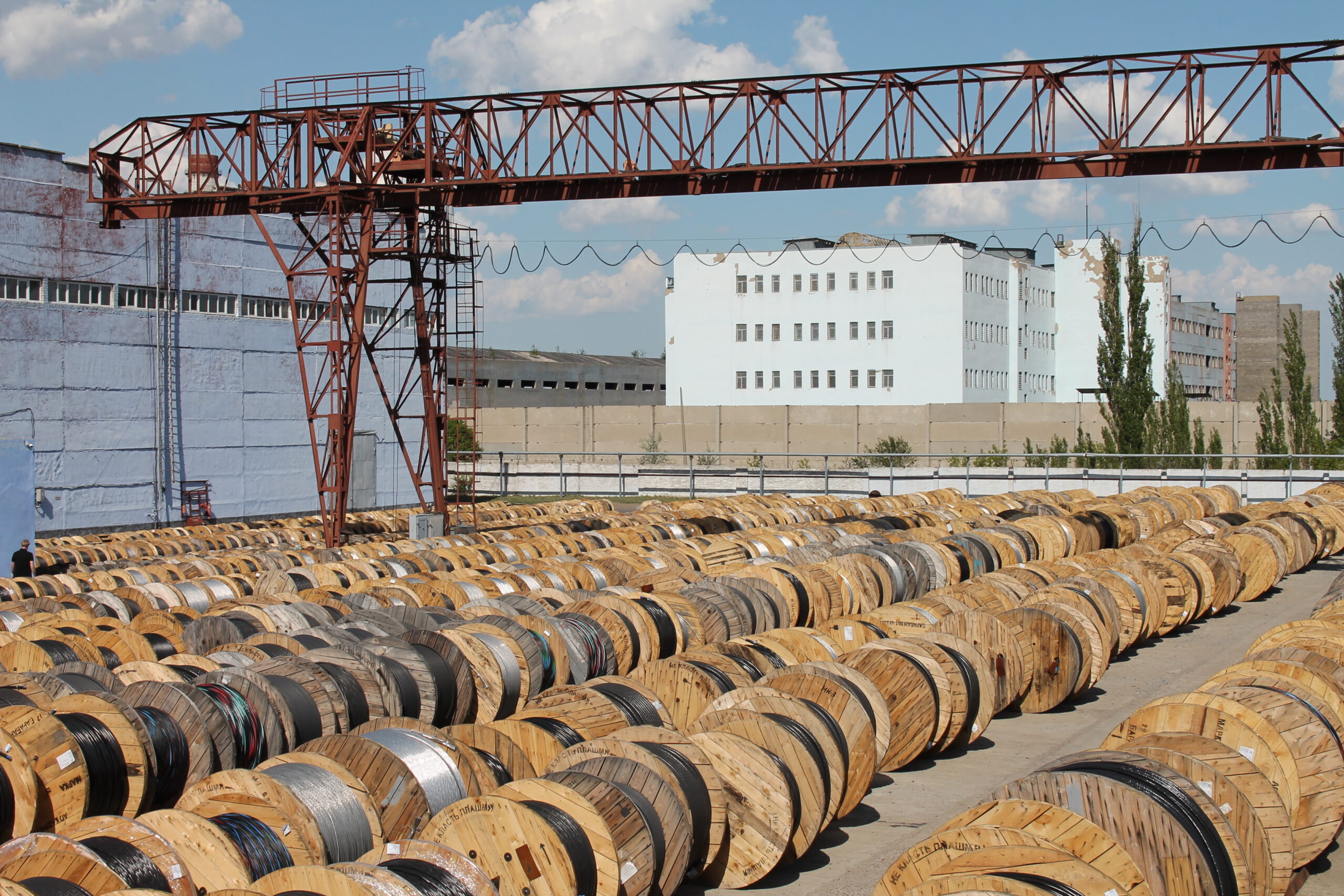
Overhead Wires: A Complete Guide to Selection and Application
Overhead wire is the foundation of overhead power lines designed for the transmission and distribution of electricity across a territory. The correct choice of wire type determines the reliability, economic efficiency, and safety of the entire power grid. Depending on the purpose of the line (main high-voltage overhead lines or low-voltage branches to consumers), wires with fundamentally different characteristics in terms of conductivity, strength, and degree of protection are required.
1. Classification and Main Types of Overhead Wires
All overhead line wires can be divided into two large groups based on a key feature — the presence of insulation.
| Category | Description and Principle | Advantages | Disadvantages and Limitations | Main Grades |
| Non-insulated (bare) wires | Conductors without an outer insulating layer. Electrical insulation is provided solely by the air gap between wires and from the wire to the ground. | Maximum heat dissipation to the environment, allowing high currents to pass. Relatively low cost. High mechanical strength. | Require significant clearances for safety. High probability of short circuits due to wire slapping from wind or foreign objects. Difficulty of installation in confined spaces. | A, AC, ASK, ASKP, AVT |
| Insulated wires | The conductive core is covered with a layer of polymer insulation (most often light-stabilized polyethylene). Insulation protects against accidental contact and short circuits. | Enhanced safety, possibility of installation in confined spaces, along building walls, in tree branches. Resistance to wire slapping. Reduction of corona losses at certain voltages. | Higher cost. Limited resistance to ultraviolet radiation and temperatures compared to bare metal (for polymer insulation). Difficulty in visually inspecting the condition of the core. | SIP (Self-Supporting Insulated Wire), SIP-2, SIP-3 |
2. Non-insulated Wires for Overhead Lines: Grades and Features
These are traditional and widely used solutions for high-voltage main and distribution networks. The marking reveals their construction.
- “A” — Aluminum. A simple wire made of aluminum strands. Used on overhead lines up to 35 kV in areas with low air pollution. It has low mechanical strength.
- “AC” — Aluminum with Steel Core. In the center of the wire is a core of galvanized steel strands, around which aluminum strands are twisted. The steel bears mechanical loads (weight, wind, ice), while the aluminum conducts current. This is a universal and the most common wire for overhead lines 6-220 kV and above.
- “ASK” / “ASKP” — Aluminum with Steel Core Surrounded by Compact Aluminum Strands. An improved version of AC. The compact arrangement of strands reduces the outer diameter for the same cross-section, which reduces wind and ice loads, as well as corona losses. ASKP has additional impregnation of the core with anti-corrosion lubricant.
- “AVT” — Aluminum with Supporting Rope. Constructively consists of a separate galvanized steel rope (supporting element) and one or more layers of aluminum wires (current-carrying elements) attached to it. Allows the creation of lines with long spans.
Selection of non-insulated wires is carried out based on the cross-section of the aluminum part (e.g., AC 70/11: aluminum cross-section 70 mm², steel cross-section 11 mm²) based on the calculation of mechanical and electrical loads.
3. Self-Supporting Insulated Wires (SIP): A Revolution in Distribution Networks
The technology of overhead lines with insulated wires has fundamentally changed the approach to constructing 0.4-35 kV distribution networks. Its foundation is the SIP wire.
Key elements of SIP construction:
- Supporting core: A neutral insulated or non-insulated core made of aluminum alloy, bearing the mechanical load. In some grades (SIP-4), there is no supporting core, and all cores are equivalent.
- Phase insulated cores: Aluminum conductive cores covered with light-stabilized cross-linked polyethylene, resistant to UV radiation.
- Insulation: Usually made of black thermoplastic or cross-linked polyethylene.
Main SIP grades and their application:
| SIP Grade | Construction | Purpose | Features |
| SIP-1, SIP-1A | Three insulated phase cores twisted around a non-insulated neutral supporting core (made of aluminum alloy). In SIP-1A, the neutral core is also insulated. | Overhead lines with voltage 0.4/0.22 kV. Mains and branches to consumers. | The most common type for house connections and street lighting. SIP-1A is safer when in contact with trees. |
| SIP-2, SIP-2A | Similar to SIP-1, but all cores (including the neutral) are insulated. Insulation is rated for higher voltage. | Overhead lines with voltage up to 1 kV. Often used in marine climates, high humidity, saline conditions. | Increased resistance to aggressive environments. Higher cost. |
| SIP-3 | Single-core wire. Conductive core made of aluminum alloy surrounded by steel wires (core), with outer insulation of cross-linked polyethylene. | Overhead lines with voltage 6-35 kV. For medium voltage main and distribution lines. | High mechanical strength. Allows increasing spans between supports. Replacement of traditional bare wires on 6-10 kV overhead lines. |
| SIP-4, SIP-5 | Does not have a separate supporting core. Several (2-4) identical insulated cores made of aluminum alloy twisted together. | Branches from overhead lines to building entrances, installation along facades. | All cores are equal. Requires special supporting hardware as it lacks a power supporting core. |
4. Comparative Analysis: Non-insulated Wire (AC) vs. SIP
The choice between the two technologies determines the appearance and operational characteristics of the network for decades.
| Criterion | Non-insulated Wire (AC) | Self-Supporting Insulated Wire (SIP) | Conclusions and Recommendations |
| Safety | Low. High risk of electric shock upon contact, short circuits from wire slapping or falling trees. | High. Insulation protects against accidental contact. Reduced probability of short circuits and fire. | SIP is preferable in populated areas, private sectors, and areas with green spaces. |
| Reliability and Fault Tolerance | Weather dependent. Frequent outages due to slapping, branches, snow adhesion. | High. Insulation prevents slapping. Construction is more resistant to icing. | SIP ensures more stable power supply, especially in harsh climatic conditions. |
| Installation and Operation Cost | Lower wire cost, but higher installation cost (insulators needed, wider right-of-way, taller supports). Requires regular right-of-way clearing. | Higher wire cost, but lower installation cost (easy installation, smaller supports, no insulators). Minimal maintenance costs. | AC is economical for long main overhead lines in unpopulated areas. SIP is more advantageous in the long term for distribution networks. |
| Aesthetics and Convenience | Wide corridors, tall supports. Visually clutters the space. | Possibility of compact installation, including along facades. Neater appearance. | SIP is the only choice for concealed installation in dense urban or cottage areas. |
| Application Area | Main overhead lines 35 kV and above, 6-10 kV distribution networks in open areas. | 0.4-35 kV distribution networks, building entrances, street lighting, densely built-up areas. | The choice is determined by voltage, route location, and safety requirements. |
5. Criteria for Selecting and Sizing Overhead Wires
Algorithm for selecting overhead electrical wires for a specific project:
- Determination of the line’s rated voltage: 0.4 kV, 6-10 kV, 35 kV, 110 kV and above. This is the key factor determining the type of insulation and construction.
- Calculation of electrical loads and selection of cross-section: Based on the maximum transmitted current, considering voltage drop losses and economic current density, the minimum permissible cross-section of the conductive part (aluminum) is selected.
- Analysis of climatic conditions (ice and wind region): Based on the zoning map, the load from ice and wind is determined, which affects the mechanical calculation and the choice of wire grade (AC, ASK) or SIP type.
- Choice of wire type based on installation conditions:
- Check for corona conditions (for overhead lines 110 kV and above): For high voltages, a wire with an increased diameter (or split phase) is selected to avoid corona discharge losses and radio interference.
6. Installation and Operation: Key Differences for Different Wire Types
- For non-insulated wires (A, AC):
- Requires a set of insulators, hardware (clamps, tension strings).
- Mandatory observance of clearances to ground, buildings, trees.
- Regular inspection and tightening in clamps, clearing the route from vegetation are necessary.
- For SIP:
- Special hardware is used: anchor and suspension clamps, insulation piercing connectors for branches.
- Installation is possible on lower supports and with smaller distances to objects.
- Maintenance is minimal: visual inspection for mechanical damage to the insulation.
7. Conclusion: Trends and Prospects
The market for overhead line wires today shows a clear trend towards increasing the safety and reliability of distribution networks through a massive transition to insulated wires of the SIP type. For main high-voltage lines, development proceeds along the path of creating wires with increased transmission capacity and improved aerodynamic characteristics.
The correct choice between a traditional overhead line wire of the AC type and modern SIP is not just a technical decision, but a strategic calculation for the long term, considering the life cycle cost, reliability of consumer supply, and safety.
You can always review the range and select a suitable overhead wire in the manufacturer’s catalog.