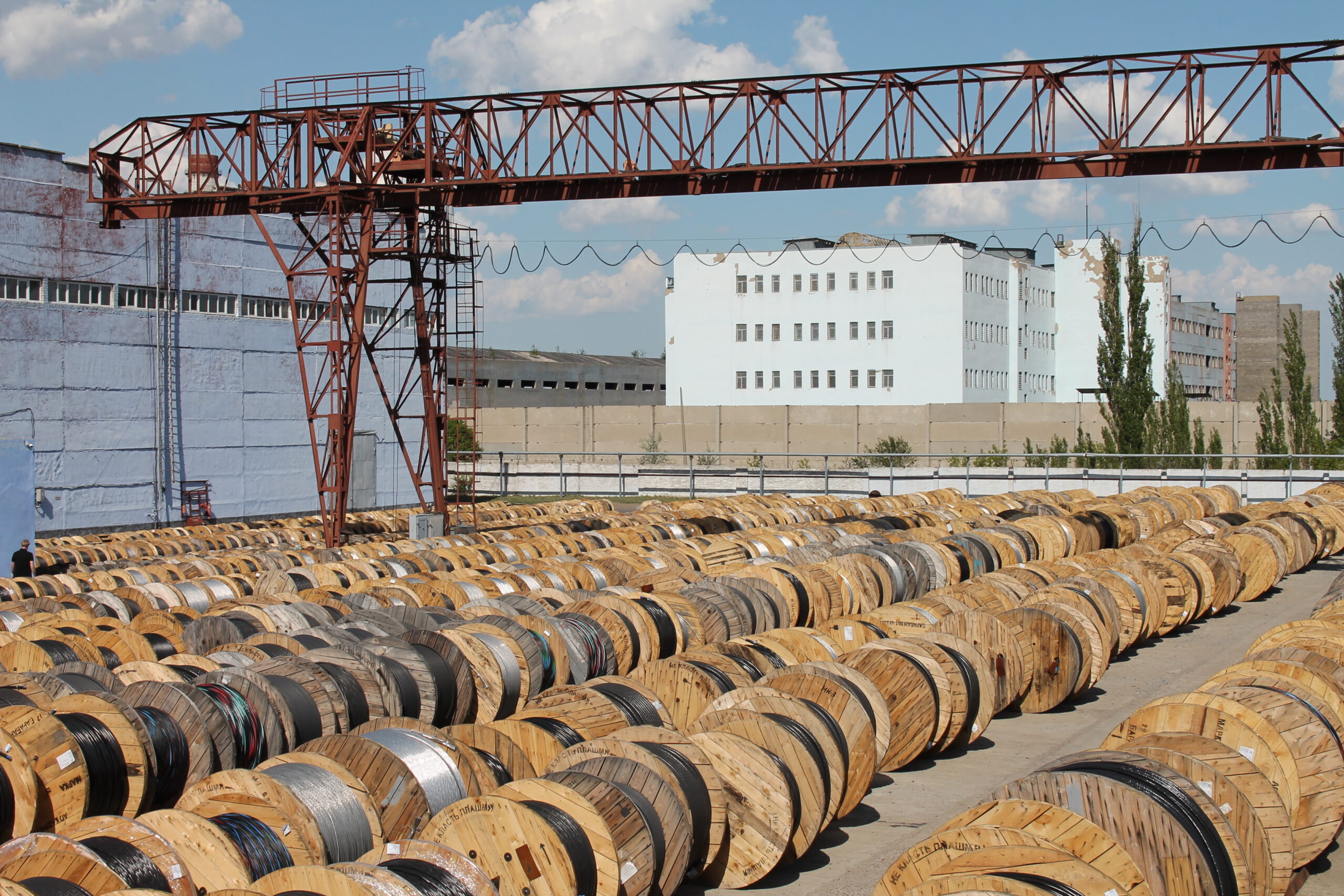
KGVV Cable: Flexible Power Cable for Stationary and Mobile Installation
In power supply and control systems for moving mechanisms, conductors that combine flexibility, strength and resistance to bending are in demand. The KGVV cable meets these requirements. This article discusses its construction, marking decoding, specifications, popular cross-sections (3×1, 3×1.5, 4×1, 7×1, 7×1.5) and special versions (ng, ng-A-LS, LS, HL).
1. KGVV marking decoding
Decoding of the abbreviation KGVV:
- K — cable;
- G — flexible (stranded conductors of increased flexibility);
- V — conductor insulation made of PVC compound;
- V — outer sheath made of PVC compound.
The cable is intended for connecting moving mechanisms, stationary installations with frequent bending, as well as for control circuits and power networks with voltage up to 660 V AC at 50/60 Hz or up to 1000 V DC. The letter “G” in the marking indicates increased flexibility compared to stationary cables of the VVG type.
2. Construction features
KGVV cable is produced with copper stranded conductors of flexibility class 4 or 5 according to GOST 22483. Conductor cross-sections — from 0.75 to 10 mm², number of cores — from 2 to 37. PVC compound insulation has colour coding (blue, brown, black, grey, yellow-green for grounding). The cores are twisted into a common core with interstice filling to give a round shape.
The outer sheath is made of grey or black PVC compound. The cable has no armour or overall shield (unlike the KGVVE modification). The absence of a shield simplifies the construction and reduces cost. The flexibility allows the cable to be laid in confined spaces and on moving connections (cranes, conveyors, lifts).
For difficult operating conditions, special versions are available: ng (flame retardant), ng-A-LS (group flame retardant category A, low smoke emission), LS (Low Smoke — reduced smoke and gas emission), HL (cold-resistant version for temperatures down to –50°C).
3. Technical specifications
The main parameters of KGVV cable are given in the table (using the example of the version with PVC insulation and sheath).
For ng-A-LS and LS versions, the smoke emission index does not exceed 50% light transmittance, and the emission of corrosive gases is limited. The cable remains operational at relative humidity up to 98%.
4. Versions ng, ng-A-LS, LS, HL
Depending on the installation conditions, the appropriate modification is selected:
- KGVV ng — does not propagate flame during single laying. Used indoors without group laying requirements.
- KGVV ng-A-LS — does not propagate flame during group laying according to category A (the strictest requirements), with low smoke and gas emission. Mandatory for subway facilities, hospitals, children’s institutions, high‑rise buildings.
- KGVV LS — reduced smoke emission but without the group flame retardant category (usually used as an analogue of ng-LS).
- KGVV HL — cold‑resistant version. Insulation and sheath made of cold‑resistant PVC, remain elastic down to –50°C. Installation is allowed at –30°C without preheating. Widely used in the Far North regions and outdoors in winter.
Combined versions, for example KGVV ng-A-LS HL, are produced on special order and marked with additional indices.
5. Popular sizes: 3×1, 3×1.5, 4×1, 7×1, 7×1.5
The most popular cables are those with conductors of 1 mm² and 1.5 mm². This is due to the balance between current load, flexibility and price. Specific modifications:
- KGVV 3×1 — three cores of 1 mm². Used for connecting low‑power single‑phase consumers (lighting, ventilation, sensors).
- KGVV 3×1.5 — three cores of 1.5 mm². Used for powering three‑phase motors up to 1.5 kW, portable lamps, power tools.
- KGVV 4×1 — four cores (three phases + PE or three phases + N). For three‑phase circuits with grounding for low‑power machine tools.
- KGVV 7×1 — seven cores of 1 mm². Widely used in control and signaling circuits (7 signal lines in one cable).
- KGVV 7×1.5 — seven cores of 1.5 mm². For controlling a group of mechanisms or powering several low‑voltage loads.
All the listed cross‑sections are available in ng, ng-A-LS, HL versions. When ordering, specify the full marking, for example: “KGVV ng-A-LS 7×1.5”.
6. Application area
The application area of KGVV cable covers industry, construction and infrastructure:
- Machine tool and mechanical engineering — connecting moving units, robots, conveyor lines.
- Lifting mechanisms — cranes, hoists, lifts where frequent bending is required.
- Construction sites — portable power extension cords, temporary lighting.
- Automation systems — connecting controllers to sensors and actuators (for signal circuits).
- Public buildings — installation in ventilated facades, above suspended ceilings (using ng-A-LS versions).
- Power facilities — control circuits at substations, in distribution cabinets.
The cable is suitable for laying in cable trays, boxes, pipes, under plaster, as well as for open wiring indoors. Direct burial in the ground without protection is not allowed (absence of armour).
7. Compliance with GOST and certification
KGVV cables are manufactured according to GOST R 53769-2010 or according to TU 16.K73.05-2017 (depending on the plant). Main regulatory documents:
- GOST 22483 — requirements for conductors.
- GOST R 53769-2010 — flexible power cables with PVC insulation.
- GOST R 53315-2009 — fire safety requirements.
- TR CU 004/2011 — on the safety of low‑voltage equipment.
Products are accompanied by Customs Union certificates of conformity and fire safety certificates. The presence of documents confirms safety and the stated specifications.
8. Installation and operation features
To maintain flexibility and insulation properties, the following rules are observed:
- Minimum bending radius — 6 outer diameters. For a 7×1.5 cable with a diameter of about 12 mm, the radius is 72 mm.
- Tension exceeding 50 N/mm² of the conductor cross‑section is not allowed.
- Installation at sub‑zero temperatures is allowed only for the HL version (down to –30°C). Standard KGVV requires preheating.
- Joint laying with cables that emit oils and solvents that destroy PVC is prohibited.
- Stripping of ends — using cable knives; for stranded conductors, tinning or crimping with ferrules is recommended.
The frequency of insulation resistance monitoring is once every 2 years for critical circuits.
10. Conclusion
KGVV cable is a reliable flexible power cable for connecting mobile and stationary devices. Marking decoding is simple: “G” means flexibility, two “V”s mean PVC insulation and sheath. A wide range of cross‑sections (3×1, 3×1.5, 4×1, 7×1, 7×1.5) covers needs from lighting to multi‑core control circuits. Versions ng, ng-A-LS, LS, HL allow the cable to be used in fire‑hazardous areas and at low temperatures. Products comply with GOST and are certified. To purchase, go to the section KGVVE cable.