- Design and Sealing Principle
- Materials and Protective Coatings
- Diameters and Technical Characteristics
- Marking and Popular Series
- Connectors and Sealed Entries
- Laying and Installation
- Leak Tightness Check and Periodic Inspection
- Storage and Transportation
- Typical Installation Mistakes
- Earthing of the Metal Hose
- Regulatory Documentation and Certification
- Advantages over Ordinary Metal Hose and HDPE Pipe
- Selection Recommendations
- Conclusion
Hermetic Metal Hose: Design, Materials, Installation and Application
Protection of cable lines from moisture, dust and mechanical damage requires reliable solutions. One of them is a hermetic metal hose. It combines the flexibility of a metal sheath with the leak-tightness of a polymer coating. In this article we will consider the design, materials, typical diameters and installation features of such a hose. Product examples and detailed characteristics are presented on the page hermetic metal hose.
1. Design and Sealing Principle
The hermetic metal hose consists of two main layers. The inner one is a spirally wound metal strip forming a flexible tube. It can be made of galvanized steel or stainless steel. The outer layer is a polymer sheath that tightly adheres to the metal and ensures leak-tightness. The polymer coating protects against water, oils, ultraviolet radiation and aggressive media. Unlike an ordinary metal hose where gaps remain between the turns, here the sheath fills the irregularities and creates a continuous waterproof barrier. Due to this, the cable inside does not contact moisture, and the hose itself can be laid outdoors, in the ground and in damp premises.
The profile of the metal strip is selected so that after winding it forms a closed ring with minimal gaps. Then, during the extrusion process, hot plastic compresses the metal, penetrating into micro-cavities, and after cooling becomes a single structure. This method eliminates delamination even under repeated bending. As a result, a protection rating of IP65 or IP67 is achieved, depending on the type of sheath and connectors.
2. Materials and Protective Coatings
The metal base of the hose is made of galvanized steel according to GOST 14918-80 or stainless steel AISI 304 or 316. The galvanized version is intended for normal conditions, the stainless one — for aggressive environments, chemical productions and marine climate. The polymer sheath is made of PVC compound, polyurethane PU or special compositions resistant to low temperatures. A hose with PVC insulation is the most common solution. For facilities with increased fire safety requirements, a version with the index “ng” — non-flammable — is produced, for example, GERDA MG 16 ng, GERDA MG 22 ng. The low-temperature metal hose retains flexibility down to –55 °C, and the polyurethane PU sheath is distinguished by resistance to abrasion and oils. The properties of flexible hoses are described in detail in the material about flexible metal hose.
The PVC sheath can be grey, black or blue. Black is preferable for outdoor installation as it contains carbon black, which increases resistance to ultraviolet radiation. The thickness of the polymer coating varies from 0.5 to 2.5 mm depending on the diameter and protection class.
3. Diameters and Technical Characteristics
Hermetic metal hoses are produced in a wide range of diameters — from 10 to 100 mm and more. The diameters 16 mm, 20 mm, 25 mm, 32 mm, 40 mm and 50 mm are in demand. For ease of selection, we provide a table of typical sizes.
| Diameter, mm | Internal diameter, mm | Outer diameter, mm | Bending radius, mm | Length in coil, m |
| 16 | 15.0 | 19.5 | 50 | 100 |
| 20 | 19.5 | 24.5 | 60 | 50 |
| 25 | 24.0 | 29.5 | 75 | 50 |
| 32 | 31.0 | 38.0 | 95 | 25 |
| 40 | 39.0 | 47.0 | 120 | 25 |
| 50 | 49.0 | 58.5 | 150 | 25 |
The diameters are designated by the nominal size DN. For example, DN 15 mm in PVC insulation corresponds to a metal hose with an internal diameter of about 15 mm and an outer diameter of 19.5 mm. Similarly, DN 35 mm and DN 40 mm are internal diameters of 35 and 40 mm respectively. The 50 mm hose is often used for trunk cable routes. The indicated values may slightly vary depending on the manufacturer. When selecting a hose for a cable, it is useful to know that a standard VVG 3×2.5 cable with an outer diameter of about 10 mm freely passes into a DN 16 metal hose.
4. Marking and Popular Series
Several lines of hermetic metal hoses are presented on the Russian market. Among them, the following stand out:
- GERDA MG — a series of metal hoses with a PVC sheath. Includes diameters from 16 to 50 mm. The index “ng” means non-flammable version. GERDA MG 16, GERDA MG 22 — popular items for laying cables in residential and industrial buildings. GERDA MG 22 ng and GERDA MG 16 ng are suitable for facilities with increased fire requirements. They are made of galvanized steel.
- MRPING — a metal hose with polymer insulation, non-flammable. MRPING 20, MRPING 25 — popular sizes for office and commercial premises. They are distinguished by resistance to ultraviolet.
- Stainless steel metal hose — made of AISI 304, 316 steel. Used in the food, chemical industries, and also in sea water. Can be with PVC or PU insulation.
- Metal hose in PU insulation — the polyurethane sheath provides high resistance to abrasion, oils and aggressive chemicals. Used in machine tool building and moving connections.
5. Connectors and Sealed Entries
To ensure the leak-tightness of the entire system, special connectors are used together with the hose. They are brass or galvanized steel fittings with sealing rings made of neoprene. The GERDA SG connector is a straight connection of a metal hose to the body of a panel or a junction box. It provides an IP65 protection rating when correctly installed. There are also angle connectors, tees and plugs. The sealed entry is selected according to the hose diameter and the type of cable sheath. Installation of the connector is simple: the hose is inserted into the fitting, the nut is tightened, compressing the sheath and creating a seal. The use of ordinary couplings without seals is not permitted, as they compromise the leak-tightness. Detailed information on connector compatibility is given in the manufacturers’ catalogues.
When installing the connector, it is important to tighten the nut with the recommended torque so as not to over-compress the polymer sheath and cause its cracking. For large-diameter metal hoses, connectors with double sealing are used, guaranteeing protection even under vibrations.
6. Laying and Installation
A hermetic metal hose is installed according to the same rules as an ordinary metal hose, but with control of the sheath integrity. The route is laid along walls, ceilings, in trays, in the ground. Fastening is performed with clips or clamps at a spacing of 30–50 cm. The bending radius must not be less than the values indicated in the table, otherwise a kink of the metal strip and damage to the polymer coating are possible. When laying in the ground, the hose is protected by a sand bed and warning tape. For vertical installation, additional fastening is provided every 1–1.5 m. It is important to prevent construction debris from getting inside the hose, for which the open ends are temporarily plugged. After pulling the cable, the entries are sealed with connectors.
The metal hose is cut with a hacksaw for metal or a tube cutter with a fine tooth to avoid burrs. The edges are filed and coated with restorative paint if the galvanizing is damaged. When pulling the cable inside, a steel draw wire is used, after making sure that it has no sharp edges capable of damaging the insulation. To facilitate pulling, the use of talc or a special lubricant compatible with the polymer sheath is allowed.
The 16 mm hermetic metal hose is convenient for connecting luminaires and sensors. The 20 mm diameter — for socket groups, 25 mm — for distribution lines. The 40 mm and 50 mm hoses are used at building entries and in cable ducts. When selecting the diameter, the fill factor is taken into account: the total cross-section of conductors must not exceed 40% of the internal cross-section of the hose. This ensures easy pulling and sufficient heat dissipation.
7. Leak Tightness Check and Periodic Inspection
After completing the installation, a leak tightness test of the system is carried out. For this, the route, plugged at one end, is pressurized with air at an overpressure of 0.2–0.3 bar and the pressure drop is monitored over 5 minutes. The permissible leakage is standardized by the factory instructions. Additionally, the connectors are inspected for cracks and displacement of the sealing rings. During operation, the metal hose is periodically inspected: the integrity of the sheath, the absence of corrosion on visible metal parts and the tightening of nuts are checked. Sections subject to vibration are thoroughly checked — there the fasteners may loosen. Visual inspections are carried out at least once a year, and in aggressive environments — once every six months.
8. Storage and Transportation
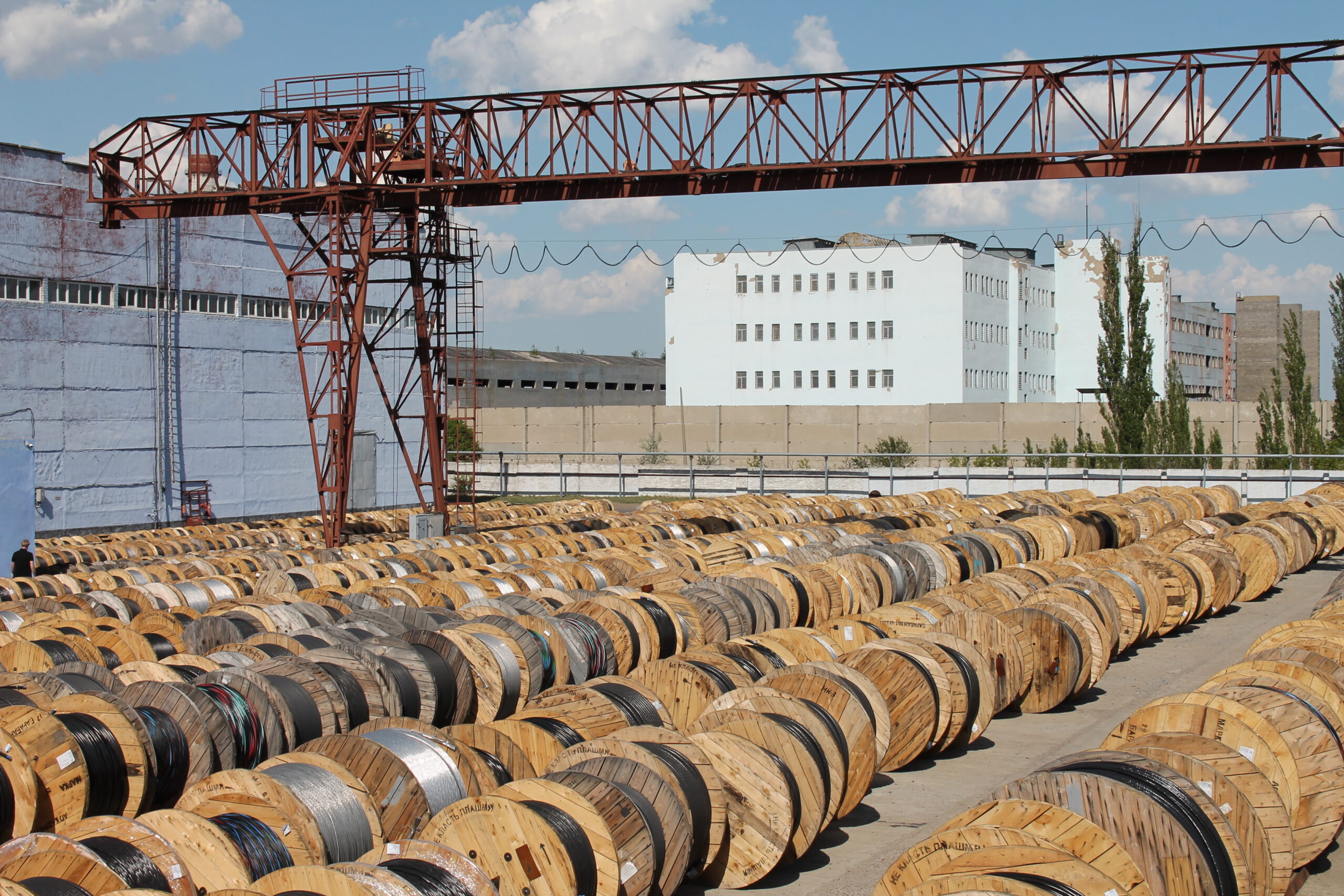
Coils of metal hose are stored in dry enclosed rooms at temperatures from –20 to +40 °C. Storage near heating appliances and under direct sunlight is not permitted, since prolonged exposure to ultraviolet reduces the elasticity of the PVC sheath. During transportation, the coils are laid horizontally, avoiding kinks and compression. Before installation, the hose is kept at a temperature not lower than –5 °C so that the sheath restores flexibility. If installation is carried out at subzero temperatures, low-temperature grades are used.
9. Typical Installation Mistakes
Violations during the installation of a hermetic metal hose are often associated with incorrect cutting — the remaining burrs damage the insulation of the wires during pulling. Another mistake is exceeding the bending radius, due to which the sheath cracks or peels away from the metal. The use of connectors without seals or of an inappropriate diameter leads to loss of leak-tightness. Neglecting earthing is also critical: if the metal sheath is not earthed, the body may become live if the cable insulation is damaged. Finally, splicing hoses by twisting or with couplings not certified by the manufacturer is not permitted — this violates the integrity of the protection and voids the warranty.
10. Earthing of the Metal Hose
The metal hose must be earthed in accordance with the requirements of the PUE. For this purpose, earthing clamps are installed at the ends of the hose, which ensure reliable contact with the metal strip. The clamps are connected with a copper conductor of at least 2.5 mm² cross-section to the earthing circuit. The resistance of the earthing circuit is checked with a megohmmeter. High-quality earthing is especially important for metal hoses without a polymer coating, but hermetic versions also require this procedure, since the inner metal sheath may become live if the cable insulation is damaged.
11. Regulatory Documentation and Certification
The quality of hermetic metal hoses is confirmed by certificates that attest that the products comply with GOST 12177-79, TU 3449-001-76960731-2008 or similar technical specifications of the manufacturer. The IP protection rating is assessed according to GOST 14254-2015. Hoses with the “ng” index must have a fire safety certificate according to GOST 31565-2012. The product passport indicates the material, diameter, IP protection rating, combustibility class. For use in fire protection systems, confirmation of the fire resistance limit as part of a cable penetration is required. The marking on the sheath contains the manufacturer’s name, the date of manufacture, the diameter and the bar code.
12. Advantages over Ordinary Metal Hose and HDPE Pipe
Compared to a non-hermetic metal hose, the hermetic version reliably protects the cable from moisture, which eliminates corrosion of conductors and insulation breakdown. Unlike a rigid HDPE pipe, it retains flexibility, allowing obstacles to be bypassed without additional fittings. This reduces installation time and the number of connecting elements. A hermetic metal hose with PVC insulation withstands impact loads without deformation. Vibration resistance makes it suitable for moving parts of machines and conveyors.
13. Selection Recommendations
When selecting a specific model, the operating conditions are taken into account. For indoor installation in dry premises, a galvanized hose with a PVC sheath without the “ng” index is sufficient. For escape routes and rooms with mass occupancy, the non-flammable “ng” version is mandatory. In chemical productions and marine climates, stainless steel and PU sheath are used. For outdoor installation at low temperatures, low-temperature PVC insulation or special grades that retain flexibility down to –55 °C are chosen. An example is the low-temperature metal hose with PVC insulation. When ordering, the diameter and grade are indicated, for example, MG 25 or MRPING 20. The entire product range is available in the hermetic metal hose section.
14. Conclusion
A hermetic metal hose is a reliable protection for cables in severe conditions. The combination of metal strength and polymer leak-tightness ensures the durability of the wiring. Precise selection of the material, diameter and type of sheath, as well as careful installation using certified connectors guarantee the safety and trouble-free operation of the network for decades.