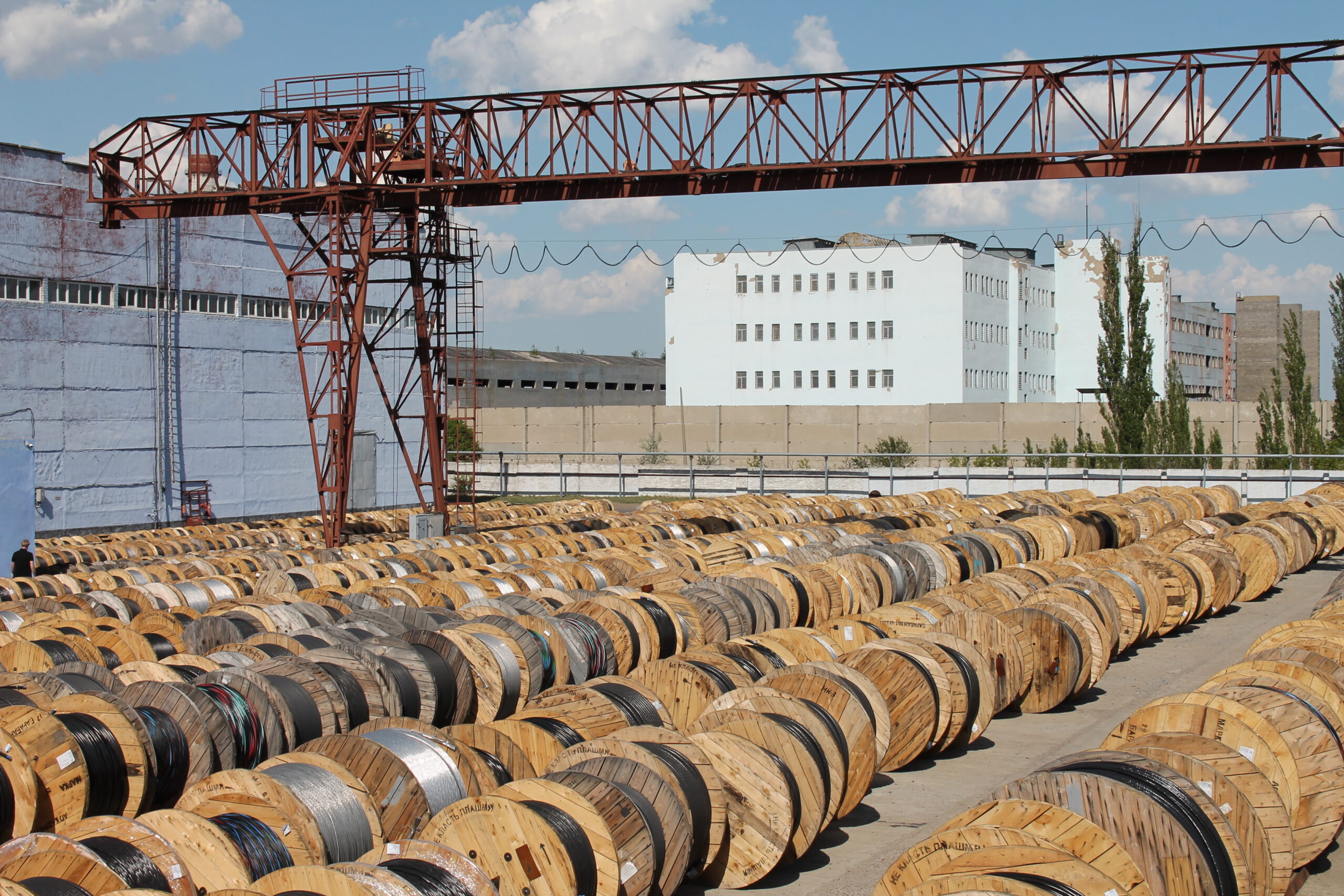
TERK Thermoelectrode Cable: Complete Guide to Selection and Application
TERK thermoelectrode cable (термоэлектродный кабель) is a specialized cable product designed for connecting thermocouples to measuring instruments and transducers in thermal monitoring and temperature measurement systems. The main task of such a cable is to transmit the thermoelectric EMF signal from the thermocouple to the secondary instrument with minimal distortion while compensating for the influence of the cold junction temperature. Unlike ordinary connecting wires, TERK is made from the same alloys or alloys with equivalent thermoelectric properties as the thermocouple itself, ensuring high measurement accuracy.
In this guide we will examine in detail what TERK cable is, what types exist (extension and compensating), what materials the conductors are made of, how to decipher the marking, and also consider technical characteristics, application areas and selection criteria. You will learn how cables differ according to IEC and GOST standards, how to properly select a cable for a specific type of thermocouple and what to pay attention to during installation.
1. Purpose and application of TERK cables
TERK cables are designed for connecting thermocouples to secondary transducers (temperature measuring instruments) in automatic process control and monitoring systems. Main application areas:
- Metallurgy and heat treatment: temperature monitoring in furnaces, heating devices, casting machines.
- Oil & gas and chemical industry: temperature measurement in reactors, columns, pipelines, including hazardous areas.
- Power engineering: temperature monitoring in boilers, turbines, steam lines, chimneys.
- Mechanical engineering: test benches, engines, compressors.
- Food and pharmaceutical industry: process control.
- Scientific research and laboratories: precision temperature measurements.
Cables can be used for both fixed and flexible installation indoors and outdoors, including aggressive environments, elevated temperatures and vibration. Special versions allow TERK cable to be used in hazardous areas of all classes.
2. Construction and materials
The construction of TERK cable is optimized to ensure accurate transmission of thermoelectric EMF while maintaining flexibility and resistance to external influences.
| Construction element | Materials and options | Purpose |
|---|---|---|
| Conductors | Made from metals or alloys corresponding to the thermocouple type. May be stranded (default), solid (index “ozh”) or increased flexibility (index “G”). | Transmit thermoelectric EMF. Conductor material determines thermoelectric compatibility with the thermocouple. |
| Conductor insulation | PVC compound, heat-resistant PVC, cross-linked polyethylene, thermoplastic elastomer, silicone rubber, fluoroplastic, fiberglass yarns. | Provides electrical insulation of conductors from each other and from the environment. Material determines the operating temperature range. |
| Twisting | Conductors are twisted in pairs (thermoelectrode pair) or into a common core. Pair twisting with “x2” marking is possible. | Reduces the influence of external electromagnetic fields and ensures compactness. |
| Shield | Aluminum‑polymer tape with drain wire (“E”), braid from tinned copper (“El”) or bare copper (“Em”) wire, braid from nickel wire (“En”), combined (“EEl”). | Protects the signal from electromagnetic interference, especially important in industrial environments. |
| Armor | Galvanized steel tapes (“B”), galvanized steel wires (“K”), stainless steel tapes (“Bn”) or wires (“Kn”), wire armor (“Kp”, “Knp”) without outer sheath. | Protection against mechanical damage, rodents, aggressive environments. |
| Outer sheath | PVC compound, flame retardant PVC (ng), low smoke and gas emission PVC (LS), halogen‑free polymer compounds (HF), thermoplastic elastomer, silicone rubber, fluoroplastic, fiberglass yarns. | Protection against external influences; determines installation conditions and fire safety. |
3. Types of TERK cables: extension and compensating
Depending on the conductor material and compensation principle, TERK cables are divided into two main types.
- Extension cables – designated with symbol “X” (e.g., KX, NX, EX).
- Conductors are made from the same alloys as the thermocouple.
- Operate in a narrower temperature range than the thermocouple, but provide high accuracy.
- Provide per‑electrode compensation – each conductor develops the same thermoelectric EMF in pair with a third electrode as the corresponding thermocouple electrode.
- Compensating cables – designated with symbol “C”, “CA” or “CB” (e.g., KCA, KCB, SCA).
- Conductors are made from less expensive alloys that are not identical to the thermocouple alloys.
- Develop thermoelectric EMF equal to the thermoelectric EMF of the thermocouple as a whole (total compensation).
- Have a narrower operating temperature range and higher permissible errors compared to extension cables.
- Can be used when minimum circuit resistance is required or when using expensive alloys is impractical.
4. Marking decoding and manufacturing standards
TERK cables can be manufactured according to two main standards: international IEC 584-3 and national (Russian/interstate) GOST 1791-2014. Understanding the marking is critical for proper matching of the cable to the thermocouple.
4.1. IEC 584-3 standard (international)
Cables marked KX, KCA, KCB, NX, EX, JX, TX, SCA, SCB, RCA, RCB are manufactured according to this standard. They are intended for use with thermocouples according to IEC 584-1. Color coding of conductors and sheath is strictly regulated.
| Thermocouple type | TERK cable designation according to IEC | Positive conductor (+) | Negative conductor (-) | Sheath color |
|---|---|---|---|---|
| J | JX | Fe (black) | CuNi (white) | black |
| T | TX | Cu (brown) | CuNi (white) | brown |
| E | EX | NiCr (purple) | CuNi (white) | purple |
| K | KX | NiCr (green) | NiAl (white) | green |
| K | KCA | Fe (green) | CuNi (white) | green |
| K | KCB | Cu (green) | CuNi (white) | green |
| N | NX | NiCrSi (pink) | NiSi (white) | pink |
| R | RCA | Cu (orange) | CuNi (white) | orange |
| S | SCA | Cu (orange) | CuNi (white) | orange |
4.2. GOST 1791-2014 standard (national)
Cables marked XA(KX), XA(KC), XKn(EX), ZhK(JX), XK(LX), MKn(TX), PP(SCA), PP(SCB), PP(RC), PR(BC), MK(MX) are manufactured according to this standard. The conductor color coding follows Russian tradition and may differ from the international one. Sheath color is not regulated (default is black).
| Thermocouple type according to GOST | TERK cable designation | Positive conductor (+) | Negative conductor (-) |
|---|---|---|---|
| T (TMKn) | MKn(TX) | Cu (red or pink) | constantan (brown) |
| E (THKn) | KhKn(EX) | chromel K (purple or black) | constantan (brown) |
| J (TZhK) | ZhK(JX) | Fe (blue or light blue) | constantan (brown) |
| K (THA) | KhA(KX) | chromel K (purple or black) | alumel (white or natural) |
| K (THA) | KhA(KC) | Cu (red or pink) | constantan (brown) |
| L (THK) | KhK(LX) | chromel K (purple or black) | copel (orange or yellow) |
| R (TPP) | PP(RC) | Cu (red or pink) | TP alloy (green) |
| S (TPP) | PP(SCA) | Cu (red or pink) | TP alloy (green) |
5. Technical characteristics
The main parameters of TERK cables that determine their applicability under various conditions.
| Parameter | Value |
|---|---|
| Rated voltage | up to 50 V AC at 50/60 Hz or up to 75 V DC |
| Electrical insulation resistance | not less than 10 MOhm/km (at +20°C) |
| Test voltage | 1500 V AC (50 Hz, 5 min) |
| Operating temperature range | from -60°C to +400°C (depending on insulation and sheath material) |
| Minimum installation temperature | from -40°C to -15°C (depending on version) |
| Bending radius | from 2.5 to 7.5 outer diameters (depending on construction) |
| Fire resistance (FR) | not less than 180 minutes under flame exposure (PO1 according to GOST 31565) |
| Service life | not less than 25 years |
5.1. Tolerance classes and permissible deviations of thermoelectric EMF
The accuracy of signal transmission is characterized by the tolerance class. For cables according to IEC 584-3:
- Extension cables (X): can be of the 1st or 2nd tolerance class.
- Compensating cables (C, CA, CB): only the 2nd class.
For cables according to GOST 1791-2014, the tolerance class is determined for the wire used for the conductors (1st or 2nd).
6. Special versions and additional indices
TERK cables can have additional indices that expand the application range:
- “UF” — resistance to ultraviolet radiation (outdoor installation without sun protection).
- “M” — resistance to motor oil, gasoline, diesel fuel.
- “v” — water‑blocking element preventing longitudinal water propagation under the sheath.
- “z” — extruded filling giving the cable a round shape and preventing propagation of explosive gases under the sheath (for use in hazardous areas).
- “FR” — fire‑resistant (maintains operability during fire).
- “HL” — cold‑resistant version.
- “EHL” — resistance to extremely cold conditions.
- “G” — conductors of increased flexibility.
- “ozh” — solid conductors.
7. Fire safety indicators
Depending on the insulation and sheath material, TERK cables can have different fire safety indicators regulated by GOST 31565-2012.
| Version type | Fire hazard class | Application |
|---|---|---|
| without designation | O1.8.2.5.4 | single laying in cable structures and industrial premises |
| ng(A) | P1b.8.2.5.4 | laying in open cable structures (trestles, galleries) |
| ng(A)-LS | P1b.8.2.2.2 | laying in internal electrical installations, buildings and closed cable structures |
| ng(A)-LSLTx | P1b.8.1.1.1 | facilities with large numbers of people, children’s and medical institutions |
| ng(A)-FRLS | P1b.7.2.2.2 | fire protection systems |
8. Criteria for selecting TERK cable
When selecting TERK cable, the following key parameters must be considered:
- Thermocouple type: the cable marking must strictly correspond to the thermocouple type (K, J, T, E, N, R, S, L, etc.). Mismatch will lead to significant measurement errors.
- Manufacturing standard: choose a cable that matches the standard of the thermocouple (IEC or GOST). For imported equipment, cables according to IEC are preferable.
- Cable type (extension or compensating): extension cables provide higher accuracy; compensating cables are more economical and have lower resistance.
- Installation conditions:
- Indoors: unarmored cable with PVC sheath is sufficient.
- Outdoors: UV protection required (“UF” version).
- In ground: armor necessary (“B”, “K”).
- In hazardous areas: “z” version (extruded filling) and compliance with TR CU 012/2011 are mandatory.
- Temperature range: select insulation and sheath material appropriate for the maximum and minimum temperature at the installation site (from -60°C to +400°C).
- Presence of shield: in strong electromagnetic interference environments (near power cables, electric motors), shielded cable is mandatory.
- Fire safety: for facilities with large numbers of people, choose cables with ng(A)-LS or ng(A)-LSLTx indices.
9. Installation features
- Minimum bending radius: strictly observe the values specified in the technical documentation (from 2.5 to 7.5 outer diameters). Violation leads to conductor damage and signal distortion.
- Connection to thermocouple: use special terminals or joints that ensure reliable contact. Polarity (plus and minus) must be observed.
- Shielding: the cable shield must be grounded only on one side (typically on the measuring instrument side) to avoid closed loops and induced noise.
- Cable preparation: perform carefully, avoiding nicks to conductors and insulation. For stranded conductors, use ferrules or sleeves.
- Installation temperature: at sub‑zero temperatures (below -15°C for standard cables or below -30…-40°C for cold‑resistant ones), preheating of the cable is required.
10. Conclusion
TERK thermoelectrode cable is a critical element of temperature monitoring systems, and proper selection determines measurement accuracy and equipment reliability. Understanding the differences between extension and compensating cables, knowledge of standards (IEC and GOST) and color coding, as well as consideration of operating conditions, make it possible to choose the optimal solution for any task — from laboratory measurements to industrial furnaces and hazardous industries.
The range of TERK cables from JSC “Kazenergocable” includes a wide line of versions: for all main thermocouple types (K, J, T, E, N, R, S, L), in various insulation and sheath options (PVC, LS, HF, silicone, fluoroplastic), with shield and armor, for standard and hazardous areas. All products meet the requirements of GOST and international standards. You can see the full range and select the required version in the cable catalog section.