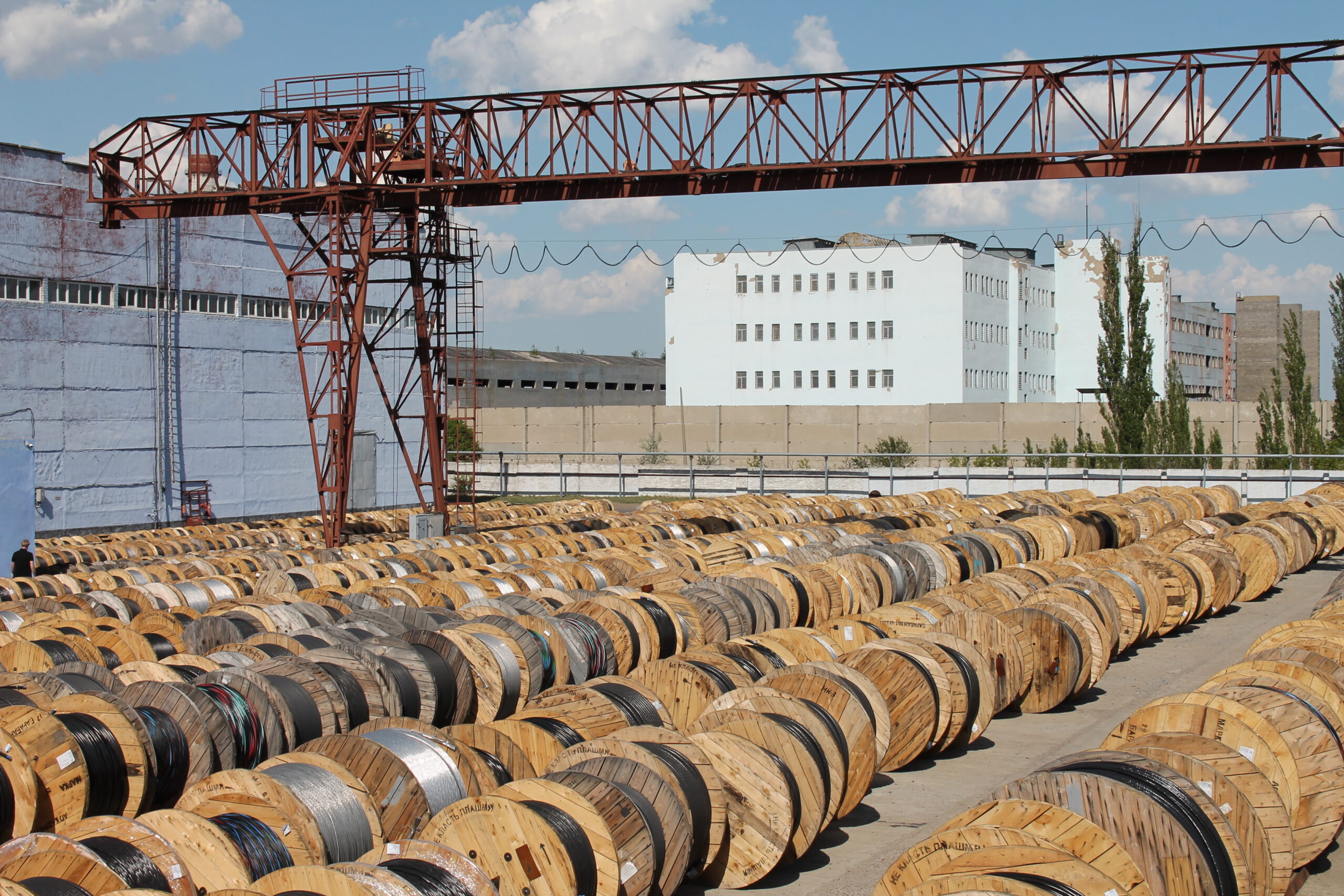
Light instead of wires: Perm scientists have learned to transmit energy via fiber optics 7 times more efficiently
Conventional electrical cables are dangerous. Sparks, short circuits, interference from powerful equipment — in mines, chemical plants, aviation and space, this can lead to disaster. But there is a technology that allows energy to be transmitted using light, completely eliminating metal. It is called Power over Fiber (PoF). The only problem is that the efficiency of such systems is depressingly low. Researchers at Perm Polytechnic have found a way to boost efficiency several times — and here is how it works.
Why ordinary wires are not always an option
In mines and chemical plants, any spark from a damaged cable risks an explosion. At high‑voltage substations, powerful electromagnetic fields create interference that causes equipment to malfunction. In aviation and space, every extra gram counts — and fiber optic cables are lighter than copper. For sensors on pipelines stretching for kilometers, running copper is expensive and unsafe. In all these cases, PoF is the ideal solution. Light does not spark, is immune to interference and weighs almost nothing.
The problem: dynamic load kills efficiency
In real life, devices rarely consume energy evenly. A sensor measures once a minute and sleeps the rest of the time. A fan turns on only when it heats up. This is called dynamic load. The laser and photodetector that convert electricity into light and back again prefer a stable mode. With sharp changes in consumption, most of the energy simply dissipates as heat. As a result, the efficiency of such systems is a miserable 2–15%, and at low powers even 1–7%.
The Perm solution: pulsed mode instead of power reduction
Scientists at Perm Polytechnic, led by Alexey Garkushin, have proposed an elegant way out. Instead of reducing the laser power (in which mode it is inefficient), they switched it to pulsed mode using pulse‑width modulation. The laser turns on for a fraction of a millisecond at its optimal power and then turns off. The amount of transmitted energy is regulated not by the intensity of light but by the duration of the on‑times and the pauses between them.
To smooth out the pulsations, a capacitor — a storage element — is installed on the receiver side. During a short flash it charges quickly, and during the pause it smoothly releases energy to the device. The result is stable power, while the laser operates in its most favorable mode.
Impressive numbers
Computer modeling has confirmed: when transmitting low power (less than 1 watt), the conventional continuous mode gives an efficiency of 2%. The pulsed mode raised it to 12–14% — a 6‑ to 7‑fold improvement! In the medium power range (0.75–15 W), the increase was up to 6 percentage points. “Even a 3–5% increase in efficiency means that the end device receives up to 20% more useful energy because losses are reduced at every stage,” explains Garkushin.
The system no longer loses efficiency under load fluctuations — the efficiency is now stable across the entire operating range. The laser and photodetector heat up less, which directly increases reliability and service life.
Where this will be useful
The Perm scientists’ development makes PoF economically viable where it was previously unprofitable. This is especially important for:
- Robotics and industrial automation — safe, interference‑free power supply.
- Smart cities — sensors scattered along streets can be powered by light.
- Cell towers and underwater systems — where running cables is difficult and expensive.
- Medical equipment — in MRI and other installations with strong magnetic fields, metal is not allowed.
- The Arctic — equipment operates autonomously in the cold, and fiber optics is not afraid of frost.
And most importantly, there is no need to create fundamentally new components. The same lasers and photodetectors, but with a smart control algorithm. That means the solution can be implemented into existing systems without a radical overhaul.